The Drum · Weekly AI news, freeSubscribe →
Share
Three of the world's most-used AI chatbots failed within minutes of each other on Thursday. The coincidence exposes how concentrated, and how fragile, the infrastructure underpinning the generative AI boom has become.
Three of the biggest names in generative AI went dark within roughly ninety minutes of each other on Thursday, a coincidence that should give pause to anyone treating these platforms as reliable infrastructure rather than beta-stage products.
OpenAI's ChatGPT began throwing error messages for users around 11AM ET. The company's status page described "elevated errors across ChatGPT and Codex." The outage was not cosmetic. Logins, file uploads, voice mode, search, deep research, and image generation were all affected. Notably, the failure hit while OpenAI was actively teasing the launch of Astra, its next major model release, a timing detail that will not be lost on anyone watching the company's product cadence.
Anthropic's Claude, along with Claude Code and the Claude API, went down at roughly the same time. CJ Avilla, a technical staff member at Anthropic, attributed the disruption to an "infrastructure issue" causing a partial outage across services. Anthropic resolved the problem by about 12:15PM ET, giving it the fastest recovery of the three.
xAI's Grok had actually started failing earlier, at 9:30AM ET, across Android, iOS, and web. Users prompting the chatbot on X received a blunt error: "This model is overloaded right now. Please try again shortly or pick a different model." xAI later linked the outage to a failure at its Memphis data center, the same facility that has drawn scrutiny before over power and infrastructure strain.
By early afternoon, all three services were back online. The Verge reported that it reached out to OpenAI, xAI, and Anthropic for comment on what caused the failures and whether they were connected in any way. None of the three companies had responded by publication.
Correlation is not causation, and there is no confirmed technical link between the three outages. But the optics are still uncomfortable for an industry that has spent the past three years positioning itself as the next layer of critical business infrastructure. When ChatGPT, Grok, and Claude all fail inside the same two-hour window, the natural question is whether the AI sector's dependence on a small number of shared inputs, cloud providers, data center regions, and chip supply, creates correlated failure risk that customers have not fully priced in.
That risk matters more now than it did a year ago. Enterprises have moved well past chatbot novelty use and are embedding these models into customer service, coding pipelines, and internal research workflows. Anthropic's Claude Code outage is a good example: this is not a consumer toy going offline, it is a developer tool that teams may depend on for shipping software. A partial outage measured in tens of minutes is a minor annoyance for a casual user. For a business that has wired an API into production systems, it is a service-level breach.
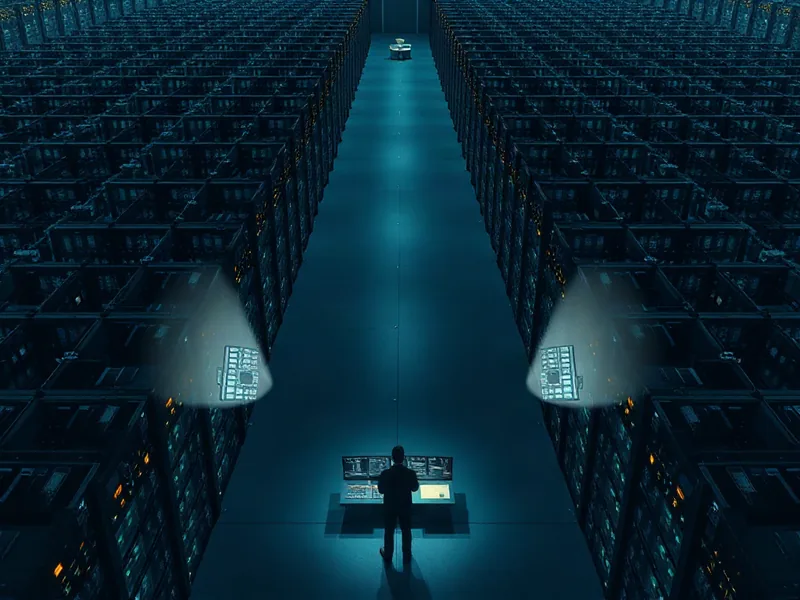
The xAI angle adds a physical dimension to what might otherwise look like a purely software story. Linking the Grok outage to its Memphis data center underscores that these chatbots, for all their software polish, run on physical infrastructure with the same failure modes as any other large-scale computing operation: power, cooling, networking, and capacity constraints. Memphis has already been a focal point for local concerns about data center energy draw. An outage traced to that facility is a reminder that AI reliability is downstream of real-world infrastructure decisions, not just code quality.
The most immediate risk is reputational and contractual. Enterprise customers signing service agreements with AI vendors typically negotiate uptime guarantees, and repeated or overlapping outages across providers make it harder for any single vendor to differentiate itself on reliability. If ChatGPT, Grok, and Claude can all go down within the same window, customers may reasonably conclude that switching providers offers no real hedge against downtime, since the underlying risk may be systemic rather than vendor-specific.
There is also a disclosure risk. None of the three companies had explained root cause by the time this story published, and OpenAI, xAI, and Anthropic did not respond to requests for comment. Investors and enterprise customers evaluating these vendors should watch for how transparent each company is in its post-incident reporting. A vague or absent postmortem is itself a signal about operational maturity, particularly for companies raising capital or negotiating enterprise contracts on the promise of dependable, production-grade service.
Finally, there is a timing risk specific to OpenAI. The outage landed while the company was teasing Astra, its next model release. Launch windows are exactly when infrastructure teams are under the most strain, juggling new deployment pipelines alongside existing traffic. A high-profile outage during a marketing push does not inspire confidence that the infrastructure scaling has kept pace with the ambition of the roadmap.
Investors with exposure to the AI infrastructure trade, whether through data center real estate, cloud providers, or the AI labs themselves, should treat this episode as a data point rather than a one-off. Watch for whether OpenAI, Anthropic, and xAI publish detailed incident reports naming specific causes and remediation steps. Watch for whether enterprise customers start demanding stronger uptime service-level agreements or financial penalties for downtime in contract renewals. And watch the Memphis facility specifically, since xAI's willingness to name a physical location as the source of failure invites more scrutiny of that site's power and cooling capacity going forward.
None of this suggests the generative AI trade is broken. Demand for these tools remains strong, and outages of an hour or two are unlikely to move usage numbers meaningfully. But reliability is becoming a genuine competitive axis in this market, not just a technical footnote, and the companies that treat infrastructure resilience as seriously as model capability are the ones likely to win the enterprise contracts that matter most over the next several years.
Tags
Original Sources
ChatGPT, Grok, and Claude all went down at the same time
↗ https://www.theverge.com/ai-artificial-intelligence/989503/chatgpt-grok-claude-outage-down
About the author
Marcus began tracking AI's market implications in 2016, noticing AI-related patent filings accelerating ahead of earnings upgrades before most of the sell-side had caught on. A former fixed-income quantitative analyst, he spent two decades building models that priced risk across emerging markets before pivoting to cover the economic impact of AI full-time. His writing translates opaque technical developments into clear risk/reward terms — and he's rarely diplomatic about the gap between AI valuations and underlying fundamentals. He believes most market participants still underestimate AI's long-run deflationary effect on knowledge work.
More from The Analyst →This Week's Edition
6 September 2026
24 articles
Related Articles

When Hackers Target Your Fridge: France's Supermarket Cyberattack Exposes a Growing IoT Risk
Security & Risk · 5 min
xAI Launches Grok Bot, an Autonomous Agent That Logs Into Your Tools and Does the Work
Products & Applications · 5 min

German Bishops Back Child-Friendly AI Standards, Citing Papal Call on Human Dignity
Policy & Regulation · 5 min
Related Articles
When Hackers Target Your Fridge: France's Supermarket Cyberattack Exposes a Growing IoT Risk
Security & Risk · 5 min
xAI Launches Grok Bot, an Autonomous Agent That Logs Into Your Tools and Does the Work
Products & Applications · 5 min
German Bishops Back Child-Friendly AI Standards, Citing Papal Call on Human Dignity
Policy & Regulation · 5 min
More Stories
© 2026 Cedar & Bloom. All rights reserved.
