The Drum · Weekly AI news, freeSubscribe →

Share
A deep dive into how Anthropic’s Claude Science is changing the game for AI in scientific research, offering robust solutions and credible insights.
In the world of AI, it’s not just about creating models that can generate text or images; it’s about building systems that can genuinely contribute to complex fields like science. Recently, Anthropic has made significant strides with its latest model, Claude Science. This isn’t just another big language model (BLM) but a tool designed specifically for scientific research. As someone who closely follows AI in health and medicine, I’ve been impressed by how Claude Science is being used to tackle real-world problems.
Claude Science stands out from other BLMs due to several key technical advancements:
Domain-Specific Training: Unlike general-purpose models, Claude Science was trained on a vast corpus of scientific literature, including peer-reviewed papers, textbooks, and experimental data. This specialized training ensures that the model has a deep understanding of scientific concepts and methodologies.
Enhanced Reasoning Capabilities: The model incorporates advanced reasoning algorithms that allow it to understand complex scientific relationships and perform tasks like hypothesis generation, experiment design, and data analysis. For example, Claude Science can help researchers identify potential drug targets by analyzing molecular interactions.
Interpretability Features: One of the biggest challenges with BLMs is their black-box nature. Claude Science includes interpretability features that allow users to understand how the model arrives at its conclusions. This transparency is crucial for scientific validation and trust.
Collaborative Workflow Integration: The model can be seamlessly integrated into existing research workflows, allowing scientists to use it as a tool rather than a standalone application. For instance, it can generate hypotheses based on initial data, which researchers can then test in their labs.
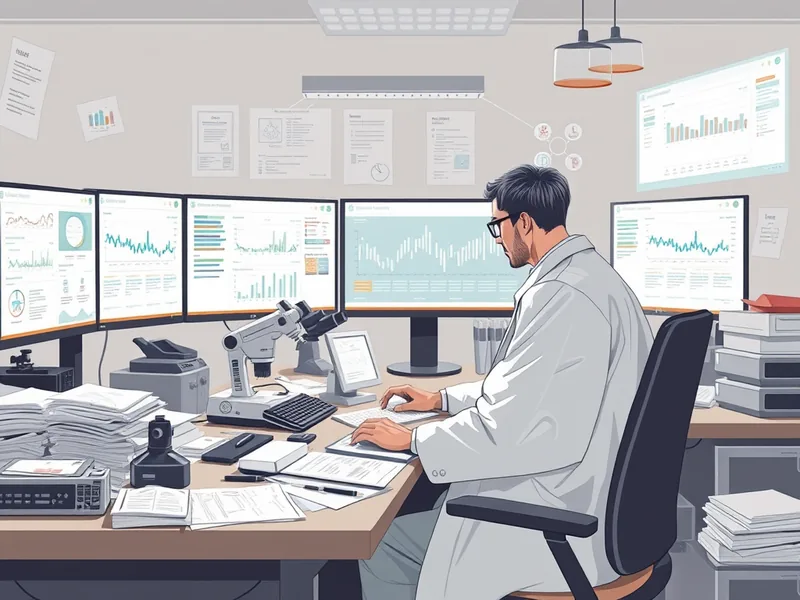
The practical applications of Claude Science are already making waves in the scientific community:
Drug Discovery: Pharmaceutical companies are using Claude Science to accelerate drug discovery processes. By analyzing large datasets and generating hypotheses, the model helps identify promising compounds more efficiently than traditional methods.
Genomics Research: In genomics, Claude Science is being used to interpret complex genetic data and predict how specific gene variants might affect disease susceptibility. This has significant implications for personalized medicine.
Environmental Studies: Researchers studying climate change and environmental impacts are leveraging Claude Science to analyze vast amounts of environmental data. The model can help identify patterns and trends that might not be apparent through manual analysis.
Educational Tools: In academic settings, Claude Science is being used as an educational tool to help students understand complex scientific concepts. It can generate detailed explanations and visualizations, making learning more engaging and effective.
Claude Science represents a significant step forward in the application of AI to scientific research. Its domain-specific training, enhanced reasoning capabilities, interpretability features, and seamless integration into existing workflows make it a powerful tool for researchers across various fields. As Anthropic continues to refine and expand its capabilities, we can expect to see even more innovative applications of this technology in the future.
The potential of Claude Science to accelerate scientific discovery is immense, but it also raises important questions about data privacy, ethical considerations, and the need for robust validation frameworks. As with any powerful tool, responsible use will be key to realizing its full potential.
Tags
Original Sources
The moment Anthropic convinced me it’s serious about science
↗ https://www.statnews.com/2026/07/01/anthropic-claude-science-convinced-me-its-serious-ai-prognosis
About the author
Kai built ML infrastructure at a Bay Area startup before developing an obsession with transformer architectures and inference optimisation that eventually pulled him out of product work entirely. A stint at a compute research lab sharpened his instinct for what actually matters in a model release versus what is marketing. He writes from the inside — from the perspective of someone who has debugged the systems he is describing at three in the morning. He is allergic to hype and instinctively drawn to the unglamorous plumbing questions that everyone else skips over.
More from The Engineer →This Week's Edition
6 July 2026
28 articles
Related Articles

What the Uncanny Valley Actually Tells Us About Machine Perception
Models & Research · 5 min

The Chip That Let Hardware Be Rewritten Like Software: Xilinx's XC2064
Models & Research · 5 min

New Graphite Study Finds AI Models Still Have Distinctive Writing Tells, Even After Scrubbing Em-Dashes
Models & Research · 5 min
Related Articles
What the Uncanny Valley Actually Tells Us About Machine Perception
Models & Research · 5 min
The Chip That Let Hardware Be Rewritten Like Software: Xilinx's XC2064
Models & Research · 5 min
New Graphite Study Finds AI Models Still Have Distinctive Writing Tells, Even After Scrubbing Em-Dashes
Models & Research · 5 min
More Stories
© 2026 Cedar & Bloom. All rights reserved.
