The Drum · Weekly AI news, freeSubscribe →

Share
As AI systems grow in complexity, connecting multiple agents to work together seamlessly is the next big challenge. Here’s how the "Internet of Cognition" and "Internet of Agents" are paving the way.
Imagine a healthcare system where multiple AI agents handle different tasks-symptom assessment, scheduling, insurance, and pharmacy management. Each agent excels in its domain but operates independently, leading to disjointed patient care. Vijoy Pandey, senior vice president and general manager of Outshift by Cisco, highlights that while the intelligence is already present, what’s missing is the connective tissue to turn these independent agents into a cohesive team.
This “connective tissue” comes from adding a semantic layer called the "Internet of Cognition," which enables agents across domains to work together and “think” through shared intent, context, and reasoning. Beneath this semantic layer lies the "Internet of Agents," a connectivity layer that allows autonomous agents to discover each other, prove identity, and exchange messages.
For years, the AI industry has focused on vertical scaling-building larger models trained on more data with more compute power. This approach has produced powerful reasoning capabilities, akin to a “brain” for AI agents. However, to enable agentic problem-solving across different systems, companies, and platforms, the next axis of scale must be horizontal.
Multi-agent systems are being explored in various fields such as software engineering, drug discovery, and scientific simulations. Despite their potential, current performances have been underwhelming. A study evaluating seven open-source multi-agent systems found a failure rate ranging from 41% to 87%. According to Pandey, the issue is not with the individual agents but with the coordination layer.
“Connected agents handle coordinated action well; they can take a task, divide it, and pass it around,” explains Pandey. “What they cannot do is hold a common goal and reason toward something none of them was trained to solve.”
The gap lies in the architecture, not just the prompting methods. Without the right coordination layer, naive multi-agent setups can perform worse than a single agent. The key step forward is enabling a team of agents to converge on its own, solving new problems collaboratively.
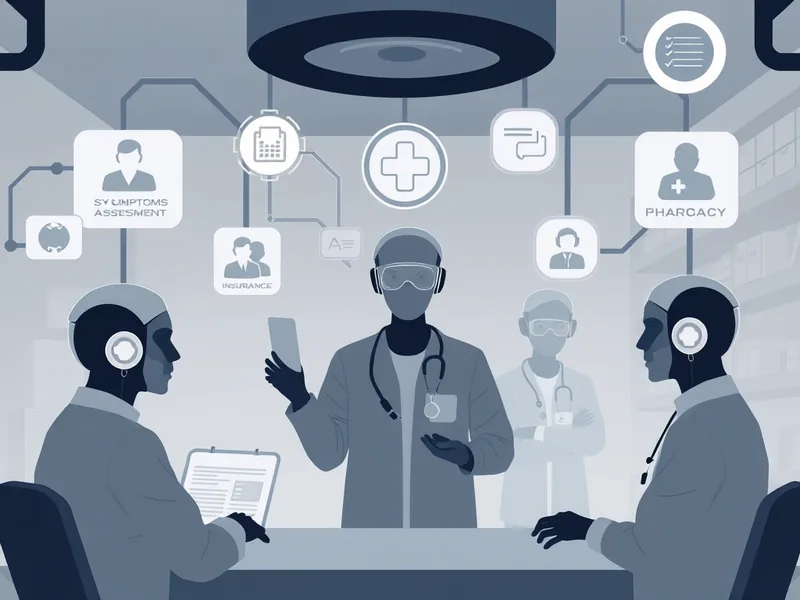
The "Internet of Cognition" and "Internet of Agents" are crucial components in this horizontal scaling approach. Here’s how they work together:
Internet of Agents: This layer provides the foundational connectivity that allows agents to discover, identify, and communicate with each other across different domains. Key features include:
Internet of Cognition: This semantic layer builds on the connectivity provided by the Internet of Agents. It enables higher-level coordination and reasoning:
Together, these layers form the connective tissue that transforms independent AI agents into a cohesive team. This approach is not just theoretical; it has practical implications in various domains:
Russell Sean, a cybersecurity expert, adds that the security of these connected systems is paramount. With over 1.3 million public models hosted by platforms like Hugging Face, there are potential risks from permission-based attack paths where AI systems can be repurposed maliciously. Ensuring robust security measures will be crucial as we move toward more interconnected and collaborative AI systems.
The path to distributed artificial superintelligence involves not just building smarter individual agents but connecting them in a way that allows for coordinated problem-solving. The "Internet of Cognition" and "Internet of Agents" are key technologies driving this transformation, paving the way for more efficient and effective multi-agent systems.
Tags
Original Sources
The path to artificial superintelligence
↗ https://www.technologyreview.com/2026/07/27/1140724/the-path-to-artificial-superintelligence
About the author
Kai built ML infrastructure at a Bay Area startup before developing an obsession with transformer architectures and inference optimisation that eventually pulled him out of product work entirely. A stint at a compute research lab sharpened his instinct for what actually matters in a model release versus what is marketing. He writes from the inside — from the perspective of someone who has debugged the systems he is describing at three in the morning. He is allergic to hype and instinctively drawn to the unglamorous plumbing questions that everyone else skips over.
More from The Engineer →This Week's Edition
6 August 2026
25 articles
Related Articles

Stanford's CORES Symposium Puts AI's Role in Scientific Reproducibility Under the Microscope
Models & Research · 5 min

Stanford HAI Talk Puts Arena's Human-Feedback Approach to AI Evaluation Under the Microscope
Models & Research · 5 min

Medicare's AI Push Meets a Discovery Problem for Health Chatbots
Products & Applications · 5 min
Related Articles
Stanford's CORES Symposium Puts AI's Role in Scientific Reproducibility Under the Microscope
Models & Research · 5 min
Stanford HAI Talk Puts Arena's Human-Feedback Approach to AI Evaluation Under the Microscope
Models & Research · 5 min
Medicare's AI Push Meets a Discovery Problem for Health Chatbots
Products & Applications · 5 min
More Stories
© 2026 Cedar & Bloom. All rights reserved.
