The Drum · Weekly AI news, freeSubscribe →

Share
As one of the world's most cited climate researchers, Prof. Philippe Ciais shares his concerns about the planet's carbon cycle and the urgent need for action.
For almost four decades, Prof. Philippe Ciais has dedicated his career to understanding the Earth’s carbon cycle and how human activities are disrupting its delicate balance. Based at the Laboratoire des Sciences du Climat et de l’Environnement (LSCE) in Paris, Ciais has authored nearly 1,300 peer-reviewed studies, making him the most highly cited climate scientist globally.
In a recent interview, Ciais delves into his concerns about the annual global carbon budget and the role of artificial intelligence in climate research. He also discusses his reservations about carbon dioxide removal technologies and compares how different regions view scientific endeavors.
Ciais begins by highlighting the natural balance that has long maintained our planet’s carbon cycle. “We live on a very, very lucky planet,” he says, noting that half of human-generated CO2 emissions are absorbed by natural reservoirs like forests and oceans. However, this balance is increasingly under threat.
“I'm very concerned about what we are seeing more and more: abrupt changes,” Ciais explains. These changes include the degradation of carbon sinks-natural environments that absorb CO2 from the atmosphere. “We live in a world where there is a fight between the good guys, CO2 fertilization, and the bad guys, climate change impacting carbon sinks. So far, we still have carbon sinks, so the good guys have been beating the bad guys,” he adds. But this may not always be the case.
The imbalance in the annual global carbon budget is a critical issue. Ciais emphasizes that while some natural processes help mitigate CO2 levels, others are being overwhelmed by human activities. “If we continue on our current path, these natural sinks could become sources of CO2, exacerbating climate change rather than mitigating it,” he warns.
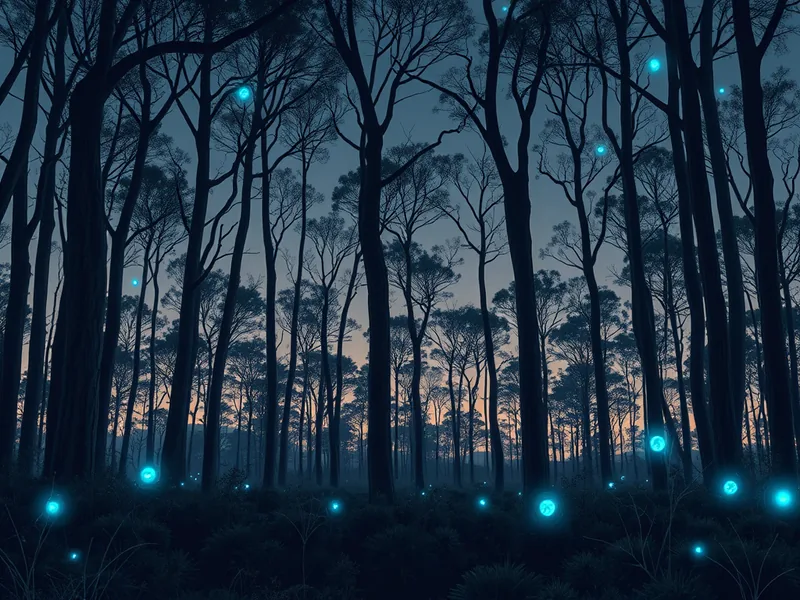
Artificial intelligence (AI) is increasingly becoming a tool in the arsenal of climate scientists. Ciais discusses how AI can help process vast amounts of data and identify patterns that might elude human researchers. “AI can assist us in understanding complex systems by analyzing large datasets more efficiently,” he says.
However, Ciais also cautions against over-reliance on AI. “While it’s a powerful tool, we must ensure that the algorithms are transparent and that they don’t perpetuate biases or inaccuracies,” he notes. The integration of AI into climate research should be guided by robust scientific principles and ethical considerations.
Ciais's work with the European Integrated Carbon Observation System (ICOS) and his role as co-chair of the Global Carbon Project highlight the importance of international collaboration in addressing climate challenges. “No single country or region can solve this problem alone,” he emphasizes. “We need a coordinated global effort to monitor and manage our carbon emissions effectively.”
The stakes are high, both for the environment and public health. Disruptions in the carbon cycle can lead to more frequent and severe climate events, such as heatwaves, droughts, and storms, which have direct impacts on human well-being. “Climate change is not just an environmental issue; it’s a public health crisis,” Ciais states.
He advocates for a multifaceted approach that includes reducing emissions, enhancing carbon sinks, and adapting to the changes already underway. “We need policies that incentivize sustainable practices and support vulnerable communities,” he adds. The choices we make today will determine the future of our planet and the well-being of generations to come.
Ciais’s extensive research and global influence underscore the urgency of addressing climate change. As one of the world's leading experts, his insights provide a clear call to action for policymakers, scientists, and the public alike.
Tags
Original Sources
Prof Philippe Ciais: The world’s most highly cited climate scientist
↗ https://www.carbonbrief.org/prof-philippe-ciais-the-worlds-most-highly-cited-climate-scientist
About the author
Amara's entry point into AI was an epidemiology role at a London research hospital, where she spent five years studying how digital health tools reached — or conspicuously failed to reach — underserved communities. Watching early algorithmic systems in healthcare quietly entrench existing inequalities, she redirected her career toward the systemic consequences of AI at scale. She covers AI through an unflinching lens: who benefits, who bears the cost, and what evidence actually says versus what the press release claims. Her writing is calm and precise, but she doesn't mistake balance for neutrality.
More from The Steward →This Week's Edition
29 June 2026
29 articles
Related Articles

Australian Farmers Warm to Renewables, But Big Projects Still Face Resistance
Environment & Climate · 5 min

Record-Shattering El Niño, AI's Energy Habit, and a Renewables Gap That Won't Close Itself
Environment & Climate · 6 min

Pentagon Energy Expo Highlights Push for Efficiency, Resilience and Space-Based Power
Environment & Climate · 6 min
Related Articles
Australian Farmers Warm to Renewables, But Big Projects Still Face Resistance
Environment & Climate · 5 min
Record-Shattering El Niño, AI's Energy Habit, and a Renewables Gap That Won't Close Itself
Environment & Climate · 6 min
Pentagon Energy Expo Highlights Push for Efficiency, Resilience and Space-Based Power
Environment & Climate · 6 min
More Stories
© 2026 Cedar & Bloom. All rights reserved.
