The Drum · Weekly AI news, freeSubscribe →
Share
As AI chatbots take over routine tasks in medical offices, patient experiences can vary widely. A dermatologist shares her firsthand account of a less-than-smooth encounter.
The idea of using artificial intelligence (AI) to streamline healthcare processes is gaining traction, and for good reason. From scheduling appointments to managing medication lists, AI has the potential to make healthcare more efficient and accessible. One area where this technology is making waves is in doctor office check-ins. However, as a board-certified dermatologist with a master’s in bioethics, I recently had an experience that highlighted both the promise and the pitfalls of using chatbots for patient intake.
I arrived at an internal medicine specialty clinic for a blood pressure issue, expecting a smooth process since I had completed my online registration the day before. The form included all the usual details: demographics, past medical history, medications, allergies, and more. Upon arrival, I was directed to a kiosk, much like checking in at an airport. But unlike airports, where there’s usually someone nearby to assist, I found myself navigating the process alone.
After completing the kiosk check-in, I had to go to the front desk for further confirmation. The receptionist repeated many of the questions I had already answered online and via the kiosk, including my name, date of birth, insurance information, and recent international travel history. This redundancy not only felt unnecessary but also added to the time spent in the waiting room.
After a few minutes, my name was called-though it was pronounced incorrectly-and I didn’t see anyone at first. I stood up and looked around, eventually finding a person who had indeed called me. Let’s call her Sandy. She wore no visible name tag, which made it difficult to know if she was a medical assistant or another role. When I introduced myself and corrected the pronunciation of my last name, Jampel, she gave me a blank stare.
We then moved to an adjacent room for my intake. Sandy began asking questions that had already been covered in the online registration and kiosk check-in. This repetition not only felt redundant but also raised concerns about the efficiency of the system. While AI chatbots can handle routine tasks, the human touch is still crucial for ensuring a smooth and personalized patient experience.
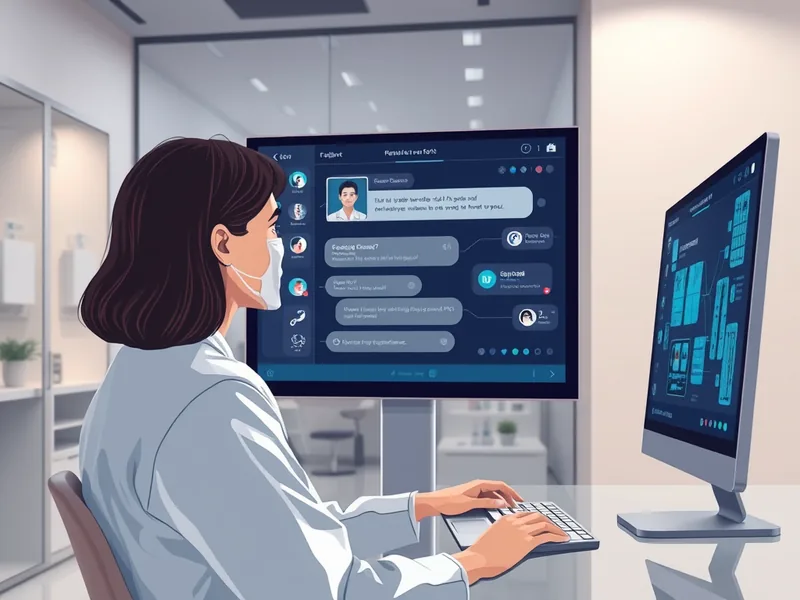
The use of chatbots in healthcare settings can significantly reduce wait times and administrative burdens on staff. However, it’s essential to balance automation with human interaction. For instance, having a trained staff member available to assist patients who may need help or have questions can enhance the overall experience. Ensuring that information collected via online forms and kiosks is accurately transferred to the patient's medical record can prevent unnecessary repetition.
The clinic I visited could benefit from better integration between their digital and human systems. For example, if the receptionist had access to a real-time dashboard showing which parts of the intake process were already completed, she could focus on more critical tasks, such as addressing any new concerns or providing patient education.
The integration of AI in healthcare is inevitable, but it must be done thoughtfully. While chatbots can handle routine tasks efficiently, they cannot replace the empathy and personal touch that human interactions provide. Patients need to feel heard and understood, especially during medical appointments where their health and well-being are at stake.
By combining the efficiency of AI with the compassion of healthcare professionals, clinics can create a more streamlined and patient-centered experience. This approach not only improves patient satisfaction but also ensures that the healthcare system operates more effectively, ultimately leading to better health outcomes for all.
Tags
Original Sources
Check-in and intake at the doctor’s office are perfect for AI
↗ https://www.statnews.com/2026/05/22/chatbots-doctor-office-check-in-intake-ai
About the author
Amara's entry point into AI was an epidemiology role at a London research hospital, where she spent five years studying how digital health tools reached — or conspicuously failed to reach — underserved communities. Watching early algorithmic systems in healthcare quietly entrench existing inequalities, she redirected her career toward the systemic consequences of AI at scale. She covers AI through an unflinching lens: who benefits, who bears the cost, and what evidence actually says versus what the press release claims. Her writing is calm and precise, but she doesn't mistake balance for neutrality.
More from The Steward →This Week's Edition
6 August 2026
25 articles
Related Articles

Medicare's AI Push Meets a Discovery Problem for Health Chatbots
Products & Applications · 5 min

Google's Gemini 3.8 Flash Targets the Value Segment of the AI Market
Products & Applications · 5 min

Intermountain Health Closes $795M Deal for Idaho Hospitals, Ending Surgery Partners' Joint Ownership
Products & Applications · 5 min
Related Articles
Medicare's AI Push Meets a Discovery Problem for Health Chatbots
Products & Applications · 5 min
Google's Gemini 3.8 Flash Targets the Value Segment of the AI Market
Products & Applications · 5 min
Intermountain Health Closes $795M Deal for Idaho Hospitals, Ending Surgery Partners' Joint Ownership
Products & Applications · 5 min
More Stories
© 2026 Cedar & Bloom. All rights reserved.
