The Drum · Weekly AI news, freeSubscribe →
Share
In a significant setback for tech billionaire Elon Musk, a jury has ruled that his lawsuit against OpenAI is too late, raising questions about the future of AI governance and corporate accountability.
On Monday, the jury in Musk v. Altman dealt Elon Musk a major blow-reaching a unanimous advisory verdict that he had sued OpenAI too late, and as a result, his claims are barred by the applicable statutes of limitations. US District Judge Yvonne Gonzalez Rogers immediately accepted the verdict.
Musk announced on X (formerly Twitter) that he will be appealing the decision. “The judge and jury never actually ruled on the merits of the case, just on a calendar technicality,” he wrote. This legal setback has significant implications for both Musk and OpenAI, as well as broader discussions about AI governance and corporate accountability.
OpenAI was co-founded by Musk and a group of researchers in 2015 as a nonprofit with a mission to develop AI for the benefit of humanity, free from financial pressures. Musk donated $38 million to the company during its early days, allegedly on the condition that OpenAI CEO Sam Altman and president Greg Brockman would keep the organization a nonprofit committed to this mission.
Musk brought two claims against OpenAI. First, he argued that Altman and Brockman breached the charitable trust he created through his donations by breaking their promise to keep the company a nonprofit and creating a for-profit subsidiary that grew significantly over the years. Second, he claimed that Altman and Brockman unjustly enriched themselves at Musk’s expense.
Musk asked the court to unwind a 2025 restructuring that converted OpenAI’s for-profit subsidiary into a public benefit corporation and to remove Altman and Brockman from their roles. However, OpenAI argued that the time for Musk to sue had run out before he brought the case. The statute of limitations on the breach of charitable trust claim is three years, while the statute of limitations on the unjust enrichment claim is two years. This means Musk should have discovered, or had reason to discover, Altman and Brockman’s alleged breaches no earlier than 2021 and 2022, respectively.
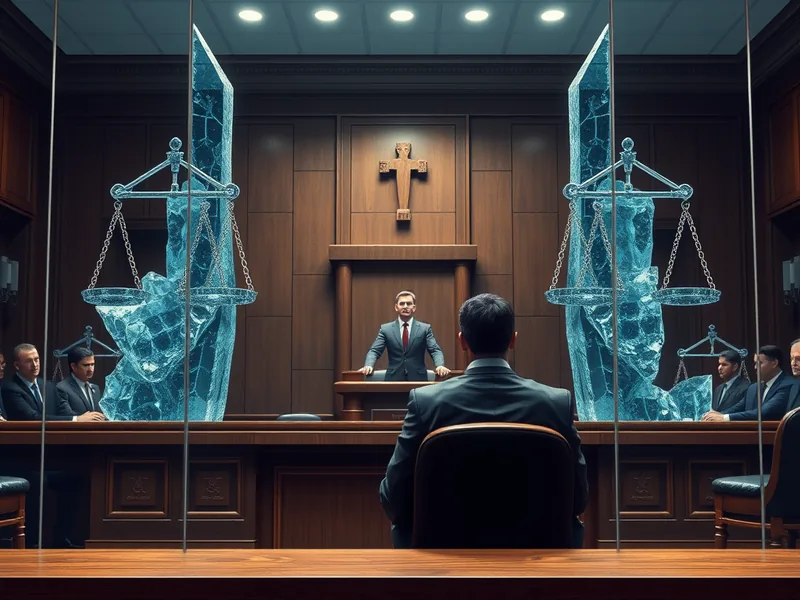
While Musk argued he only discovered that Altman and Brockman had broken their promise in 2022, OpenAI claimed that Musk had reason to suspect this well before 2021. The jury's decision hinged on the timing of when Musk should have reasonably known about these alleged breaches.
The court’s decision to dismiss Musk’s lawsuit on technical grounds highlights the importance of timely legal action in corporate governance disputes. It also underscores the challenges faced by those seeking to hold tech companies accountable, especially when the issues involve complex organizational structures and rapidly evolving technologies.
Musk's appeal could bring renewed attention to the case, potentially leading to a more detailed examination of the merits. However, for now, OpenAI can continue its mission with less immediate legal pressure. The broader implications of this decision will likely influence how other tech leaders and investors approach their commitments and responsibilities in the rapidly growing field of AI.
The outcome of Musk’s appeal will be closely watched by stakeholders in the AI community, policymakers, and the public. It could set important precedents for future cases involving corporate governance, charitable trusts, and the development of AI technologies.
Tags
Original Sources
Here’s why Elon Musk lost his suit against OpenAI
↗ https://www.technologyreview.com/2026/05/18/1137488/elon-musk-suit-openai-verdict
Roundtables: Inside the Musk v. Altman Trial | MIT Technology Review
↗ https://www.technologyreview.com/2026/05/19/1137454/roundtables-inside-the-musk-v-altman-trial
Musk v. Altman week 3: Musk and Altman traded blows over each ...
↗ https://www.technologyreview.com/2026/05/15/1137357/musk-v-altman-week-3
The Download: Musk v. Altman, smart glasses for warfare, and Google I/O
↗ https://www.technologyreview.com/2026/05/19/1137505/the-download-musk-altman-trial-smart-glasses-warfare-google-i-o
OpenAI co-founder Andrej Karpathy joins Anthropic's pre-training team
↗ https://techcrunch.com/2026/05/19/openai-co-founder-andrej-karpathy-joins-anthropics-pre-training-team
About the author
Amara's entry point into AI was an epidemiology role at a London research hospital, where she spent five years studying how digital health tools reached — or conspicuously failed to reach — underserved communities. Watching early algorithmic systems in healthcare quietly entrench existing inequalities, she redirected her career toward the systemic consequences of AI at scale. She covers AI through an unflinching lens: who benefits, who bears the cost, and what evidence actually says versus what the press release claims. Her writing is calm and precise, but she doesn't mistake balance for neutrality.
More from The Steward →This Week's Edition
22 May 2026
29 articles
Related Articles
States Race to Write the Rules for AI Sandboxes in Health Care, and Lobbyists Are Racing Right Alongside Them
Policy & Regulation · 5 min
DOJ Moves to Reward Health Care Companies That Report Their Own Fraud
Policy & Regulation · 5 min

As US Intelligence Sharing Wavers, Ukrainians Lose Precious Minutes Against Russian Missiles
Policy & Regulation · 6 min
Related Articles
States Race to Write the Rules for AI Sandboxes in Health Care, and Lobbyists Are Racing Right Alongside Them
Policy & Regulation · 5 min
DOJ Moves to Reward Health Care Companies That Report Their Own Fraud
Policy & Regulation · 5 min
As US Intelligence Sharing Wavers, Ukrainians Lose Precious Minutes Against Russian Missiles
Policy & Regulation · 6 min
More Stories
© 2026 Cedar & Bloom. All rights reserved.
