The Drum · Weekly AI news, freeSubscribe →

Share
NVIDIA's move to support RISC-V in CUDA opens new avenues for server-grade computing, but comes with a set of stringent requirements. Here’s what developers need to know.
NVIDIA has long been the go-to choice for high-performance GPU compute, especially in machine learning applications. Historically, CUDA, NVIDIA's parallel computing platform and API model, supported only x86-64 and aarch64 CPUs. However, at Hot Chips 2026, NVIDIA announced plans to extend CUDA support to RISC-V. This move is significant for both the RISC-V ecosystem and GPU compute practitioners.
To ensure that RISC-V CPUs can seamlessly integrate with CUDA, NVIDIA has outlined a set of requirements. These requirements are designed to ensure that RISC-V platforms meet the performance and reliability standards necessary for server-grade applications.
NVIDIA's requirements go beyond these specifications to address specific software challenges:
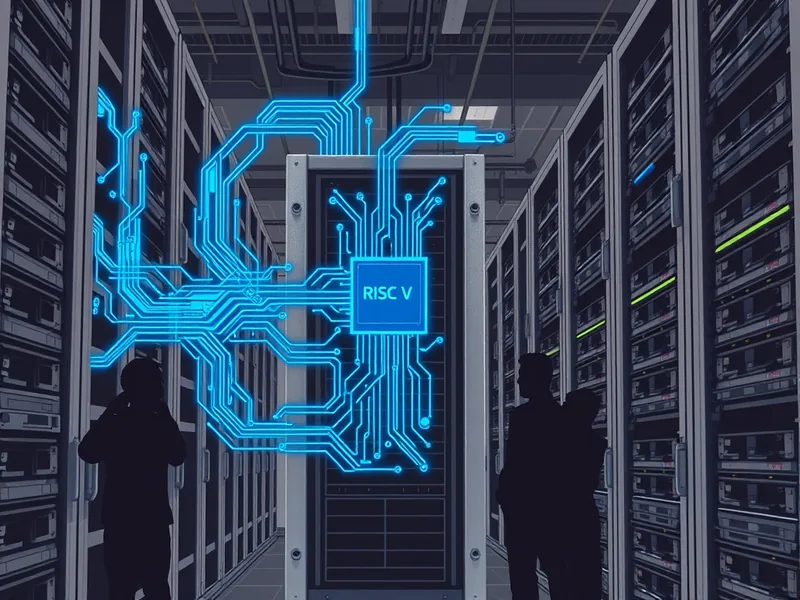
NVIDIA's decision to support RISC-V is driven by the growing adoption of RISC-V in server environments. Here’s a deeper look at how these requirements impact both hardware and software:
The extension of CUDA support to RISC-V opens up new possibilities for developers and system architects. Here are a few key points to watch as this development unfolds:
In the broader context, this move aligns with trends in computational memory and AI infrastructure. For instance, Apple’s application of generative AI algorithms to accelerate custom chip design highlights the importance of efficient compute platforms. Similarly, the 7 Pillars of Agentic AI emphasize the need for autonomous, collaborative, and aligned intelligent agents, which can benefit from the performance gains offered by RISC-V and CUDA integration.
As NVIDIA continues to push the boundaries of GPU computing, the inclusion of RISC-V is a significant step towards a more diverse and robust compute ecosystem.
Tags
Original Sources
Hot Chips 2026: CUDA Targets RISC-V
↗ https://chipsandcheese.com/p/hot-chips-2026-cuda-targets-risc?utm_source=tldrai
About the author
Kai built ML infrastructure at a Bay Area startup before developing an obsession with transformer architectures and inference optimisation that eventually pulled him out of product work entirely. A stint at a compute research lab sharpened his instinct for what actually matters in a model release versus what is marketing. He writes from the inside — from the perspective of someone who has debugged the systems he is describing at three in the morning. He is allergic to hype and instinctively drawn to the unglamorous plumbing questions that everyone else skips over.
More from The Engineer →This Week's Edition
31 August 2026
17 articles
Related Articles

Modular Data Centers Chase Solar Curtailment to Power GPUs
Tools & Engineering · 5 min

Microsoft and AWS Push Agentic AI as the Next Layer of Industrial Software
Products & Applications · 5 min

Stanford Launches Center for Decoding the Universe to Bring AI Methods to Astrophysics
Models & Research · 5 min
Related Articles
Modular Data Centers Chase Solar Curtailment to Power GPUs
Tools & Engineering · 5 min
Microsoft and AWS Push Agentic AI as the Next Layer of Industrial Software
Products & Applications · 5 min
Stanford Launches Center for Decoding the Universe to Bring AI Methods to Astrophysics
Models & Research · 5 min
More Stories
© 2026 Cedar & Bloom. All rights reserved.
