The Drum · Weekly AI news, freeSubscribe →
Share
More than 100 gas plants are being built to power AI data centers outside the grid entirely. The shortcut avoids a years-long wait for approval, but it may leave communities with dirtier air and higher power bills.
If you've ever waited on hold for a utility company, you have a small taste of what AI developers are dealing with, except their wait isn't measured in minutes. It's measured in years, sometimes a full decade, before a new data center can even get permission to plug into the electrical grid. For an industry racing to build ever-larger AI models, that kind of delay is unacceptable. So a growing number of developers are simply opting out.
As of October 2026, companies had announced plans for more than 100 gas power plants built specifically to run data centers in the United States, operating independently of the public grid. Think of it like a restaurant deciding to dig its own well rather than wait for the city to approve a new water hookup. It solves the immediate problem. But it also raises uncomfortable questions about who bears the cost, and who breathes the consequences.
These off-grid plants let data centers sidestep the queue entirely. No waiting for grid operators to study whether the local system can handle the added load. No competing with hospitals, schools, and homes for limited transmission capacity. Just build the gas plant, connect it directly to the data center, and start computing.
The appeal is obvious from a business standpoint. AI companies are under enormous pressure to deploy computing power quickly, and every month spent waiting for grid approval is a month of lost ground in a fiercely competitive race. Gas turbines can be purchased, installed, and running in a fraction of the time it takes to navigate the regulatory process for a traditional grid connection.
But the tradeoffs are real, and they don't fall evenly on everyone.
Burning natural gas releases carbon dioxide, methane, and other pollutants, and doing so outside the normal regulatory channel that governs grid-connected power plants can mean fewer checks on emissions. At a moment when climate scientists are warning that the window to avoid the worst effects of warming is closing fast, adding more than 100 new fossil fuel plants to the American landscape runs directly counter to that goal.
There's also a less obvious consequence: these off-grid plants don't necessarily reduce strain on the broader energy system. Communities near these facilities may see no benefit from the power being generated nearby, since it's reserved entirely for the data center it serves. Meanwhile, the broader grid still has to handle rising demand from everyone else, which can push up electricity prices for ordinary households and businesses who had nothing to do with the AI boom.
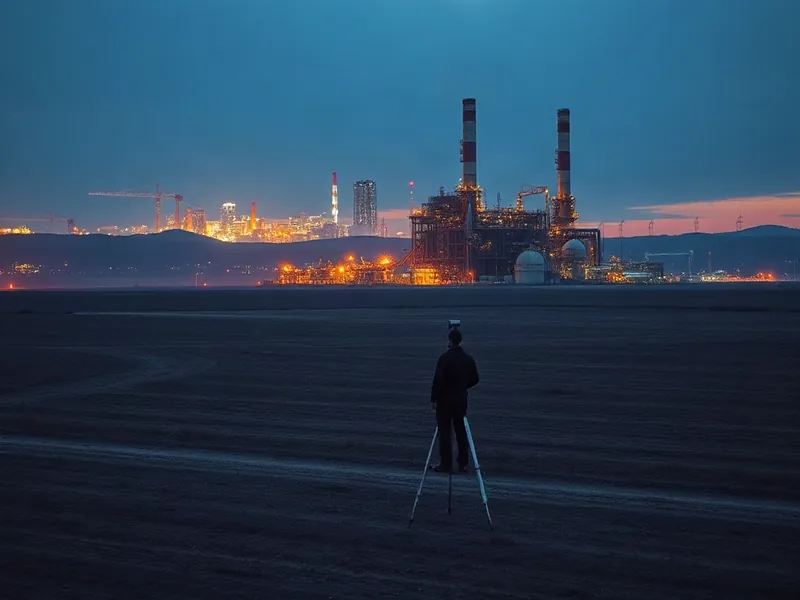
That's the part that deserves more public attention. People in nearby towns may end up living with the air quality impacts of a new gas plant while seeing none of the electricity it produces. It's a bit like a factory opening next door that ships every single product out of town, leaving the neighborhood with the noise and emissions but none of the jobs or goods. Over the long run, this dynamic could entrench a two-tiered energy system: one for AI infrastructure, insulated from grid delays and public oversight, and another for everyone else, left to deal with rising costs and the environmental fallout of a more gas-dependent grid.
This isn't happening in a vacuum, either. It comes just as global climate negotiations hit a serious roadblock. COP31 collapsed this past week, reviving longstanding criticism of the consensus rule that lets a single country veto a deal. Ironically, undoing that rule would itself require unanimous agreement, which tells you something about how stuck the process has become. There were some genuine wins, including a new electrification pledge, but the broader failure underscores how difficult it is to coordinate climate action even as emissions-heavy industries like AI infrastructure keep expanding. Researchers have also pointed out that current climate models carry a significant blind spot, making it even harder to fully predict how choices like these ripple outward over decades.
None of this means gas-powered data centers are an unambiguous villain in the story. Grid delays are a legitimate infrastructure problem, not a fiction invented by tech companies eager to avoid oversight. Permitting reform, faster transmission buildout, and smarter grid planning could all reduce the pressure that's pushing developers toward off-grid solutions in the first place. Some energy experts argue that if these gas plants are built with strong emissions controls and eventually paired with carbon capture or transitioned to cleaner fuels, they could serve as a bridge rather than a permanent fixture.
But right now, there's little indication that's the plan for most of these projects. The incentive structure rewards speed, not sustainability. And when more than a hundred power plants get built with speed as the primary goal, caution tends to be the first casualty.
The decisions being made right now about how to power AI will shape the American energy landscape for decades, not years. Gas plants built today don't simply disappear once a better option arrives. They tend to operate for 30 years or more, locking in emissions commitments long after the current AI boom has evolved into whatever comes next.
The people most affected by this shift, families living near new gas facilities and ratepayers absorbing higher electricity bills, had little say in how it unfolded. They weren't in the boardrooms where these projects got approved, and they likely won't see the profits these data centers generate. What they will see is the air they breathe and the bills they pay.
Energy policy rarely makes for dramatic headlines compared to AI's flashier debates over consciousness or job displacement. But the question of how we power this technology may end up being just as consequential as the technology itself. Getting it right means balancing genuine infrastructure needs against environmental responsibility and basic fairness, something that requires more public scrutiny than a hundred quietly announced gas plants have so far received.
Tags
Original Sources
The Download: AI’s gas power boom and a consciousness reality check
↗ https://www.technologyreview.com/2026/11/24/1149669/the-download-data-centers-gas-ai-consciousness
About the author
Amara's entry point into AI was an epidemiology role at a London research hospital, where she spent five years studying how digital health tools reached — or conspicuously failed to reach — underserved communities. Watching early algorithmic systems in healthcare quietly entrench existing inequalities, she redirected her career toward the systemic consequences of AI at scale. She covers AI through an unflinching lens: who benefits, who bears the cost, and what evidence actually says versus what the press release claims. Her writing is calm and precise, but she doesn't mistake balance for neutrality.
More from The Steward →This Week's Edition
25 November 2026
20 articles
Related Articles

As COP31 Ends, Fights Over Climate Science Itself Take Center Stage
Environment & Climate · 6 min

AI Chatbots Use Less Water Per Dollar Than Almond Milk or Golf, Report Finds
Environment & Climate · 5 min

AI Can Now Draft Your Radiology Report. The Question Is Whether That Makes You Safer
Health & Science · 6 min
Related Articles
As COP31 Ends, Fights Over Climate Science Itself Take Center Stage
Environment & Climate · 6 min
AI Chatbots Use Less Water Per Dollar Than Almond Milk or Golf, Report Finds
Environment & Climate · 5 min
AI Can Now Draft Your Radiology Report. The Question Is Whether That Makes You Safer
Health & Science · 6 min
More Stories
© 2026 Cedar & Bloom. All rights reserved.