The Drum · Weekly AI news, freeSubscribe →

Share
A youth movement demanding India's election chief resign has met police barricades and mass detentions, raising hard questions about who gets to vote, and who gets to protest when they feel silenced.
For a lot of young Indians, the right to vote has always felt like the one lever they could pull regardless of money, connections, or family name. That's partly why the scenes unfolding in New Delhi this past weekend matter so much, even to people who've never set foot in India.
On Saturday, police detained several demonstrators in the capital as a second day of protests disrupted the city center. The demonstrations were organized by the Gen Z-led Cockroach Janta Party alongside other opposition groups, and they're aimed squarely at changes to India's voter rolls that critics say have quietly stripped millions of eligible people of their ability to cast a ballot.
About 100 protesters tore down security barricades on Saturday, chanting "vote thief, leave the post" and calling for Gyanesh Kumar, the chief of India's Election Commission, to step down. Police moved in and forcibly detained some of them. Among those present, according to a Reuters witness, were independent Member of Parliament Kapil Sibal, All India Students' Association President Neha Bora, and longtime political activists Prashant Bhushan and Yogendra Yadav. Police declined to say how many people were detained or who they were.
Think of a voter roll like a guest list for a massive national event. If your name quietly disappears from that list, you don't find out until you show up and get turned away at the door. That's the fear driving these protests: that a nationwide "verification exercise," launched last year, has functioned less like routine list-cleaning and more like exclusion by design.
The Election Commission says its intent is modest and procedural, removing duplicate entries, dead voters, and people who no longer qualify. That's a reasonable goal on paper. Every democracy needs accurate rolls to function, and stale voter lists can be exploited just as easily as purged ones.
But the people losing their names from those lists tell a different story. Bora put it bluntly to Reuters: "First they removed people from the voters list and now they are not letting us raise our voice against this. This is not acceptable." That sentiment captures the core grievance driving this movement: it's not just about the policy itself, it's about feeling shut out twice, once from the ballot and again from the street.
The Election Commission has not responded publicly to the protests or the resignation demands. It did, notably, direct officials on Friday to register newly eligible voters and those who'd been left off the rolls, a move that could be read as a quiet concession or simply routine housekeeping, depending on who you ask.
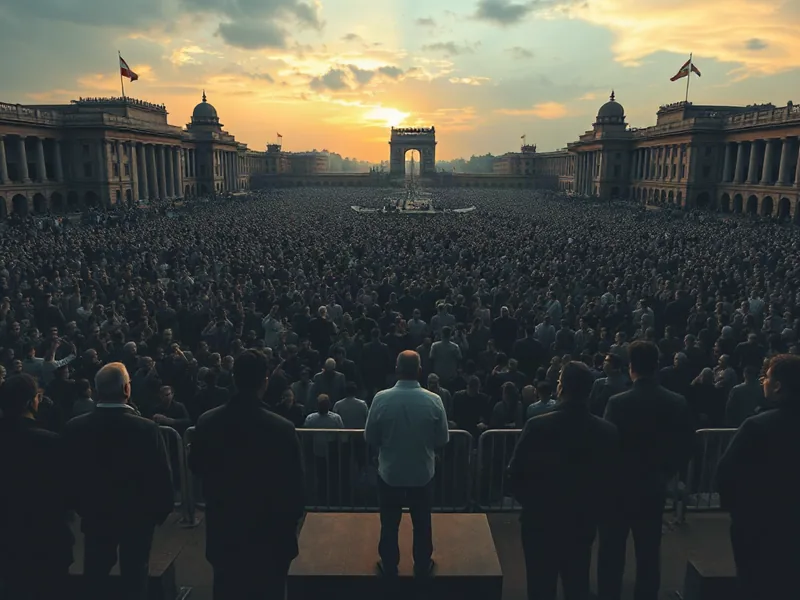
Friday's protest looked similar to Saturday's, only with an even heavier hand. Police stopped a group of demonstrators before they could fully gather, loading them onto buses. Several nearby metro stations shut down entirely, a tactic that effectively cuts off a city's circulatory system to prevent crowds from forming. Most of those detained Friday were eventually released, but a police source told Reuters that several now face charges for allegedly violating bans on mass gatherings in Delhi.
This is the fourth or fifth time this year that young, loosely organized protest movements have rattled Prime Minister Narendra Modi's government, and the pressure is unlike anything he's faced in his twelve years in power. These aren't the traditional, party-machine demonstrations India has seen for decades. They're decentralized, internet-fluent, and often led by people too young to remember India's last major political realignment. The name "Cockroach Janta Party" itself signals a kind of irreverent, meme-literate defiance that doesn't map neatly onto old political categories.
It's worth pausing on why younger generations keep showing up for this particular fight. Voter rolls feel abstract until they're not. For a 22-year-old voting for the first time, discovering their name has vanished from the list isn't a bureaucratic hiccup, it's a message that their participation was never fully secured in the first place. That's a powerful radicalizing experience, and it helps explain why these protests have sustained momentum rather than fizzling out after a single news cycle.
There's also a generational trust gap at play. The Election Commission has long been considered one of India's most credible institutions, a rare point of broad public confidence in a polarized political landscape. When that trust frays, even partially, it doesn't just affect one election cycle. It chips away at the baseline assumption that democratic institutions are working in good faith, which is a much harder thing to rebuild than a voter list.
None of this happens in a vacuum. Similar youth-led unrest has been brewing elsewhere this year, including student protests in Paris that prompted the city's police chief to urge peaceful action rather than escalation. Different countries, different grievances, but a similar pattern: young people feeling locked out of systems that were supposed to represent them, and choosing visibility over silence.
What happens next in Delhi will likely hinge less on the protests themselves and more on whether the Election Commission offers any real accountability for the voters removed from its rolls. Friday's directive to re-register omitted voters is a start, but it stops short of addressing the resignation demands or explaining how the exclusions happened in the first place.
For the broader public, especially outside India, this story is a reminder that voting rights disputes rarely stay contained to a single news cycle or a single country. When young people organize around the basic premise that their vote should count, and that premise gets contested through detentions and shuttered metro stations, it tests something fundamental: whether democratic institutions can still earn the trust of the generation inheriting them. That test isn't unique to India, and how it's answered here will likely echo well beyond its borders.
Tags
Original Sources
Indian police detain several people in Gen Z-led protests against voter roll changes
↗ https://www.reuters.com/world/india/indian-police-detain-several-people-gen-z-led-protests-against-voter-roll-2026-10-03
About the author
Amara's entry point into AI was an epidemiology role at a London research hospital, where she spent five years studying how digital health tools reached — or conspicuously failed to reach — underserved communities. Watching early algorithmic systems in healthcare quietly entrench existing inequalities, she redirected her career toward the systemic consequences of AI at scale. She covers AI through an unflinching lens: who benefits, who bears the cost, and what evidence actually says versus what the press release claims. Her writing is calm and precise, but she doesn't mistake balance for neutrality.
More from The Steward →This Week's Edition
4 October 2026
25 articles
Related Articles
Related Articles
More Stories
© 2026 Cedar & Bloom. All rights reserved.