The Drum · Weekly AI news, freeSubscribe →

Share
As engineers design increasingly lifelike robotic infants, the technology forces an uncomfortable question: are we building tools to help people, or machines that exploit our hardwired instinct to nurture?
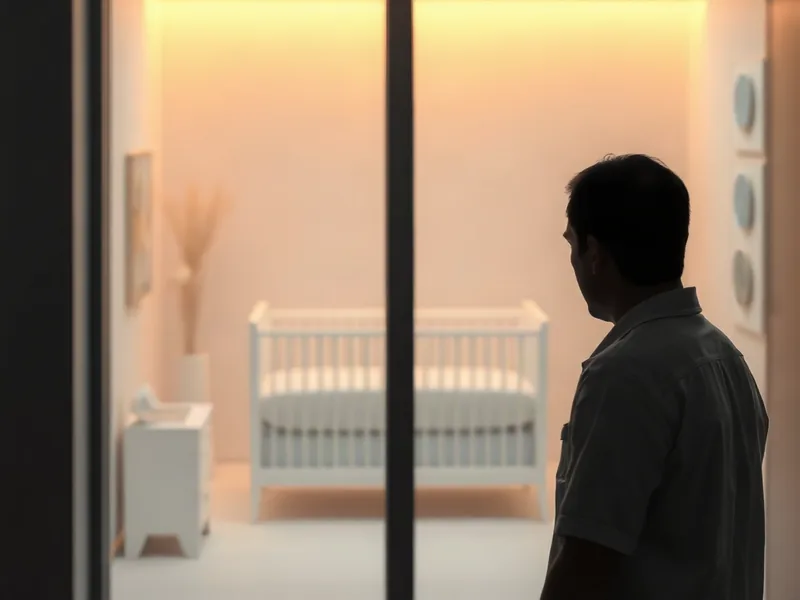
Picture a nursery. Soft light, a crib, and inside it something that looks, moves, and even cries like a newborn. Except it isn't one. It's a robot, engineered down to the flutter of its eyelids to trigger the same protective instincts a real baby would. For some people, that's a marvel of design. For others, it's deeply unsettling.
That tension sits at the heart of a growing field of robotics research into infant-like machines. These robots aren't science fiction props. They're serious engineering projects, built by researchers who study how humans respond to faces, voices, and movements that mimic the earliest stage of human life. The goal, broadly, is to understand attachment itself: why we bond with some things and recoil from others, and whether a machine can be built to intentionally trigger that bond.
The appeal is easy to understand. Robotic infants have real potential uses in therapy, in training new parents, in comforting people who have lost a child, or in supporting elderly patients with dementia who find emotional comfort in caregiving behaviors. A lifelike robot baby could, in theory, offer companionship without the exhaustion, cost, or risk that comes with caring for an actual infant.
But the same qualities that make these robots useful also make them unsettling. Researchers have long studied a phenomenon called the "uncanny valley," the discomfort people feel when something looks almost human but not quite. A robot baby sits right in that valley. It's close enough to real to trigger instinctive caregiving responses, but artificial enough to feel wrong once you notice the seams.
Human beings are wired to respond to infant cues. Big eyes, round cheeks, a particular pitch of crying, these are not incidental design features of babies. They're evolutionary triggers that compel adults to protect and nurture. Robotics engineers studying robot babies are, in effect, reverse-engineering that biological response and asking how much of it can be replicated artificially.
This is where the ethical questions start to pile up. If a robot can convincingly trigger a parent's instinct to nurture, what happens when that instinct is directed at a machine instead of a child? Does it provide genuine emotional relief, the way a therapy animal might? Or does it risk becoming a kind of emotional placeholder, something that feels like connection but ultimately leaves a person more isolated?
There's precedent here worth considering. Robotic compancompanion animals, like the well-known Paro seal used in elder care facilities, have shown measurable benefits for patients with dementia, reducing anxiety and encouraging social interaction. That track record suggests robot babies could plausibly offer similar therapeutic value. But a seal is not a human infant. The emotional stakes, and the potential for confusion or distress, are different when the object of attachment resembles a child rather than an animal.
Technology acceptance research consistently shows that how people feel about a device often matters as much as what the device can actually do. A robot baby that feels too real may provoke rejection precisely because it blurs a boundary people aren't ready to have blurred. One that feels too fake may fail to produce any therapeutic benefit at all. Engineers working in this space are threading a narrow needle, calibrating realism carefully enough to be useful without tipping into discomfort.
There's also a harder question lurking underneath the engineering challenge: who decides what counts as an appropriate use for this technology? A robot baby used in a grief therapy setting, under professional supervision, is a very different proposition than one marketed as a consumer product to simulate parenthood on demand. The underlying hardware might be nearly identical. The social and psychological consequences could diverge enormously depending on context, oversight, and intent.
This is not a new tension in robotics. Social robots designed to provide companionship, from conversational AI assistants to robotic pets, have repeatedly raised the same concern: that emotional attachment to a machine might substitute for, rather than supplement, human connection. Critics worry that leaning on robotic companionship, especially in care settings for the elderly or isolated, could reduce the pressure on society to provide genuine human contact and adequate caregiving staff. Proponents counter that these tools can fill real gaps, particularly where human caregivers are in short supply, without claiming to replace them entirely.
Robot babies sharpen that debate because infancy carries such outsized emotional and cultural weight. A robotic companion animal doesn't carry the same symbolic freight as a simulated child. Decisions about how, where, and whether to deploy infant-like robots will need to grapple with that weight directly, rather than treating it as a side effect of clever engineering.
None of this means the technology should be abandoned. Understanding human attachment, and building tools that can genuinely ease suffering for grieving parents or dementia patients, is a worthwhile pursuit. But worthwhile pursuits still deserve scrutiny, especially when they touch something as fundamental as our instinct to care for the vulnerable.
The deeper lesson from robot babies isn't really about robotics at all. It's about recognizing how easily human empathy can be engineered, and asking hard questions about who benefits when it is. As these technologies move from research labs toward therapeutic and commercial use, the conversation needs to keep pace. That means involving psychologists, ethicists, and caregivers, not just engineers, in deciding where the line between helpful and exploitative actually falls. The machines are getting better at looking like babies. Our thinking about what that means still has some catching up to do.
Tags
Original Sources
Robot Babies: Cute or Creepy?
↗ https://spectrum.ieee.org/robot-babies-cute-or-creepy/particle-1
About the author
Amara's entry point into AI was an epidemiology role at a London research hospital, where she spent five years studying how digital health tools reached — or conspicuously failed to reach — underserved communities. Watching early algorithmic systems in healthcare quietly entrench existing inequalities, she redirected her career toward the systemic consequences of AI at scale. She covers AI through an unflinching lens: who benefits, who bears the cost, and what evidence actually says versus what the press release claims. Her writing is calm and precise, but she doesn't mistake balance for neutrality.
More from The Steward →This Week's Edition
20 November 2026
29 articles
Related Articles
Related Articles
More Stories
© 2026 Cedar & Bloom. All rights reserved.