The Drum · Weekly AI news, freeSubscribe →

Share
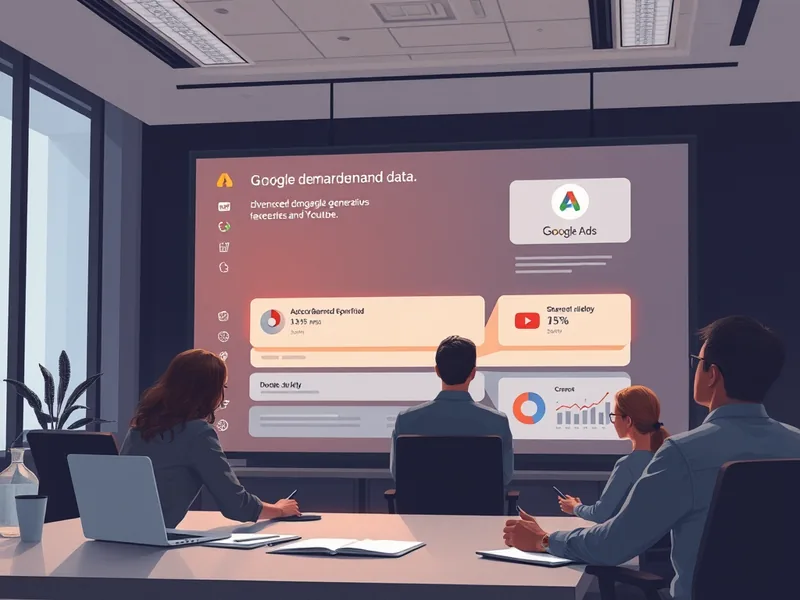
Google's new suite of demand generation features for 2025 aims to give businesses a competitive edge in the crowded digital advertising space, focusing on enhanced performance across YouTube and Google’s visual platforms.
Google Ads is set to enhance its demand generation capabilities with a suite of new features designed to help businesses create and convert demand more effectively across YouTube and Google’s visual platforms. These updates, announced by Nicky Rettke, Vice President of Product Management at YouTube Ads, are aimed at improving performance and driving better results for advertisers.
The digital advertising landscape is increasingly competitive, and businesses need robust tools to stand out. According to a recent report, the global digital advertising market is expected to reach $720 billion by 2025. Google's new demand generation features are positioned to capitalize on this growth by providing advertisers with more sophisticated tools for audience engagement and conversion.
Enhanced Visual Surfaces: Google is expanding its visual surfaces, including YouTube and Google Images, to provide more opportunities for businesses to engage potential customers. This expansion leverages the growing trend of visual search and content consumption.
AI-Driven Performance Optimization: The new features include AI-driven performance optimization tools that automatically adjust ad placements and creative elements to maximize engagement and conversions. These tools use machine learning algorithms to analyze user behavior and optimize campaigns in real-time.
Integrated Analytics Dashboard: Advertisers will have access to a more comprehensive analytics dashboard, which provides detailed insights into campaign performance. This includes metrics such as click-through rates, conversion rates, and audience demographics, allowing businesses to make data-driven decisions.
Customizable Creative Templates: Google is introducing customizable creative templates that allow advertisers to create visually appealing ads quickly and efficiently. These templates are designed to be user-friendly and can be tailored to specific campaign goals and target audiences.
Market Competition: While Google's new features are promising, the digital advertising market is highly competitive. Other major players like Facebook and Amazon continue to innovate and offer advanced advertising tools. Advertisers will need to evaluate which platform best meets their needs and budget constraints.
Data Privacy Concerns: As with any AI-driven tool, there are concerns about data privacy and user consent. Google must ensure that its new features comply with global data protection regulations, such as the General Data Protection Regulation (GDPR) in Europe, to avoid potential legal issues.
Ad Fatigue: The increasing number of ads on visual platforms can lead to ad fatigue among users. Advertisers will need to be creative and strategic to ensure their messages stand out without causing user frustration.
Increased Engagement: The enhanced visual surfaces and AI-driven optimization tools offer significant potential for increased engagement. By leveraging these features, businesses can create more compelling and relevant ads that resonate with their target audience.
Cost Efficiency: The customizable creative templates and integrated analytics dashboard can help advertisers achieve better cost efficiency. These tools reduce the time and resources needed to create and manage effective campaigns, allowing businesses to focus on other aspects of their marketing strategy.
Data-Driven Decisions: The detailed insights provided by the new analytics dashboard enable advertisers to make more informed decisions. By understanding which elements of their campaigns are performing well, businesses can optimize their strategies for maximum impact.
Google's latest demand generation features represent a significant step forward in the digital advertising landscape. While there are risks and challenges to consider, the potential benefits of increased engagement, cost efficiency, and data-driven decision-making make these updates a valuable addition for businesses looking to enhance their online presence and drive performance.
Tags
Original Sources
About the author
Marcus began tracking AI's market implications in 2016, noticing AI-related patent filings accelerating ahead of earnings upgrades before most of the sell-side had caught on. A former fixed-income quantitative analyst, he spent two decades building models that priced risk across emerging markets before pivoting to cover the economic impact of AI full-time. His writing translates opaque technical developments into clear risk/reward terms — and he's rarely diplomatic about the gap between AI valuations and underlying fundamentals. He believes most market participants still underestimate AI's long-run deflationary effect on knowledge work.
More from The Analyst →This Week's Edition
13 February 2025
29 articles
Related Articles

Rosarium Health Partners With Anthem Medi-Cal to Fund Home Modifications for Older Californians
Products & Applications · 5 min

Meta's new open-weight model runs on Macs, if you have 1TB of RAM to spare
Products & Applications · 5 min

Persona AI Bets on Calm Execution in a Noisy Humanoid Robotics Market
Products & Applications · 5 min
Related Articles
Rosarium Health Partners With Anthem Medi-Cal to Fund Home Modifications for Older Californians
Products & Applications · 5 min
Meta's new open-weight model runs on Macs, if you have 1TB of RAM to spare
Products & Applications · 5 min
Persona AI Bets on Calm Execution in a Noisy Humanoid Robotics Market
Products & Applications · 5 min
More Stories
© 2026 Cedar & Bloom. All rights reserved.
