The Drum · Weekly AI news, freeSubscribe →

Share
Google's new Gemini Robotics models are set to revolutionize the robotics industry by enabling humanoids to navigate complex environments with unprecedented precision and autonomy, marking a significant leap forward in AI integration.
Google DeepMind has announced two new AI models, Gemini Robotics and Gemini Robotics-ER, designed to enhance the capabilities of robots in understanding and interacting with the physical world. These models aim to address a critical gap in robotics: creating an autonomous system that can navigate novel scenarios safely and precisely. This development could be a game-changer for applications like humanoid robot assistants.
The core innovation lies in how these models integrate multiple sensory inputs and generate precise motor actions. Here’s a breakdown:
Vision-Language-Action (VLA) Capabilities: Gemini Robotics can process visual data, understand language commands, and execute physical movements. This trifecta allows the model to handle tasks that require both cognitive understanding and fine motor skills.
Enhanced Embodied Reasoning (ER): Gemini Robotics-ER focuses on spatial understanding, making it ideal for tasks that require precise manipulation of objects in a three-dimensional space.
Creating robots that can autonomously perform complex tasks has been a long-standing challenge in robotics. Previous systems often struggled with adaptability and precision, especially in new or unstructured environments. Gemini Robotics and Gemini Robotics-ER aim to bridge this gap by:
Improving Adaptability: By leveraging advanced VLA capabilities, these models can better understand and respond to dynamic environments.
Enhancing Safety and Precision: The enhanced spatial reasoning in Gemini Robotics-ER ensures that robots can perform delicate tasks without causing damage or harm.
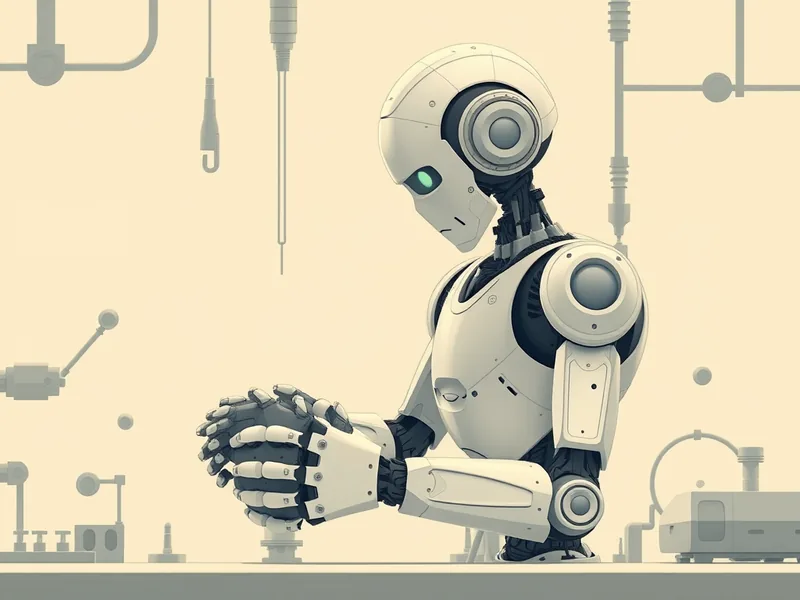
Both models build upon Google’s Gemini 2.0 large language model (LLM) foundation but with significant enhancements:
Gemini Robotics:
Gemini Robotics-ER:
The development of these models is part of a broader trend in embodied AI, which aims to create systems that can interact with the physical world as effectively as humans. Other notable efforts include:
Gemini Robotics and Gemini Robotics-ER represent significant advancements in AI-powered robotics. By combining advanced VLA capabilities and enhanced spatial reasoning, these models could pave the way for more capable and versatile humanoid robot assistants. As the industry continues to push the boundaries of embodied AI, we can expect to see more sophisticated and practical applications of robotic technology in our daily lives.
Tags
Original Sources
About the author
Kai built ML infrastructure at a Bay Area startup before developing an obsession with transformer architectures and inference optimisation that eventually pulled him out of product work entirely. A stint at a compute research lab sharpened his instinct for what actually matters in a model release versus what is marketing. He writes from the inside — from the perspective of someone who has debugged the systems he is describing at three in the morning. He is allergic to hype and instinctively drawn to the unglamorous plumbing questions that everyone else skips over.
More from The Engineer →This Week's Edition
19 March 2025
29 articles
Related Articles

Rosarium Health Partners With Anthem Medi-Cal to Fund Home Modifications for Older Californians
Products & Applications · 5 min

Meta's new open-weight model runs on Macs, if you have 1TB of RAM to spare
Products & Applications · 5 min

Persona AI Bets on Calm Execution in a Noisy Humanoid Robotics Market
Products & Applications · 5 min
Related Articles
Rosarium Health Partners With Anthem Medi-Cal to Fund Home Modifications for Older Californians
Products & Applications · 5 min
Meta's new open-weight model runs on Macs, if you have 1TB of RAM to spare
Products & Applications · 5 min
Persona AI Bets on Calm Execution in a Noisy Humanoid Robotics Market
Products & Applications · 5 min
More Stories
© 2026 Cedar & Bloom. All rights reserved.
