The Drum · Weekly AI news, freeSubscribe →

Share
Meet Rear Admiral Grace Hopper, a computing pioneer whose work laid the foundation for modern programming languages and inspired generations of women in tech.
In a world where technology often feels like an ever-evolving mystery, it's important to remember that every major advancement has its roots in the efforts of dedicated individuals. One such individual is Rear Admiral Grace Hopper, a trailblazer who transformed the landscape of computing from punch cards to Python and beyond. Her contributions not only revolutionized how we interact with computers but also opened doors for women in the tech industry.
Born in 1906, Grace Hopper was a woman ahead of her time. She earned her Ph.D. In mathematics from Yale University in 1934, at a time when few women pursued advanced degrees in STEM fields. Her academic achievements were just the beginning of a remarkable career that would span over four decades and leave an indelible mark on the world of computing.
Hopper's journey into technology began during World War II when she joined the U.S. Navy Reserve. She was assigned to work on the Mark I computer, one of the earliest electromechanical computers, at Harvard University. This early exposure to computing set the stage for her groundbreaking contributions. Hopper quickly realized that programming these machines required a more accessible and human-friendly approach.
One of Hopper's most significant achievements was the development of the first compiler, which translated high-level programming languages into machine code. Before compilers, programmers had to write in complex, low-level languages that were difficult to understand and prone to errors. Hopper's compiler, known as A-0, allowed programmers to use more intuitive commands, making the process faster and less error-prone.
This innovation paved the way for the creation of COBOL (Common Business Oriented Language), one of the first high-level programming languages designed for business applications. COBOL was so successful that it became a standard in government and industry, and many systems still use it today. Hopper's work on COBOL not only made computing more accessible but also demonstrated the potential for women to lead in technological innovation.
Hopper's influence extended beyond her technical contributions. She was a mentor and advocate for women in tech, often speaking about the importance of diversity and inclusion in the field. Her famous quote, "It’s easier to ask forgiveness than it is to get permission," encapsulates her pioneering spirit and encourages others to take risks and push boundaries.
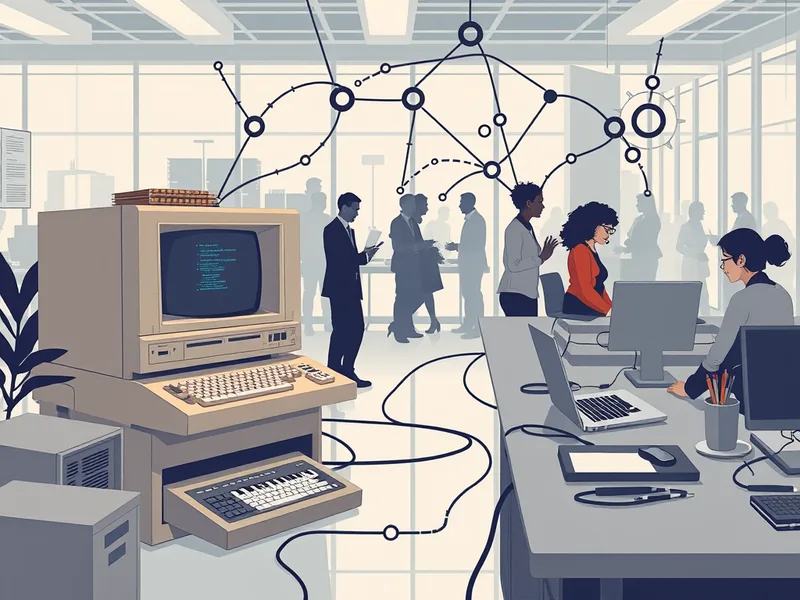
Hopper's legacy continues to inspire new generations of technologists. Her work on compilers and high-level languages laid the foundation for modern programming practices, making it possible for millions of people around the world to write code in Python, Java, and other user-friendly languages. These tools have democratized access to technology, enabling individuals from diverse backgrounds to contribute to the digital revolution.
Hopper's advocacy for women in tech has had a lasting impact. She was a role model who showed that women could excel in traditionally male-dominated fields. Today, organizations like Girls Who Code and Women in Tech continue her mission by providing resources and support to young women interested in STEM careers.
Hopper's influence also extends to the broader tech community. The Grace Hopper Celebration of Women in Computing, named in her honor, is the world's largest gathering of women technologists. This annual event provides a platform for networking, learning, and collaboration, furthering Hopper's vision of a more inclusive tech industry.
Grace Hopper's contributions to computing are not just historical footnotes; they have shaped the modern world in profound ways. Her innovations in programming languages have made technology more accessible and user-friendly, opening doors for people from all walks of life. By breaking down barriers and championing diversity, Hopper set a precedent that continues to guide the tech industry today.
As we look to the future, it's crucial to build on Hopper's legacy by fostering an environment where everyone has the opportunity to contribute to technological advancements. Her story serves as a powerful reminder that progress is driven not only by technical ingenuity but also by the inclusion and empowerment of all voices.
Tags
Original Sources
About Grace Hopper
↗ https://spectrum.ieee.org/from-punch-cards-to-python/about-grace-hopper
About the author
Amara's entry point into AI was an epidemiology role at a London research hospital, where she spent five years studying how digital health tools reached — or conspicuously failed to reach — underserved communities. Watching early algorithmic systems in healthcare quietly entrench existing inequalities, she redirected her career toward the systemic consequences of AI at scale. She covers AI through an unflinching lens: who benefits, who bears the cost, and what evidence actually says versus what the press release claims. Her writing is calm and precise, but she doesn't mistake balance for neutrality.
More from The Steward →This Week's Edition
24 August 2026
25 articles
Related Articles
Related Articles
More Stories
© 2026 Cedar & Bloom. All rights reserved.