The Drum · Weekly AI news, freeSubscribe →
Share
Humane’s Ai Pin promises a future where AI blends seamlessly into daily life, but early adopters are encountering glitches that challenge the vision of a truly ambient tech experience.
The Humane Ai Pin is a bold step toward reimagining mobile computing. This wearable device aims to integrate artificial intelligence (AI) into our daily lives in a more seamless and less intrusive way than traditional smartphones. However, as with any first-generation product, it comes with its share of compromises and teething issues.
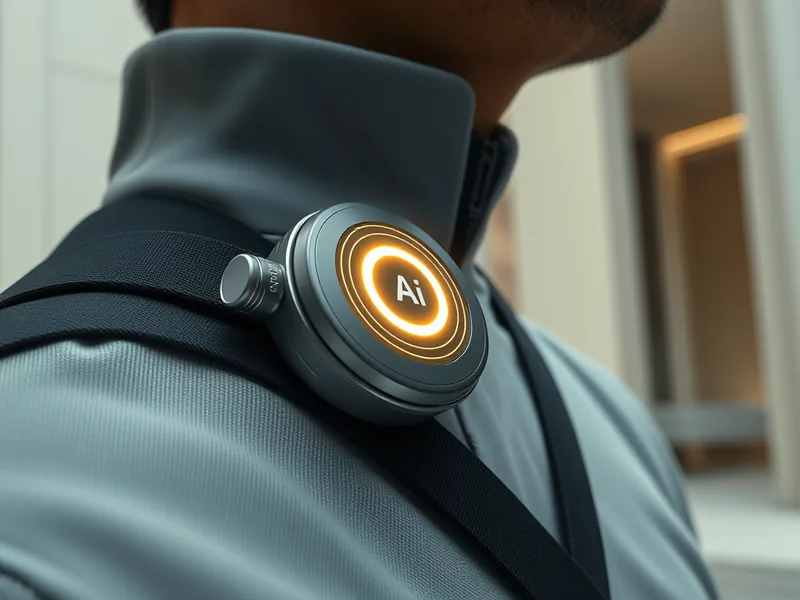
The Ai Pin is designed to be worn on clothing, thanks to its magnetic Battery Booster attachment system. It features a multi-modal AI voice assistant that can handle tasks like answering questions, taking notes, and managing your digital life. The device also includes a Laser Ink Display, which projects information onto the palm of your hand or other surfaces.
My first few days with the Ai Pin were fraught with technical issues:
These problems are significant for a device that aims to demonstrate how AI can make mobile computing more personal and ambient. However, after troubleshooting with Humane’s support team and performing a factory reset, the issues were largely resolved.
One evening, while walking in a thunderstorm, a strong gust of wind blew the Ai Pin off my shirt. It landed on the street, separated from its Battery Booster and pelted by rain. This incident inadvertently put the device’s durability and water resistance to the test. Surprisingly, the Ai Pin functioned perfectly after I retrieved it, with only a minor dent in its polished aluminum frame.
The following week was much smoother. The multi-modal AI assistant became more reliable, and the Laser Ink Display provided a novel way to view information. Here are some key points:
Despite the initial hiccups, the Ai Pin offers a glimpse into what ambient computing could look like in the future. Here are some potential benefits:
The Humane Ai Pin is an ambitious device that shows promise in redefining mobile computing. While it currently faces some technical and usability challenges, these are par for the course with first-generation products. As the technology matures, the Ai Pin could indeed become a viable alternative to traditional smartphones, ushering in a new era of ambient intelligence.
Tags
Original Sources
About the author
Kai built ML infrastructure at a Bay Area startup before developing an obsession with transformer architectures and inference optimisation that eventually pulled him out of product work entirely. A stint at a compute research lab sharpened his instinct for what actually matters in a model release versus what is marketing. He writes from the inside — from the perspective of someone who has debugged the systems he is describing at three in the morning. He is allergic to hype and instinctively drawn to the unglamorous plumbing questions that everyone else skips over.
More from The Engineer →This Week's Edition
16 April 2024
29 articles
Related Articles

Rosarium Health Partners With Anthem Medi-Cal to Fund Home Modifications for Older Californians
Products & Applications · 5 min

Meta's new open-weight model runs on Macs, if you have 1TB of RAM to spare
Products & Applications · 5 min

Persona AI Bets on Calm Execution in a Noisy Humanoid Robotics Market
Products & Applications · 5 min
Related Articles
Rosarium Health Partners With Anthem Medi-Cal to Fund Home Modifications for Older Californians
Products & Applications · 5 min
Meta's new open-weight model runs on Macs, if you have 1TB of RAM to spare
Products & Applications · 5 min
Persona AI Bets on Calm Execution in a Noisy Humanoid Robotics Market
Products & Applications · 5 min
More Stories
© 2026 Cedar & Bloom. All rights reserved.
