The Drum · Weekly AI news, freeSubscribe →

Share
Judge Bibas’s reversal in the Thomson Reuters vs. ROSS case rejects the fair use defense, setting a precedent that could restrict how AI companies can legally train their systems using copyrighted materials.
On February 13, 2025, a significant legal development occurred in the ongoing battle over AI and copyright law. Third Circuit Judge Stephanos Bibas, sitting by designation in the District of Delaware, reversed his earlier ruling and granted summary judgment to Thomson Reuters in its lawsuit against ROSS Intelligence. The case, Thomson Reuters v. ROSS, 1:20-cv-00613-SB, is notable for being the first district court decision to address fair use and copyright infringement related to training AI models.
This ruling has far-reaching implications for the AI industry, particularly in how companies can use copyrighted material to train their algorithms. The decision hinges on the specific context of ROSS Intelligence's actions but serves as a cautionary tale for other developers. Judge Bibas's reversal underscores the complexity and evolving nature of copyright law in the digital age.
In 2020, Thomson Reuters (Reuters) filed a lawsuit against ROSS Intelligence (ROSS), alleging that ROSS had knowingly, intentionally, and willfully infringed on its copyrights by using critical features of Westlaw to develop a competing legal research tool without permission or compensation. The case proceeded through the judicial process, with initial summary judgment motions being denied in 2023.
Just before trial was set to begin in August 2024, Judge Bibas made an unexpected move. He invited both parties to renew their summary judgment motions, a decision that surprised legal observers. Reuters and ROSS complied, leading to the recent ruling.
On February 11, 2025, Judge Bibas issued his decision on the renewed motions for summary judgment. In a significant reversal from his earlier stance, he ruled in favor of Thomson Reuters on both copyright infringement and fair use.
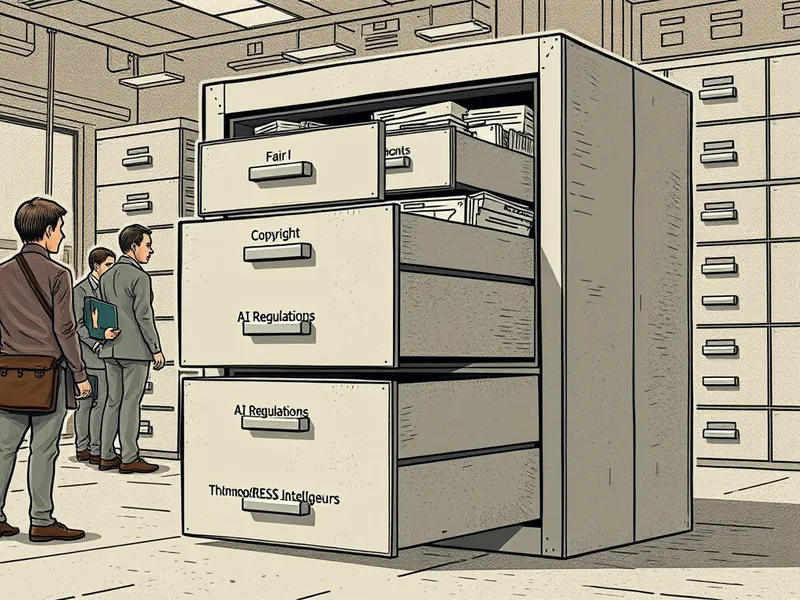
Judge Bibas refined his earlier analysis to conclude that Westlaw's headnotes and Key Number System meet the minimal threshold for copyrightability due to the creativity required to distill, synthesize, or explain legal concepts. This finding is crucial as it establishes a precedent for protecting editorial content in digital databases.
The court rejected ROSS’s fair use defense based on several key factors:
The ruling poses several risks for AI developers and companies using copyrighted material:
Despite the risks, this case also presents opportunities:
The reversal by Judge Bibas in Thomson Reuters v. ROSS marks a significant moment in the legal debate over AI and copyright. While it does not close the door on fair use defenses for all AI applications, it highlights the need for careful consideration of intellectual property rights. As the landscape continues to evolve, stakeholders must stay informed and adapt their
Tags
Original Sources
About the author
Marcus began tracking AI's market implications in 2016, noticing AI-related patent filings accelerating ahead of earnings upgrades before most of the sell-side had caught on. A former fixed-income quantitative analyst, he spent two decades building models that priced risk across emerging markets before pivoting to cover the economic impact of AI full-time. His writing translates opaque technical developments into clear risk/reward terms — and he's rarely diplomatic about the gap between AI valuations and underlying fundamentals. He believes most market participants still underestimate AI's long-run deflationary effect on knowledge work.
More from The Analyst →This Week's Edition
18 February 2025
29 articles
Related Articles

States Race to Write the Rules for AI Sandboxes in Health Care, and Lobbyists Are Racing Right Alongside Them
Policy & Regulation · 5 min

DOJ Moves to Reward Health Care Companies That Report Their Own Fraud
Policy & Regulation · 5 min

As US Intelligence Sharing Wavers, Ukrainians Lose Precious Minutes Against Russian Missiles
Policy & Regulation · 6 min
Related Articles
States Race to Write the Rules for AI Sandboxes in Health Care, and Lobbyists Are Racing Right Alongside Them
Policy & Regulation · 5 min
DOJ Moves to Reward Health Care Companies That Report Their Own Fraud
Policy & Regulation · 5 min
As US Intelligence Sharing Wavers, Ukrainians Lose Precious Minutes Against Russian Missiles
Policy & Regulation · 6 min
More Stories
© 2026 Cedar & Bloom. All rights reserved.
