The Drum · Weekly AI news, freeSubscribe →
Share
New testing shows ChatGPT, Grok, and Gemini will remove hijabs from photos of women when asked, reviving concerns about religious targeting, image-based abuse, and how little progress AI companies have made on basic safeguards.
Imagine uploading a photo of yourself and having a stranger ask a chatbot to strip away a piece of clothing you wear for religious conviction, then watching it happen in seconds. That is not a hypothetical. It is what's still happening, right now, on some of the most widely used AI tools in the world.
Last month, a French far-right politician used AI to remove the hijab from a photo of a real Muslim woman, a move that sparked outrage and renewed scrutiny of how generative AI handles religious dress. In response, The Guardian decided to test the three major chatbot platforms, ChatGPT, Grok, and Gemini, to see whether their image editors would comply with similar requests. All three did.
This is not a new problem. Reporting from Wired earlier this year found that Grok was being used to mock and digitally strip women wearing hijabs and saris, often without their consent. Separately, a researcher at UC Berkeley Law flagged a troubling pattern in AI-powered headshot apps, which would frequently remove hijabs from uploaded photos without being asked to, treating the garment as some kind of editing error rather than a deliberate choice. Months of warnings, in other words, have not translated into fixes.
To understand why this keeps happening, it helps to think about how these image-editing tools actually work. Most AI chatbots are trained to recognize and respond to a huge range of editing requests: change the background, adjust the lighting, swap out clothing. The challenge is that a hijab, in the eyes of a system trained mostly on generic photo-editing patterns, can register as just another removable object, no different from a hat or a scarf worn for warmth. The model is not weighing religious meaning or consent. It is pattern-matching against examples where "remove the headwear" was a perfectly normal, harmless request.
That is the analogy worth holding onto: a chatbot without proper guardrails is a bit like a tailor who will alter any garment handed to them without asking why, or whether the person wearing it actually agreed to the change. For a baseball cap, that indifference is harmless. For a hijab, worn as an expression of faith and personal identity, removing it without consent is a violation, and the fact that an AI can do it instantly, at scale, and often for free, makes the harm much easier to inflict.
This fits into a much larger and darker pattern of AI misuse. Reporting has already documented how Grok has been exploited to generate undressed images of children, a function that runs headlong into child sexual abuse material laws. Separate investigations have shown how "nudify" tools hosted on platforms like Hugging Face have been used to digitally undress women and children without their knowledge. The hijab-removal issue sits on the same spectrum: a tool built for ordinary editing tasks being repurposed to strip away a person's autonomy over their own image.
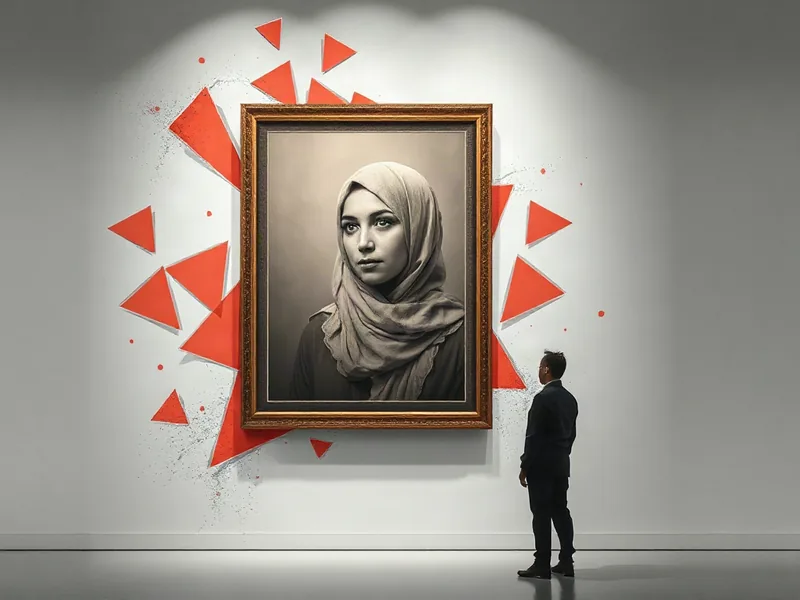
What makes this particular failure so frustrating is its persistence. This is not a brand-new jailbreak that caught developers off guard. Researchers and journalists have been raising the alarm for many months, with specific documented cases going back well over a year. Berkeley Law researchers raised it. Wired raised it. Now The Guardian has raised it again, testing three separate companies' flagship products and finding the same failure mode in all of them. That repetition tells its own story: these are not isolated bugs in one system, but a shared blind spot across the industry.
For Muslim women, the stakes are not abstract. A hijab is often a visible marker of identity, faith, and sometimes safety, a choice tied to community, culture, and personal belief. When that choice gets digitally erased by a stranger with a prompt, it is not a harmless photo edit. It can feel like a targeted act of religious disrespect, and in the case of the French politician's incident, it was explicitly political, used as a tool to mock and diminish a real person's identity in public view.
There is also a quieter, longer-term risk here: normalization. Every time a chatbot complies with a request like this without resistance, it reinforces the idea that a woman's religious clothing is fair game for digital alteration, just another editable layer in a photo rather than a meaningful choice deserving respect. That kind of casual erosion of boundaries tends to compound. What starts as an edgy prompt on a chatbot can bleed into harassment campaigns, deepfake abuse, or targeted humiliation of real people in their communities.
None of this requires exotic new technology to fix. Companies like OpenAI, xAI, and Google already build content filters that block countless other categories of harmful image requests, from weapons imagery to graphic violence. The fact that hijab removal has slipped through those filters for well over a year, across multiple companies and multiple reporting cycles, suggests it has simply not been treated as a priority.
That is the real headline here, not that AI can be misused in clever new ways, but that a well-documented, repeatedly flagged harm has gone largely unaddressed by companies with the resources to fix it. For the women affected, the message that sends is clear: their consent, their faith, and their safety are not weighted as heavily as other categories of harm these same companies have managed to block. Until that changes, this will keep happening, one prompt at a time.
Tags
Original Sources
AI chatbots are still removing women’s hijabs.
↗ https://www.theverge.com/ai-artificial-intelligence/1003258/ai-chatbots-are-still-removing-womens-hijabs
About the author
Amara's entry point into AI was an epidemiology role at a London research hospital, where she spent five years studying how digital health tools reached — or conspicuously failed to reach — underserved communities. Watching early algorithmic systems in healthcare quietly entrench existing inequalities, she redirected her career toward the systemic consequences of AI at scale. She covers AI through an unflinching lens: who benefits, who bears the cost, and what evidence actually says versus what the press release claims. Her writing is calm and precise, but she doesn't mistake balance for neutrality.
More from The Steward →This Week's Edition
2 October 2026
28 articles
Related Articles

New AI Tool Reconstructs What People See From Brain Scans, Raising Mental Privacy Questions
Security & Risk · 6 min

Payerset Bets on AI Research Assistant to Make Price Transparency Data Usable
Products & Applications · 6 min

China's Biotech Sector Stakes Its Claim on the Global Stage
Finance & Markets · 5 min
Related Articles
New AI Tool Reconstructs What People See From Brain Scans, Raising Mental Privacy Questions
Security & Risk · 6 min
Payerset Bets on AI Research Assistant to Make Price Transparency Data Usable
Products & Applications · 6 min
China's Biotech Sector Stakes Its Claim on the Global Stage
Finance & Markets · 5 min
More Stories
© 2026 Cedar & Bloom. All rights reserved.
