The Drum · Weekly AI news, freeSubscribe →

Share
Shortical's deal with actor Aki Avni to license his likeness for an AI-generated microdrama signals a new monetization model for the booming vertical video industry, one that cuts production costs but raises hard questions about compensation and displaced labor.
Shortical, a microdrama startup founded in January, has built its business on cheap, addictive, two-minute episodes of soapy romance. The model is straightforward: offer the first 7 to 10 episodes free, then charge a monthly fee for the rest. Titles like "Crossing the Line with My Neighbor" and "Accidentally Married My Boss" have driven subscriber growth in a format already proven in China, where the microdrama industry originated.
The company's homepage now tells a different story. AI-generated content has taken over, and the reasoning is financial rather than creative. Production costs for AI series run well below live-action, while the profit ceiling is considerably higher if a show finds an audience. That calculus underpins Shortical's latest release, "Inevitable," which premiered in Los Angeles last week and features Israeli actor Aki Avni, known for a stint on Fox's "24," playing a digital avatar of himself in a meta plot about an actor licensing his face to a studio.
This marks Shortical's first face-licensing arrangement with a real person, and the company says it will not be the last. A company representative confirmed the broader offering, pitched on Shortical's site under the banner "License Your Face," remains in its early stages and has not yet produced any signed contracts beyond the direct deal with Avni.
Compensation details remain vague, and that opacity is itself a data point worth tracking. Shortical declined to disclose Avni's specific payment, saying only that it was "in line with industry standards for a comparable non-AI acting role" and that he came on "as a partner in the project." CEO Guy Shimoni was similarly noncommittal when asked about royalty structures resembling television residuals, calling it "a case by case" situation.
The precedent from China is less encouraging for talent. A Rest of World report found microdrama firms there paying between $15 and $700 to license facial likenesses, a range that suggests most creators are capturing little of the value their faces generate. Two thirds of all microdrama releases in China are now AI-generated, according to a Hollywood Reporter account, which gives some sense of how fast this labor substitution can move once a market tips.
Shortical's partnership with Payouts.com, a platform describing itself as "payout infrastructure powering creator and gig economy disbursements at scale," points toward where this is headed. Rather than a studio employment relationship, the structure resembles gig work: creators submit their likeness, receive a contract if selected, and get paid based on engagement their AI avatar generates. That's a fundamentally different risk profile than a SAG-AFTR A residual check, and one investors in this space should scrutinize closely.
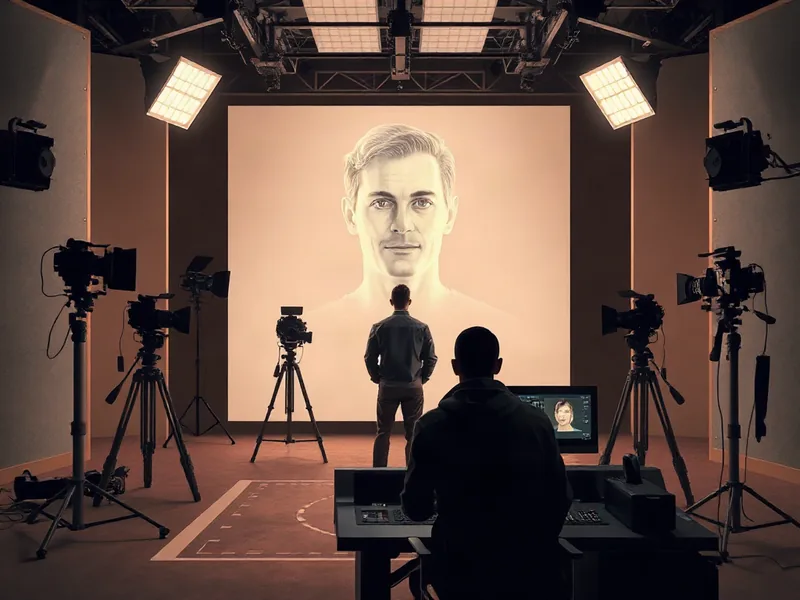
The production capability unlocked by AI is real. Shimoni points to content that would have been unthinkable under the old mobile-first live-action budget: "We have kingdoms and dragons. We have superheroes. We have werewolves." Smaller teams can now produce movie-scale visuals without the overhead of sets, crews, or location shoots. For a startup chasing margin in a crowded content category, that's a legitimate efficiency gain.
Whether audiences want werewolf romances generated by AI is a separate question, and the answer so far appears to be yes, at least in volume. Shimoni says most of Shortical's viewers are in the U.S., even though China remains the largest global microdrama market. The audience skews heavily female, and some viewers reportedly use the format to wind down before sleep, chasing small dopamine hits from cliffhanger plots. Several AI-generated shows on the platform have already racked up millions of views.
Not everyone in the industry is convinced the growth is organic. Jennifer Cooper, founder of the consultancy Vertical Drama Love, argues that AI adoption in microdramas is being driven as much by investor expectations as by viewer demand. "For anyone to get investment at the moment in microdramas, they've got to mention the word AI," she said. "It's like AI equals gold in everyone's eyes." Her skepticism extends to the content itself: "Some of it does get views. A lot of it doesn't. I think it's being pushed on an audience more than there is an audience demand or wish for it."
Cooper's broader concern is about the labor market microdramas once supported. The format had functioned as an entry point for young actors to gain set experience, she says, a lower-stakes rung on the entertainment career ladder. AI production threatens to remove that rung entirely. "A lot of us have either lost work to AI or can see that it's devastated this industry," Cooper said, "taking microdramas from something that was a rare thing in the world, that was in growth, and providing work, particularly for young people, and now it's been decimated."
Consent issues compound the labor concern. Some creators in China have accused AI drama producers of stealing their likenesses outright, according to reporting from the Straits Times. Shortical's face-licensing push can be read as an attempt to formalize consent before it becomes a liability, turning an unauthorized practice into a contractual one. Whether that protects creators or simply legitimizes a race to the bottom on pay depends entirely on the terms Shortical and its competitors are willing to put in writing.
Shortical's bet is that AI production economics will outweigh reputational risk, and early viewership numbers support that bet. But the compensation structure for face-licensing remains undefined, with no disclosed pay scale, no confirmed royalty model, and a China precedent that paid creators as little as $15 per likeness. For investors evaluating microdrama platforms, the real signal to watch isn't subscriber growth. It's whether face-licensing contracts evolve toward residual-style compensation or settle into gig-economy payouts tied to engagement, a distinction that will determine whether this becomes a sustainable talent pipeline or a race to extract likenesses as cheaply as possible.
Tags
Original Sources
Is selling an AI version of your face to this microdrama startup the future of Hollywood? | TechCrunch
↗ https://techcrunch.com/2026/11/21/is-selling-an-ai-version-of-your-face-to-this-microdrama-startup-the-future-of-hollywood
About the author
Marcus began tracking AI's market implications in 2016, noticing AI-related patent filings accelerating ahead of earnings upgrades before most of the sell-side had caught on. A former fixed-income quantitative analyst, he spent two decades building models that priced risk across emerging markets before pivoting to cover the economic impact of AI full-time. His writing translates opaque technical developments into clear risk/reward terms — and he's rarely diplomatic about the gap between AI valuations and underlying fundamentals. He believes most market participants still underestimate AI's long-run deflationary effect on knowledge work.
More from The Analyst →This Week's Edition
22 November 2026
10 articles
Related Articles
Related Articles
More Stories
© 2026 Cedar & Bloom. All rights reserved.