The Drum · Weekly AI news, freeSubscribe →

Share
MIT's Deblina Sarkar is leading a revolution with nanoscale electronic devices that can navigate the brain to deliver targeted treatments, offering hope for previously untreatable conditions.
When Deblina Sarkar checked her email one afternoon this past February, she found a message from a desperate father. His 10-year-old daughter had diffuse intrinsic pontine glioma (DIPG), an aggressive and often fatal form of brain cancer. Standard treatments had failed, and he was reaching out to Sarkar’s Nano-Cybernetic Biotrek research group at the MIT Media Lab, hoping her cutting-edge technology could offer a glimmer of hope.
Messages like this one are all too common for Sarkar, who receives similar pleas every other week. "It's the main motivation behind our work," she says. As the AT&T Career Development Associate Professor of Media Arts and Sciences and a member of the MIT Center for Neurobiological Engineering, Sarkar has dedicated her career to developing nanoscale electronic devices that can navigate the body’s fluid systems, identify diseased tissue, and deliver precise therapeutic interventions.
Sarkar's journey began in the world of nanoelectronics. A physicist and electrical engineer by training, she spent years pushing the boundaries of transistor miniaturization and power efficiency. However, it was the brain’s remarkable energy efficiency that truly captivated her. The human brain operates on roughly 20 watts-about the same as a dim lightbulb-yet modern computing systems consume about a million times more power to perform comparable tasks.
The lack of effective treatments for brain diseases like DIPG spurred Sarkar to explore how nanoscale electronics could be integrated into biological structures. The goal: create tools that can understand and heal the brain in ways medicine has never achieved before.
Over seven years, Sarkar's team developed a platform called circulatronics-nanoscale electronic devices capable of navigating the body’s fluid systems, identifying diseased tissue, and providing wireless therapeutic stimulation. These devices are designed to be non-invasive, eliminating the need for surgery or expensive procedures.
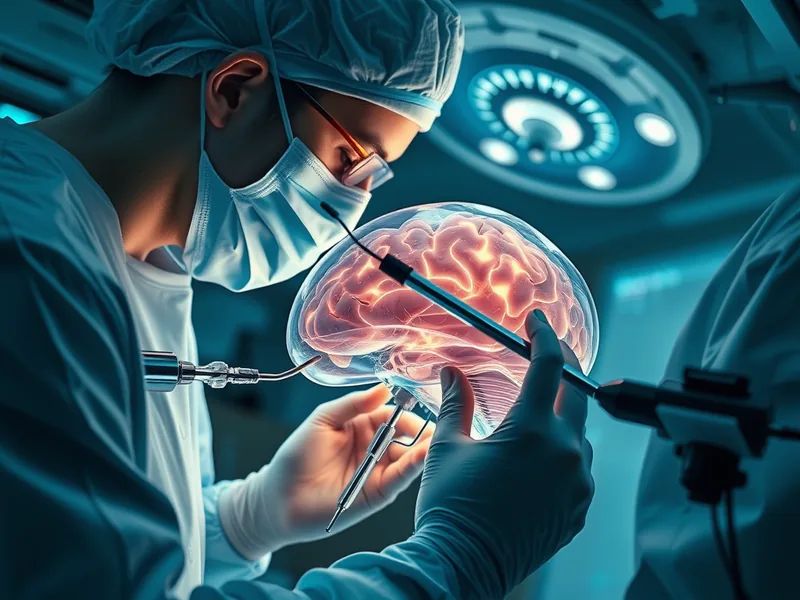
The potential applications of circulatronics are vast. For conditions like DIPG, where traditional treatments often fall short, these nanoscale devices offer a new ray of hope. By delivering targeted therapy directly to the site of disease, circulatronics can potentially improve treatment outcomes and reduce side effects.
Sarkar’s work has also caught the attention of other researchers and industry leaders. The Google Patents Inventor Search page, for instance, highlights the significance of nanoscale circuits that interface with the human body, providing a centralized index of relevant patents and research papers. This resource is invaluable for anyone interested in the intersection of nanotechnology and biomedicine.
As circulatronics continue to evolve, several key developments are on the horizon:
Deblina Sarkar’s work on circulatronics represents a groundbreaking leap in precision medicine. By combining cutting-edge nanotechnology with deep biological understanding, her team is paving the way for more effective and less invasive treatments for some of the most challenging brain diseases. As research progresses, the hope is that these tiny devices will make a big difference in the lives of patients and their families.
Tags
Original Sources
A home for responsible optimists
↗ https://www.technologyreview.com/2026/08/25/1140975/a-home-for-responsible-optimists/amp
About the author
Kai built ML infrastructure at a Bay Area startup before developing an obsession with transformer architectures and inference optimisation that eventually pulled him out of product work entirely. A stint at a compute research lab sharpened his instinct for what actually matters in a model release versus what is marketing. He writes from the inside — from the perspective of someone who has debugged the systems he is describing at three in the morning. He is allergic to hype and instinctively drawn to the unglamorous plumbing questions that everyone else skips over.
More from The Engineer →This Week's Edition
31 August 2026
17 articles
Related Articles

Microsoft and AWS Push Agentic AI as the Next Layer of Industrial Software
Products & Applications · 5 min

The AI Agents You Can Just Text: A Field Guide to the New Assistant Stack
Products & Applications · 5 min

Scientific Update Runs Another Round of Its AI-for-Process-Chemistry Course This November
Products & Applications · 5 min
Related Articles
Microsoft and AWS Push Agentic AI as the Next Layer of Industrial Software
Products & Applications · 5 min
The AI Agents You Can Just Text: A Field Guide to the New Assistant Stack
Products & Applications · 5 min
Scientific Update Runs Another Round of Its AI-for-Process-Chemistry Course This November
Products & Applications · 5 min
More Stories
© 2026 Cedar & Bloom. All rights reserved.
