The Drum · Weekly AI news, freeSubscribe →

Share
As AI models grow more powerful, the real challenge lies in creating systems that channel this intelligence into practical solutions, transforming industries and economies.
The narrative around artificial intelligence (AI) often paints a dystopian picture of an impending flood that will drown traditional business models and make it impossible to build sustainable competitive advantages. Aatish Nayak, a prominent tech investor, argues that this view is shortsighted. Instead, he believes the key to thriving in the AI era lies in building infrastructure-like dams and waterways-that can effectively channel and utilize this intelligence.
As AI labs continue to break revenue records and absorb more capabilities, there's a growing concern that the app layer is dead and that traditional moats are no longer effective. This sentiment is driven by the rapid advancement of models like GPT-5.5+ and Opus 4.5+, which, if seen in 2019, would have been hailed as artificial general intelligence (AGI) and expected to transform the economy overnight.
However, this transformation hasn't materialized. Why? Because the real world is far more complex than any AI model can handle on its own. Real work involves context, state, exceptions, and history that often don't fit into a single prompt. Human interaction remains crucial for many tasks. A country of geniuses in a data center couldn't run the country because the real world is intertwined with incentives, approvals, accountability, edge cases, legacy systems, and human coordination.
Moats are ineffective against a flood, but dams and waterways can direct and harness its power. Similarly, the premium will go to companies that can diffuse AI intelligence through every aspect of civilization, converting raw tokens into real-world outcomes. This involves building systems that:
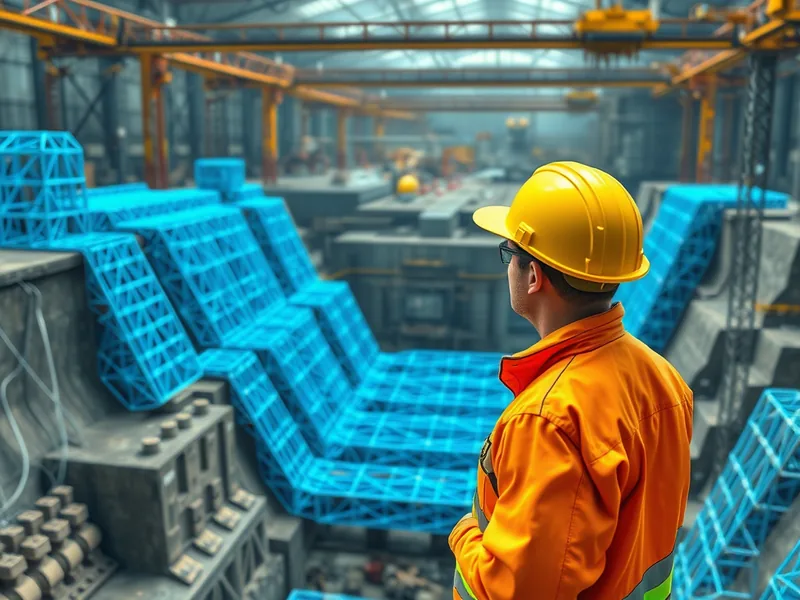
The gap between the capabilities of AI and their real-world adoption represents a significant opportunity. This window is narrow, but for those who can make the right bets and execute relentlessly, the rewards could be immense. As with previous technological revolutions-like electricity and the internet-the true economic impact will come when these technologies are fully integrated into society.
In practice, this means:
As the AI flood continues to rise, the companies that build the dams and waterways to channel this intelligence effectively will be the ones that shape the future of our economy.
Tags
Original Sources
Aatish Nayak (@nayakkayak) on X
↗ https://links.tldrnewsletter.com/9PwM3w
About the author
Kai built ML infrastructure at a Bay Area startup before developing an obsession with transformer architectures and inference optimisation that eventually pulled him out of product work entirely. A stint at a compute research lab sharpened his instinct for what actually matters in a model release versus what is marketing. He writes from the inside — from the perspective of someone who has debugged the systems he is describing at three in the morning. He is allergic to hype and instinctively drawn to the unglamorous plumbing questions that everyone else skips over.
More from The Engineer →This Week's Edition
31 August 2026
17 articles
Related Articles

Modular Data Centers Chase Solar Curtailment to Power GPUs
Tools & Engineering · 5 min

Microsoft and AWS Push Agentic AI as the Next Layer of Industrial Software
Products & Applications · 5 min

Stanford Launches Center for Decoding the Universe to Bring AI Methods to Astrophysics
Models & Research · 5 min
Related Articles
Modular Data Centers Chase Solar Curtailment to Power GPUs
Tools & Engineering · 5 min
Microsoft and AWS Push Agentic AI as the Next Layer of Industrial Software
Products & Applications · 5 min
Stanford Launches Center for Decoding the Universe to Bring AI Methods to Astrophysics
Models & Research · 5 min
More Stories
© 2026 Cedar & Bloom. All rights reserved.
