The Drum · Weekly AI news, freeSubscribe →

Share
A stroke patient in Invercargill and one in Auckland should get the same fast, accurate scan reading. New Zealand's radiology modernisation push aims to make that a reality, not an exception.
Imagine a grandmother in a rural South Island town arriving at her local emergency department with chest pain. The scan she needs might be read faster, and more accurately, if the radiologist reviewing it can pull up her full imaging history instantly, no matter where in the country she was last treated. That kind of connected care is the promise behind New Zealand's push to modernise its radiology system.
Te Whatu Ora Health New Zealand is nearing final approval for a radiology modernisation programme that could reshape how imaging data moves through the country's health system. Last month, the agency issued an advance notice to suppliers, signaling its intent to procure four distinct capabilities that would work together to create a single, integrated radiology service. The estimated value of the project ranges from NZ$50 million to NZ$100 million, or roughly $30 million to $59 million in US dollars.
Think of the current system like a library where every branch keeps its own card catalog, disconnected from the others. A patient's scan history might sit in one hospital's records while their treatment happens somewhere else entirely, forcing clinicians to hunt for information or, worse, order duplicate scans. The new programme aims to build one shared catalog that every branch can access.
The plan calls for four capabilities, each addressing a different piece of the puzzle. An enterprise imaging integration layer would connect disparate systems so they can talk to each other. An integrated reporting environment would give clinicians a consistent way to document and share findings. An imaging AI orchestrator would manage how artificial intelligence tools get deployed across radiology workflows, essentially acting as a traffic controller for AI applications. A national image archive would serve as the central repository where all this imaging data lives, accessible from anywhere in the country.
"Together, these capabilities will enable a more connected, efficient and modern radiology service across New Zealand, which will help clinicians access the information they need more easily and support more consistent care," said Darren Douglass, Te Whatu Ora's acting chief IT officer.
That phrase, "more consistent care," carries real weight here. New Zealand's health system performs around 2.5 million imaging procedures every year. Douglass expects that number to keep climbing. Without a unified system, growing demand risks straining a patchwork of local solutions that were never designed to scale nationally.
Douglass described the broader goal as establishing "an integrated, nationally consistent and sustainable radiology system." He said the new digital tools should create a "more efficient and future-ready radiology service," one built to handle not just today's caseload but tomorrow's as well.
The clinical stakes extend well beyond convenience. Douglass pointed out that radiology sits at the center of diagnosing and managing some of the most serious conditions people face, including cancer, stroke, trauma and heart disease. A delayed or incomplete scan reading in any of these cases can mean the difference between catching a problem early and missing a critical window for treatment.
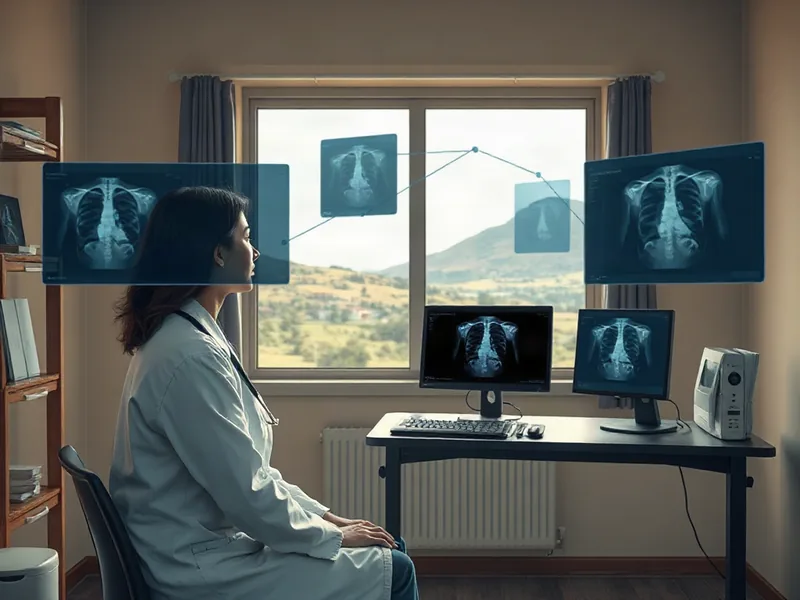
"It underpins many areas of healthcare, with a flow-on effect across the health system including emergency departments, cancer treatment pathways and planned surgery," Douglass said.
That flow-on effect is worth sitting with for a moment. When radiology works efficiently, it does not just help the radiologist. It speeds up decisions in the emergency department. It keeps cancer treatment pathways moving without unnecessary delays. It helps surgical teams plan with confidence rather than guesswork. A bottleneck in imaging can ripple outward and slow down care across an entire hospital system.
This programme did not emerge in isolation. The New Zealand government named radiology as one of its priority investment areas within a broader ten-year Health Digital Investment Plan, often shortened to HDIP. That plan lays out a national radiology information system, a single national repository for both radiology and pathology results, national imaging infrastructure, and what officials call a national radiologist flight deck, presumably a dashboard giving specialists a bird's eye view of caseloads and priorities across the country.
Funding for this kind of modernisation is already in motion. New Zealand's Budget 2026 allocated NZ$300 million, about $179 million, specifically to help deliver the first three years of the HDIP. Radiology modernisation is one piece of that larger investment, though a significant one given how central imaging is to so many clinical pathways.
There is also precedent for this kind of move. Back in 2025, Te Whatu Ora went to market for a radiology AI orchestration platform, an early step toward expanding the use of AI applications in imaging nationwide. The imaging AI orchestrator capability now included in this modernisation programme appears to build directly on that earlier groundwork, suggesting officials have been thinking about this integration for some time rather than rushing a reaction to short-term pressure.
Douglass confirmed that the programme's business case is now in its final stages of approval, which suggests the procurement process could move relatively quickly once the green light comes through. For a country grappling with rising imaging demand and a health workforce already stretched thin, the timeline matters. Every month of delay is a month where clinicians continue working with fragmented tools.
Health systems around the world are wrestling with similar questions about how to modernise imaging without losing sight of patient safety or equity. New Zealand's approach, tying together integration, reporting, AI orchestration and archiving into a single coordinated effort, offers a useful test case for whether ambitious digital transformation can actually translate into better outcomes at the bedside. If it works as intended, a patient in a remote town should get the same quality of diagnostic support as someone at a major urban hospital, with their imaging history following them wherever they go. That kind of consistency, more than any single piece of technology, is what modernisation like this is ultimately meant to deliver.
Tags
Original Sources
NZ to begin radiology modernisation
↗ https://www.healthcareitnews.com/news/anz/nz-begin-radiology-modernisation
About the author
Amara's entry point into AI was an epidemiology role at a London research hospital, where she spent five years studying how digital health tools reached — or conspicuously failed to reach — underserved communities. Watching early algorithmic systems in healthcare quietly entrench existing inequalities, she redirected her career toward the systemic consequences of AI at scale. She covers AI through an unflinching lens: who benefits, who bears the cost, and what evidence actually says versus what the press release claims. Her writing is calm and precise, but she doesn't mistake balance for neutrality.
More from The Steward →This Week's Edition
6 September 2026
24 articles
Related Articles

A Heart Without Friction: Maglev Technology Moves Into Cardiac Care
Health & Science · 6 min

How a Stubborn Hiss of Radio Noise Helped Confirm the Big Bang
Health & Science · 5 min
AI Can Predict Chemotherapy Response in Aggressive Breast Cancer, But Not Yet Reliably Enough for the Clinic
Health & Science · 5 min
Related Articles
A Heart Without Friction: Maglev Technology Moves Into Cardiac Care
Health & Science · 6 min
How a Stubborn Hiss of Radio Noise Helped Confirm the Big Bang
Health & Science · 5 min
AI Can Predict Chemotherapy Response in Aggressive Breast Cancer, But Not Yet Reliably Enough for the Clinic
Health & Science · 5 min
More Stories
© 2026 Cedar & Bloom. All rights reserved.
