The Drum · Weekly AI news, freeSubscribe →
Share
AlphaFold's evolution to predict a wider range of biological molecules marks a pivotal shift in biotechnology, promising unprecedented insights into molecular structures and potential breakthroughs in medical research.
In a significant leap forward for the field of biotechnology, Isomorphic Labs and Google DeepMind have announced an advanced version of their groundbreaking AI model, AlphaFold. This new iteration not only refines protein prediction but also extends its capabilities to encompass a broader array of biological molecules, including ligands, nucleic acids, and more. The implications are profound for both scientific research and practical applications in medicine and beyond.
Understanding the structure of biological molecules is crucial for advancing our knowledge of how life works at the molecular level. From developing new drugs to unraveling the complexities of diseases like Alzheimer's and cancer, accurate predictions can accelerate discoveries that could save lives and improve health outcomes. The enhanced capabilities of the next-generation AlphaFold mean researchers have a powerful tool to explore these frontiers with greater precision.
Imagine you're trying to build a complex Lego model without the instructions. That's what scientists face when they try to determine the three-dimensional structure of biological molecules like proteins and nucleic acids. The original AlphaFold, released in 2020, was a game-changer because it used AI to predict these structures with unprecedented accuracy for single-chain proteins. Now, the latest version goes even further.
The new model can generate predictions for nearly all molecules listed in the Protein Data Bank (PDB), often achieving atomic-level accuracy. This means it can accurately predict the positions of individual atoms within a molecule, which is essential for understanding how these molecules interact and function.
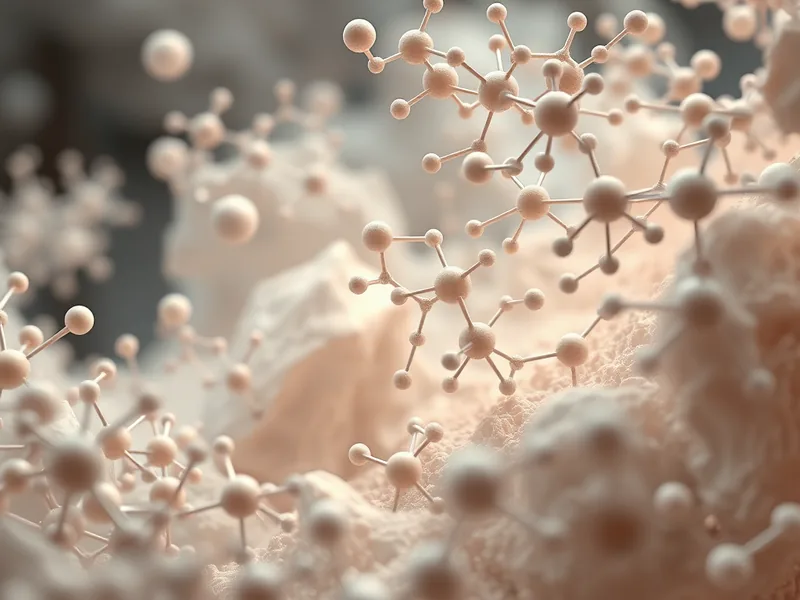
The expanded capabilities of AlphaFold have far-reaching implications:
The next-generation AlphaFold is a stepping stone towards what some call the "digital biology" era. This refers to the integration of AI and computational methods into biological research, enabling faster and more accurate predictions. As these tools become more sophisticated, they will likely play an increasingly central role in scientific discovery and innovation.
The advancements in AlphaFold represent a significant milestone in our ability to understand and manipulate biological systems. By providing researchers with a powerful tool to predict the structures of a wide range of molecules, this technology has the potential to drive groundbreaking discoveries that could transform medicine, biotechnology, and beyond.
Tags
Original Sources
About the author
Amara's entry point into AI was an epidemiology role at a London research hospital, where she spent five years studying how digital health tools reached — or conspicuously failed to reach — underserved communities. Watching early algorithmic systems in healthcare quietly entrench existing inequalities, she redirected her career toward the systemic consequences of AI at scale. She covers AI through an unflinching lens: who benefits, who bears the cost, and what evidence actually says versus what the press release claims. Her writing is calm and precise, but she doesn't mistake balance for neutrality.
More from The Steward →This Week's Edition
1 November 2023
29 articles
Related Articles
Related Articles
More Stories
© 2026 Cedar & Bloom. All rights reserved.