The Drum · Weekly AI news, freeSubscribe →

Share
Researchers say an AI model can spot signs of high blood pressure and diabetes just by analyzing a short facial video, raising hopes for cheap screening and questions about accuracy, privacy, and who gets left out.
Picture a health check that starts with nothing more than a 30-second selfie video. No needle, no cuff, no lab visit. That is the promise behind a new study presented to the European Society of Cardiology, in which researchers describe an artificial intelligence system that can flag possible hypertension and diabetes just by analyzing facial video footage.
For the roughly 1.3 billion adults worldwide living with high blood pressure, and the hundreds of millions managing diabetes, early detection is often the difference between a manageable condition and a medical emergency. Both diseases frequently develop silently. People walk around for years with dangerously elevated blood pressure or blood sugar and no obvious symptoms, until a stroke, heart attack, or organ damage forces the issue. Tools that catch these conditions earlier, cheaply, and without specialized equipment could reshape how we think about routine health monitoring.
The technology works by capturing subtle physiological signals hidden in plain sight on the human face. Think of it like a mood ring, but instead of guessing emotions, it is picking up on tiny changes in skin color and blood flow that correspond to your cardiovascular and metabolic state. Every heartbeat sends a small pulse of blood through the tiny vessels near the skin's surface, and that pulse causes microscopic shifts in color that are invisible to the naked eye but detectable by a camera and the right algorithm. This approach, sometimes called remote photoplethysmography, has been explored before for measuring heart rate from video. What is new here is extending it toward diagnosing chronic conditions like hypertension and diabetes.
The research team built their diagnostic model using facial video data paired with clinical measurements, training the AI to recognize patterns associated with elevated blood pressure and blood sugar levels. The system was then validated against standard clinical diagnoses to assess how reliably it could identify these conditions from video alone.
This kind of validation matters enormously. An algorithm that looks impressive in a controlled research setting can still fail badly when it meets the messy variability of real life: different lighting, different skin tones, different camera qualities, people who just ran up a flight of stairs before recording their video. Clinical validation studies are designed to test whether a tool's performance holds up against the gold standard, in this case, actual medical diagnoses of hypertension and diabetes made through conventional means like blood pressure cuffs and blood glucose tests.
The appeal of this approach lies in its simplicity and reach. Traditional screening for hypertension requires a blood pressure cuff. Diabetes screening typically requires a blood draw or at least a finger prick. Both require some level of trained personnel, equipment, and time, resources that are not evenly distributed across the globe. A video-based screening tool, by contrast, could theoretically run on a basic smartphone camera. That opens the door to screening in places where clinical infrastructure is thin: rural clinics, community health drives, even a person's own living room.
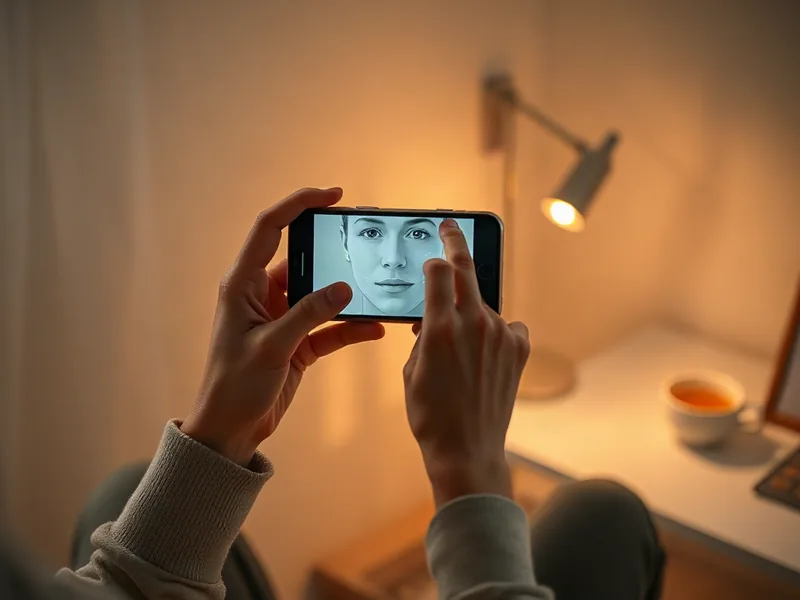
There is real precedent for AI reading health signals from unconventional data. Researchers have trained algorithms to detect heart rhythm abnormalities from smartwatch sensors, to spot signs of Parkinson's disease from voice recordings, and to flag diabetic retinopathy from eye scans. Facial video analysis for hypertension and diabetes fits into this broader wave of research trying to turn everyday devices into diagnostic tools. The common thread across all these efforts is a bet that the human body leaks more health information than we typically notice, and that machine learning can learn to read those leaks.
Still, promising results in a study are not the same as a tool ready for your doctor's office, let alone your phone's app store. Any diagnostic technology aimed at conditions as consequential as hypertension and diabetes needs extensive validation across diverse populations before it should influence real medical decisions. Skin tone, age, underlying health conditions, and even camera hardware could all affect how well the algorithm performs for different groups of people. If a system trained predominantly on one demographic underperforms for another, it risks widening health disparities rather than narrowing them, quietly missing diagnoses in the very populations that already face barriers to care.
There is also the question of what happens after a flag goes up. A video that suggests possible hypertension is not a diagnosis. It is a prompt to seek confirmation through proper clinical testing. If people mistake a screening signal for a definitive result, some may either panic unnecessarily or, more worryingly, feel falsely reassured when the tool misses something. Any rollout of this kind of technology needs to be paired with clear public communication about what it can and cannot tell you.
The stakes here go beyond convenience. Hypertension and diabetes are two of the biggest drivers of cardiovascular disease worldwide, contributing to heart attacks, strokes, kidney failure, and premature death on a massive scale. Much of that burden falls hardest on people with limited access to regular checkups, whether due to cost, geography, or overstretched health systems.
A validated, camera-based screening tool would not replace a doctor's diagnosis, and it should not try to. But as an early warning system, something that nudges someone to get a proper blood pressure check or blood sugar test, it could genuinely save lives, particularly in underserved communities where a video call is far more accessible than a clinic visit.
The excitement around this research is understandable. So is the caution. Facial video diagnostics sit at an intersection of real medical promise and real technical risk, and the responsible path forward runs through rigorous, transparent testing across every population this tool claims to serve. Get that right, and a smartphone camera could become one more quiet, powerful tool in the fight against two of the world's most stubborn chronic diseases.
Tags
Original Sources
AI-based diagnosis of hypertension and diabetes from a single facial video
↗ https://www.escardio.org/news/press/press-releases/ai-based-diagnosis-of-hypertension-and-diabetes-from-a-single-facial-video
About the author
Amara's entry point into AI was an epidemiology role at a London research hospital, where she spent five years studying how digital health tools reached — or conspicuously failed to reach — underserved communities. Watching early algorithmic systems in healthcare quietly entrench existing inequalities, she redirected her career toward the systemic consequences of AI at scale. She covers AI through an unflinching lens: who benefits, who bears the cost, and what evidence actually says versus what the press release claims. Her writing is calm and precise, but she doesn't mistake balance for neutrality.
More from The Steward →This Week's Edition
1 September 2026
29 articles
Related Articles
Related Articles
More Stories
© 2026 Cedar & Bloom. All rights reserved.