The Drum · Weekly AI news, freeSubscribe →

Share
Big Tech money is reviving a decades-old practice of upgrading nuclear reactors for more capacity. The gains are real, but when stacked against projected electricity demand, they only go so far.
Picture a power plant like a kitchen stove. For years, operators have been happy to cook on low heat, since demand for electricity barely budged and cheap natural gas made it hard to justify spending more. Now, with data centers and AI systems devouring electricity at a pace nobody quite predicted, that stove is being cranked up. Nuclear operators across the country are racing to extract every extra watt they can from plants that, in some cases, have been running the same way for decades.
The strategy has a name: power uprating. It means upgrading equipment at an existing reactor so it can produce more electricity than it was originally designed for. The concept isn't new. US operators have been doing it since the 1970s. But it fell out of fashion as electricity demand flattened and some plants closed rather than invest in themselves. Between 2001 and 2010, the Nuclear Regulatory Commission approved more than 80 uprates. In the following decade, that number dropped to just 33.
The last few weeks have brought a burst of activity that suggests the lull is ending. Constellation, the largest nuclear operator in the US, announced plans to add nearly a gigawatt of new capacity across 11 reactors at six plants. Days later, on October 5, the Department of Energy awarded a $4.2 billion loan to Vistra to fund previously announced upgrades at three plants. Shuttered facilities like Palisades and Three Mile Island are even being brought back online, a sign of just how urgently utilities are hunting for clean, reliable power.
So what does an uprate actually involve? Some are minor tweaks, adjustments to instrument calibrations or internal calculations that squeeze out a small percentage gain. Others are far more ambitious, boosting a reactor's power output by as much as 20 percent, and those require swapping out major plant equipment. Generally, the process means loading the reactor with more highly enriched fuel, or simply more fresh fuel, to generate additional steam. That steam turns the turbines that make electricity, so engineers also have to upgrade the turbines themselves, along with the pumps, motors, generators, and transformers that handle the increased load. Think of it less like turning up a dial and more like replacing the plumbing in your house so it can handle a bigger water heater.
The most recent major uprate completed in the US happened at the Browns Ferry nuclear plant in Alabama, where a $475 million project expanded capacity across three reactors by 14 percent between 2018 and 2019. That project now looks modest compared to what's coming.
Constellation says it will spend more than $4.3 billion to uprate 11 reactors, adding enough electricity to power roughly 700,000 American homes. The driving force isn't just grid necessity. It's Google. The tech giant has agreed to buy electricity from these plants under a 20-year contract, and that long-term commitment is what made the economics work. As Constellation CEO Joe Dominguez told the New York Times, "These are capital intensive, labor intensive projects that require a different price point than the market trades at, frankly." In plain terms, nobody was going to spend billions upgrading aging reactors without a buyer locked in at a price that actually covers the cost.
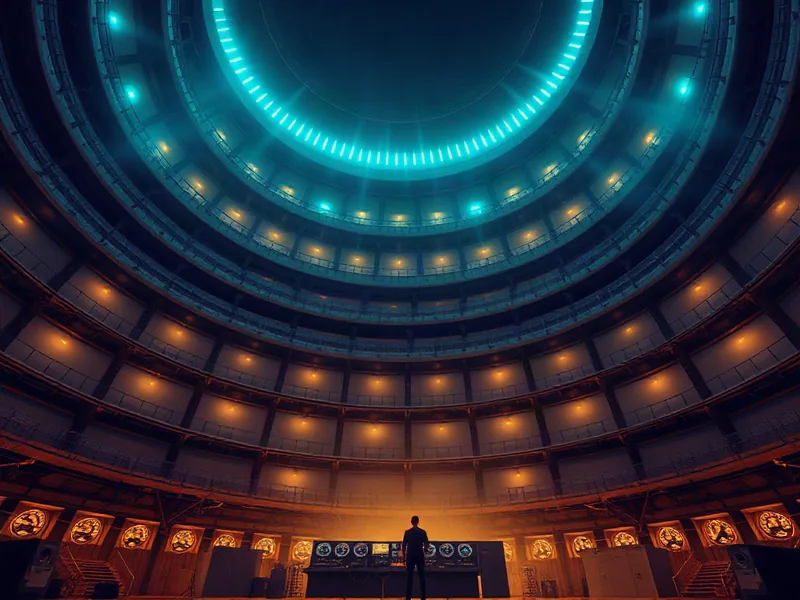
A similar pattern is playing out with Vistra. The Department of Energy's $4 billion commitment will help finance upgrades and modernization at Vistra plants in Pennsylvania and Ohio, adding 433 megawatts of capacity. Meta has already signed a long-term deal to buy that power.
It's worth being honest about cost here. On a per-kilowatt basis, the Constellation project is cheaper than building a brand-new reactor from scratch, which is reassuring given how notoriously expensive new nuclear construction has become. But it's still pricier than building a new utility-scale solar farm paired with battery storage, or a combined-cycle natural gas plant. Uprates are a bargain only relative to the most expensive alternative on the table, not an outright cheap option.
Even so, demand for uprates is high, and understandably so. The US nuclear fleet currently has about 98 gigawatts of total capacity. Estimates of how much more could be squeezed out through uprates range widely, somewhere between three and eight additional gigawatts, depending on which analysis you trust. A good chunk of that potential is already spoken for. The NRC expects applications to add 2.4 gigawatts of power to reactors through 2032.
Here's where the numbers need context, because without it, this all sounds like a bigger win than it really is. PJM, the grid operator covering much of the East Coast, projects roughly 30 gigawatts of additional peak demand from AI alone by 2030. Even if every possible nuclear uprate in the country got approved and built, it would cover only a fraction of that need.
That doesn't make uprates pointless. Far from it. They're one of the fastest, lowest-carbon ways to add meaningful power to the grid right now, since the plants already exist, the environmental review process is shorter, and the climate benefit is immediate. In a moment when utilities are scrambling for any zero-emissions electricity they can find, that matters.
But it also means uprates alone won't solve the underlying problem. If the country wants significantly more nuclear power on the grid, and demand projections suggest it will need to, the harder, slower, more expensive work of building entirely new reactors has to happen too. Squeezing more juice out of existing plants buys time. It doesn't replace the need to build.
Tags
Original Sources
How much more can nuclear power plants give?
↗ https://www.technologyreview.com/2026/10/15/1146577/nuclear-power-upgrade
About the author
Amara's entry point into AI was an epidemiology role at a London research hospital, where she spent five years studying how digital health tools reached — or conspicuously failed to reach — underserved communities. Watching early algorithmic systems in healthcare quietly entrench existing inequalities, she redirected her career toward the systemic consequences of AI at scale. She covers AI through an unflinching lens: who benefits, who bears the cost, and what evidence actually says versus what the press release claims. Her writing is calm and precise, but she doesn't mistake balance for neutrality.
More from The Steward →This Week's Edition
16 October 2026
29 articles
Related Articles
Related Articles
More Stories
© 2026 Cedar & Bloom. All rights reserved.