The Drum · Weekly AI news, freeSubscribe →

Share
Nvidia's board hires Wachtell Lipton and a former US attorney to probe the Jensen Huang spy allegations, as reporting surfaces that the White House knew far earlier than previously disclosed.
Nvidia's board has moved to formalize its response to the scandal engulfing CEO Jensen Huang, retaining former US attorney Joon H. Kim and his firm, Wachtell, Lipton, Rosen & Katz, to conduct the investigation it had previously promised. The announcement, made through a statement from the independent members of Nvidia's board, is the company's clearest signal yet that it views this matter as a governance risk requiring outside, credentialed scrutiny rather than an internal review.
The firm's selection carries its own signal value. Wachtell Lipton is widely regarded as one of the most expensive and prestigious corporate law firms in the country, and it has handled sensitive reputational matters before, including the investigation into the LA Clippers, Steve Ballmer, and Kawhi Leonard controversy. For a company of Nvidia's scale, with a market capitalization that dwarfs most of its index peers, the cost of retaining top-tier counsel is immaterial next to the stakes of getting the investigation's findings right, or wrong.
What makes this situation distinct from a typical executive misconduct inquiry is the national security dimension layered on top of it. The person at the center of the allegations, Megaspeed executive Alice Huang, is reportedly the subject of separate reporting from the New York Times digging into her background. That reporting lands alongside a second, arguably more consequential story: that President Donald Trump was informed in May by Secretary of State Marco Rubio about intelligence suggesting Nvidia's CEO was in a relationship with an individual flagged by intelligence services. According to the Times, this was the second time Trump had been briefed on the matter in seven months, which complicates his own public statements and raises questions about the handling of information that touches both corporate governance and export policy.
For investors, the mechanics of this investigation matter more than the tabloid elements. Nvidia's independent board members, not management, are the ones driving this process, which is the appropriate structural response when a CEO is the subject of the inquiry. Having outside counsel with a track record in high-profile, reputation-sensitive cases lends credibility to whatever conclusions eventually surface. It also creates a paper trail that can be pointed to if shareholder litigation or regulatory scrutiny follows.
The timing is not incidental. Nvidia sits at the center of the US-China AI competition, supplying the chips that underpin both domestic AI infrastructure buildouts and, through various licensing and export arrangements, foreign markets including China. Any suggestion that the company's chief executive had a personal relationship with someone connected to intelligence concerns introduces a layer of risk that goes beyond personnel matters. It touches on export control compliance, trade secret exposure, and the broader question of whether sensitive technology roadmaps or customer relationships were compromised.
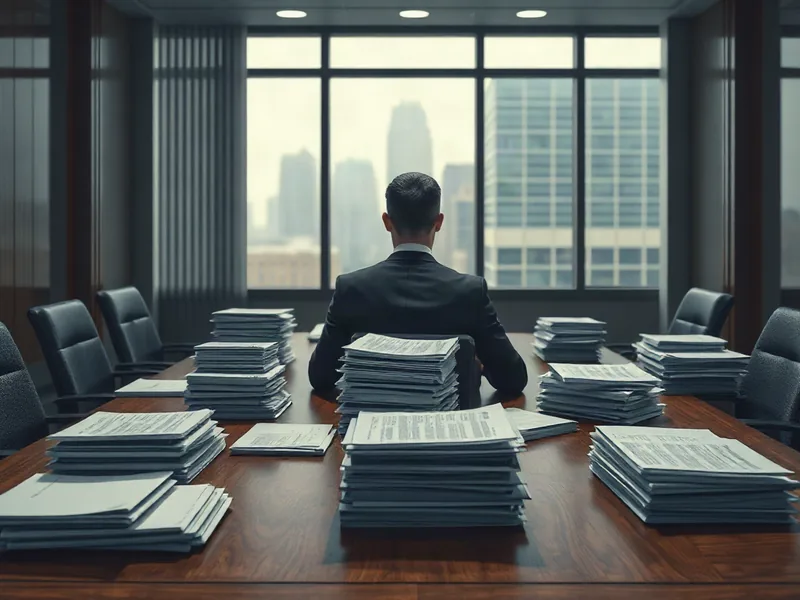
That broader context has not escaped other coverage. A companion piece from The Verge's AI desk argues the US may currently be winning the AI race against China, and frames Huang's conduct as a potential unforced error that could jeopardize that lead. Whether or not that framing proves accurate, it underscores how this story has moved well past a personal scandal and into the territory of national competitive strategy.
The revelation that Trump was briefed twice, first roughly seven months ago and again in May, also raises governance questions that extend beyond Nvidia's boardroom. If senior administration officials had intelligence concerns about a sitting CEO of a company this systemically important to US AI infrastructure, the lag in public disclosure or corporate action invites scrutiny of its own. Investors should treat this as a separate risk thread from the board's internal investigation: political and regulatory exposure that could manifest independently of whatever Wachtell Lipton ultimately concludes.
None of this has yet translated into disclosed financial impact. Nvidia has not issued guidance changes, and there is no indication in current reporting that customer contracts or export licenses have been affected. But the absence of disclosed impact is not the same as the absence of risk. Boards hire firms like Wachtell Lipton precisely because they anticipate the need for a defensible, independent record, whether that record ultimately clears Huang, recommends governance changes, or something in between.
This remains an unfolding situation with more questions than answers. The retention of a top-tier law firm and a respected former prosecutor signals that Nvidia's board understands the gravity of the matter, but it does not resolve the underlying uncertainty about what intelligence agencies and administration officials actually knew, when they knew it, and what if anything they did about it.
For shareholders, the near-term risk is less about Huang's personal conduct and more about process: whether the investigation is seen as credible, whether any findings trigger governance changes at the top of a company whose leadership stability has been a key part of its investment thesis, and whether the national security angle draws formal regulatory attention. Given Nvidia's outsized weight in AI infrastructure and index portfolios alike, even a modest erosion of confidence in leadership continuity deserves closer monitoring than the market has shown so far. Investors should watch for the investigation's findings, any statements from export control regulators, and whether additional reporting substantiates or narrows the scope of what officials in Washington knew and when.
Tags
Original Sources
Nvidia hires the same law firm that investigated the Clippers to look into Jensen Huang’s spy.
↗ https://www.theverge.com/ai-artificial-intelligence/1031190/nvidia-huang-investigation
About the author
Marcus began tracking AI's market implications in 2016, noticing AI-related patent filings accelerating ahead of earnings upgrades before most of the sell-side had caught on. A former fixed-income quantitative analyst, he spent two decades building models that priced risk across emerging markets before pivoting to cover the economic impact of AI full-time. His writing translates opaque technical developments into clear risk/reward terms — and he's rarely diplomatic about the gap between AI valuations and underlying fundamentals. He believes most market participants still underestimate AI's long-run deflationary effect on knowledge work.
More from The Analyst →This Week's Edition
11 November 2026
14 articles
Related Articles

The Phone in Your Employee's Pocket May Be an Open Door to Your Network
Security & Risk · 6 min

South Korea's Top Tax Exam Scorer Admits AI-Assisted Cheating, Rattling National Testing System
Security & Risk · 5 min
Single Router Grounds US Aviation: A $1 Billion-a-Year System Still Can't Hold
Security & Risk · 5 min
Related Articles
The Phone in Your Employee's Pocket May Be an Open Door to Your Network
Security & Risk · 6 min
South Korea's Top Tax Exam Scorer Admits AI-Assisted Cheating, Rattling National Testing System
Security & Risk · 5 min
Single Router Grounds US Aviation: A $1 Billion-a-Year System Still Can't Hold
Security & Risk · 5 min
More Stories
© 2026 Cedar & Bloom. All rights reserved.
