The Drum · Weekly AI news, freeSubscribe →
Share
Persona’s founders, veterans of the robotics industry, argue their new humanoid robot uses cutting-edge tech to stand out in a crowded market, promising more natural human interaction and smarter environment navigation.
At this early stage, Persona’s pitch doesn’t stray far from the various humanoid firms with which it’s set to compete. The startup, founded by a team of robotics and AI experts, is confident that there's room for another advanced humanoid robot in the market. But what sets Persona apart? Let’s dive into the technical details and see why they believe their approach could be a game changer.
Persona’s robot leverages state-of-the-art perception algorithms and machine learning to navigate complex environments and interact with humans more naturally. Here are some key technical points:
Perception Algorithms: The robot uses advanced computer vision techniques, including deep learning models for object recognition and scene understanding. This allows it to identify objects, people, and obstacles in real-time.
Machine Learning: The robot’s decision-making is driven by a combination of reinforcement learning and supervised learning models. This ensures that it can adapt to new situations and improve over time.
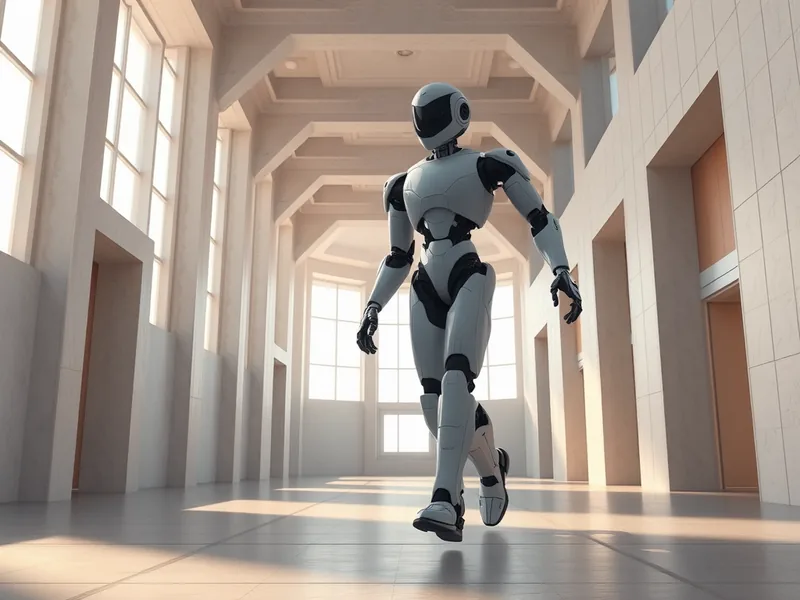
Mechanical Design: The robot’s physical design is optimized for agility and dexterity. It features a modular joint system that allows for precise movements and a wide range of motion.
While Persona’s technical stack is impressive, the real differentiator lies in its focus on user experience and adaptability. Here are a few ways they aim to stand out:
User-Centric Design: The robot is designed with end-users in mind. It can be customized to fit specific needs, such as elderly care, education, or home assistance.
Seamless Integration: Persona’s robot is designed to integrate seamlessly into existing ecosystems. It can connect with popular platforms like Amazon Alexa, Google Assistant, and Apple HomeKit.
Although Persona is still in its early stages, initial benchmarks and user feedback are promising. Here’s a snapshot of what they’ve achieved so far:
Performance Metrics:
User Feedback:
Persona’s founders are optimistic about the future. They plan to continue refining their robot’s capabilities and expanding its applications. Some upcoming developments include:
Persona’s approach to developing a humanoid robot is rooted in cutting-edge technology and user-centric design. While the market for humanoid robots is competitive, Persona’s focus on adaptability and seamless integration could set it apart. As they continue to refine their product, it will be interesting to see how they fare against established players and emerging competitors.
Tags
Original Sources
About the author
Kai built ML infrastructure at a Bay Area startup before developing an obsession with transformer architectures and inference optimisation that eventually pulled him out of product work entirely. A stint at a compute research lab sharpened his instinct for what actually matters in a model release versus what is marketing. He writes from the inside — from the perspective of someone who has debugged the systems he is describing at three in the morning. He is allergic to hype and instinctively drawn to the unglamorous plumbing questions that everyone else skips over.
More from The Engineer →This Week's Edition
4 July 2024
29 articles
Related Articles

Rosarium Health Partners With Anthem Medi-Cal to Fund Home Modifications for Older Californians
Products & Applications · 5 min
Meta's new open-weight model runs on Macs, if you have 1TB of RAM to spare
Products & Applications · 5 min

Persona AI Bets on Calm Execution in a Noisy Humanoid Robotics Market
Products & Applications · 5 min
Related Articles
Rosarium Health Partners With Anthem Medi-Cal to Fund Home Modifications for Older Californians
Products & Applications · 5 min
Meta's new open-weight model runs on Macs, if you have 1TB of RAM to spare
Products & Applications · 5 min
Persona AI Bets on Calm Execution in a Noisy Humanoid Robotics Market
Products & Applications · 5 min
More Stories
© 2026 Cedar & Bloom. All rights reserved.
