The Drum · Weekly AI news, freeSubscribe →
Share
As AI racks push past 1 MW, QuantumScape is betting its solid-state lithium-metal cells can solve the power density and thermal problems that lithium-ion backup systems increasingly struggle with.
QuantumScape just moved its battery tech out of the EV conversation and into the server room. The company announced the QS PowerBlock on October 8, a modular in-rack energy storage system built for AI data centers, and it's claiming some genuinely eye-catching numbers: 4x the power density and 5x the runtime of current data center standards.
If you've been following the AI infrastructure buildout, you know why this matters. Racks are getting denser, power draws are climbing toward the 1 MW range, and the industry is shifting toward 800VDC architectures to move that much power efficiently. Traditional lithium-ion backup systems, the kind that have handled uninterruptible power for decades, are starting to hit physical limits on how much energy they can pack into a rack-sized footprint. QuantumScape thinks solid-state lithium-metal chemistry is the fix.
The PowerBlock itself is a reference design, not a single fixed product. It's meant to be adaptable across module, shelf, and rack formats, so it can slot into industry-standard power rack configurations rather than forcing operators into a proprietary layout. That's a deliberate choice: data center hardware lives and dies by how well it fits existing standards, and QuantumScape is clearly trying to avoid becoming a niche add-on.
QuantumScape ran its demonstration against an expected data center training workload and benchmarked the results against the Open Compute Project's Open Rack V3 (ORV3) specification, the open hardware standard that much of the industry builds toward. Here's what it reported:
That last point is worth sitting with. A 120-degree gap in thermal runaway threshold isn't a marginal safety improvement, it's a different risk profile entirely. For operators protecting billion-dollar facilities packed with GPUs, that margin is arguably as important as the power density gains. Battery fires in dense data center environments are a real operational nightmare, and anything that pushes the failure threshold further out reduces both insurance exposure and downtime risk.
Worth flagging: these are prototype and modeled results under controlled conditions, not field data from a live deployment. QuantumScape is upfront about that in its own materials, noting that final performance will depend on product design, system configuration, and real-world operating conditions. Translate that from press-release-speak and it means: promising bench results, production validation still to come.
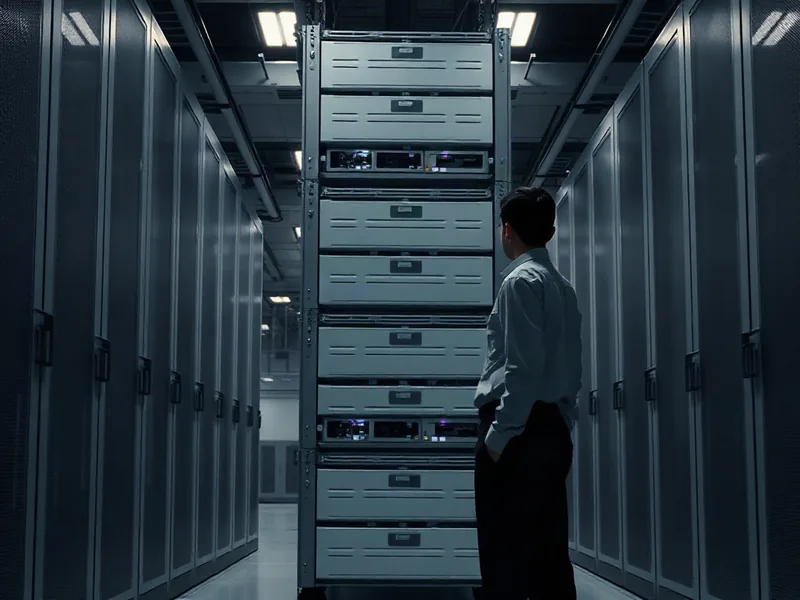
Dr. Siva Sivaram, QuantumScape's CEO and president, framed it as a natural extension of the company's core technology. "QS solid-state battery technology offers an unmatched combination of energy, power, and safety for many different applications, from electric vehicles to AI data centers and beyond," he said. "With the QS PowerBlock, we are bringing this value proposition to AI data center customers, to enable the 800VDC designs that will power the next phase of AI growth."
The go-to-market strategy here leans heavily on partnerships rather than a solo product launch. The PowerBlock design will be on display at the 2026 OCP Global Summit in San Jose, running October 12-15, at a booth hosted by Megmeet, an official power system component provider for the NVIDIA MGX ecosystem. That's a notable pairing. MGX is NVIDIA's modular reference architecture for AI server racks, and getting plugged into that ecosystem through an established power component partner gives QuantumScape a much faster path to real deployments than trying to sell direct to hyperscalers from scratch.
QuantumScape also joined OCP as a member alongside the announcement. OCP sets the open hardware standards that most hyperscale and colocation operators build around, covering everything from rack dimensions to power delivery specs. Membership signals QuantumScape wants a seat at the table shaping those standards going forward, not just a vendor selling into them after the fact. Given how fast 800VDC architecture is becoming the reference point for next-gen AI racks, having input into how those standards evolve could matter a lot down the line.
The core question is whether solid-state battery manufacturing can scale to data center volumes at a cost that makes sense. QuantumScape has spent years working through production challenges for its EV battery business, and those same manufacturing hurdles, consistency, throughput, cost per cell, don't disappear just because the application changed. The company's own forward-looking statements acknowledge this directly, flagging risks around achieving commercial-scale performance that matches prototype results.
Keep an eye on a few things over the next year. First, whether any actual data center operators or colocation providers announce pilot deployments rather than just reference designs on a trade show floor. Second, how the Megmeet partnership and NVIDIA MGX integration actually plays out in practice, since that's the most concrete path to real hardware shipping. Third, whether competing battery chemistry providers respond with their own in-rack solid-state or advanced lithium offerings, since QuantumScape won't have this lane to itself for long if the demand is real.
The bigger picture is that AI infrastructure is forcing power delivery and energy storage companies to rethink problems that used to live almost entirely in the automotive and grid-storage world. Data centers chasing gigawatt-scale power budgets need backup systems that are denser, safer, and faster to integrate than what the industry has used for the last two decades. Whether QuantumScape's solid-state chemistry becomes the answer or just one of several competing approaches, the PowerBlock announcement is a clear signal that battery companies now see AI infrastructure as a primary market, not an afterthought.
Tags
Original Sources
QuantumScape Announces QS PowerBlock for In-Rack Energy Storage in AI Data Centers | Thu, 10/08/2026 - 08:30
↗ https://ir.quantumscape.com/news-releases/news-release-details/quantumscape-announces-qs-powerblock-rack-energy-storage-ai-data
About the author
Kai built ML infrastructure at a Bay Area startup before developing an obsession with transformer architectures and inference optimisation that eventually pulled him out of product work entirely. A stint at a compute research lab sharpened his instinct for what actually matters in a model release versus what is marketing. He writes from the inside — from the perspective of someone who has debugged the systems he is describing at three in the morning. He is allergic to hype and instinctively drawn to the unglamorous plumbing questions that everyone else skips over.
More from The Engineer →This Week's Edition
9 October 2026
34 articles
Related Articles
Chinese Developer Shuts Down ARTEX AI Agent After Link to South Korean Bank Hacks
Products & Applications · 5 min
Microsoft Pushes Windows AI Back to the Device with Surface Laptop Ultra and Execution Containers
Products & Applications · 7 min
UNC Chapel Hill Opens Funding Round for Faculty and Staff AI Projects
Products & Applications · 6 min
Related Articles
Chinese Developer Shuts Down ARTEX AI Agent After Link to South Korean Bank Hacks
Products & Applications · 5 min
Microsoft Pushes Windows AI Back to the Device with Surface Laptop Ultra and Execution Containers
Products & Applications · 7 min
UNC Chapel Hill Opens Funding Round for Faculty and Staff AI Projects
Products & Applications · 6 min
More Stories
© 2026 Cedar & Bloom. All rights reserved.
