The Drum · Weekly AI news, freeSubscribe →

Share
RAG has a live-data problem: databases are too slow, streams lack context. ScaleOut's latest release tries to fix that by plugging Claude directly into its digital twin platform through the Model Context Protocol.
If you've tried building a RAG pipeline for anything that changes fast, you've probably hit the same wall. Traditional databases can't keep up with live telemetry at scale. Streaming platforms can handle the velocity but they're dumb about structure, they don't know what a "node" or a "sensor" actually represents in your system. So your LLM ends up either stale or context-blind. Neither is great when you're trying to monitor something like a telecom network in real time.
ScaleOut Software thinks it has a fix. The company just shipped Version 7 of its ScaleOut Product Suite, and the headline feature is a tighter connection between its digital twin platform and generative AI, specifically Anthropic's Claude, via the Model Context Protocol (MCP).
For the unfamiliar: ScaleOut's whole pitch is in-memory, distributed computing for tracking live systems as digital twins, object-oriented models that mirror real-world components (think a fleet of delivery trucks, or cell towers in a network) along with metadata about how those components are supposed to behave. That combination of live state plus structural context is exactly what's missing from most RAG setups today. Databases give you queryable history but not speed. Streams give you speed but not meaning. ScaleOut is betting the digital twin layer can give you both.
There are three concrete changes worth digging into:
Claude gets a live wire into digital twins. Claude Desktop can now connect directly to a ScaleOut digital twin deployment over MCP, Anthropic's open protocol for letting models securely pull context from external tools and data sources. Practically, that means Claude can query live telemetry, system structure, and behavioral metadata in real time, rather than working off a stale snapshot or an unstructured stream. ScaleOut says more model integrations are coming, so this looks like the first of several planned connectors rather than a one-off.
One UI for everything. ScaleOut has unified management of its digital twin models and its Active Caching layer (the part of the platform that handles fast-changing application data) into a single interface. If you've ever had to juggle separate consoles for caching and modeling in a distributed system, this is the kind of quality-of-life fix that doesn't make headlines but saves real operational hours. Fewer tools to context-switch between generally means fewer mistakes during deployment.

The Claude integration is the one getting top billing, and it makes sense why. RAG architectures typically assume your retrieval source is either mostly static (a vector DB of documents) or a raw stream you have to post-process yourself. ScaleOut's digital twin layer is neither. It's live, structured, and continuously updated, which means an AI model querying it gets both the current state of the system and the semantic scaffolding to interpret that state correctly. For something like network monitoring or logistics tracking, that's the difference between an AI that can flag "device X is offline" versus one that can reason about "device X is offline, and here's what that means for the three downstream systems it feeds."
Dr. William Bain, ScaleOut's CEO and founder, framed it as addressing an ingestion bottleneck: "Operational managers are now using AI models to monitor and analyze large systems, like transportation and logistics systems. However, these models face major bottlenecks ingesting live data and capturing context about a live system. Digital twins have the speed and richness to meet this challenge and unlock AI's potential." He called the Claude integration "a unique integration... built on decades of innovation in in-memory computing."
Worth being clear-eyed about what this is and isn't. This isn't a new foundation model or a novel RAG algorithm, it's an infrastructure play: giving existing models a faster, richer pipe into operational data they'd otherwise struggle to access cleanly. That's a legitimate gap. A lot of the "AI for ops" hype assumes the hard part is the model. In practice, the hard part is often getting the model reliable, low-latency, well-structured context in the first place, and that's squarely a data engineering problem, not a model problem.
The MCP angle is also worth flagging for anyone tracking the broader ecosystem. MCP has become something of a de facto standard for connecting LLMs to external tools and data sources since Anthropic released it, and vendors across the infrastructure stack have been racing to build MCP servers for their platforms. ScaleOut plugging into that ecosystem rather than building a proprietary Claude-only integration is a sensible bet: it keeps the door open for the "additional AI model integrations" the company says are planned.
If you're evaluating this for your own stack, the questions that matter are the usual ones: how does latency hold up under real production telemetry volumes, how granular is the metadata Claude actually gets access to, and how much modeling work is required upfront to build out a digital twin representation of your system before any of this pays off. ScaleOut has two decades of in-memory computing pedigree behind it, which counts for something on the scalability claims. Whether the Claude integration delivers meaningfully better operational insight, versus just faster access to the same data, is the thing to watch as early adopters put it through paces on real systems rather than demo scenarios.
Tags
Original Sources
ScaleOut Product Suite, Version 7, Brings Live Operational Context to Generative AI - BigDATAwire
↗ https://www.hpcwire.com/bigdatawire/this-just-in/scaleout-product-suite-version-7-brings-live-operational-context-to-generative-ai
About the author
Kai built ML infrastructure at a Bay Area startup before developing an obsession with transformer architectures and inference optimisation that eventually pulled him out of product work entirely. A stint at a compute research lab sharpened his instinct for what actually matters in a model release versus what is marketing. He writes from the inside — from the perspective of someone who has debugged the systems he is describing at three in the morning. He is allergic to hype and instinctively drawn to the unglamorous plumbing questions that everyone else skips over.
More from The Engineer →This Week's Edition
11 September 2026
18 articles
Related Articles
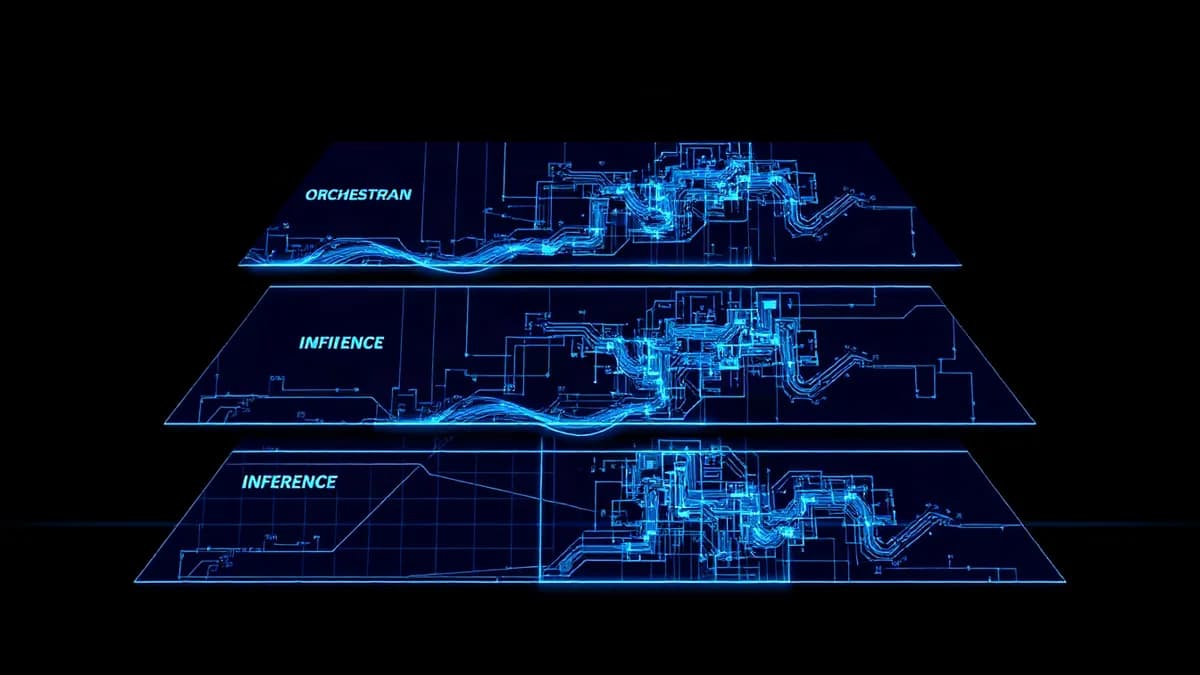
VentureBeat's October Summit Tackles the Four Layers of the Agentic Stack
Tools & Engineering · 5 min
IEEE Expands Smart City Advisory Services as Municipal Tech Budgets Grow
Products & Applications · 5 min

Christina Applegate's MS Misdiagnosis Reveals a Painful Diagnostic Gap in Neurology
Health & Science · 5 min
Related Articles
VentureBeat's October Summit Tackles the Four Layers of the Agentic Stack
Tools & Engineering · 5 min
IEEE Expands Smart City Advisory Services as Municipal Tech Budgets Grow
Products & Applications · 5 min
Christina Applegate's MS Misdiagnosis Reveals a Painful Diagnostic Gap in Neurology
Health & Science · 5 min
More Stories
© 2026 Cedar & Bloom. All rights reserved.
