The Drum · Weekly AI news, freeSubscribe →
Share
Half a century ago, a psychologist claimed worms could pass memories to each other through cannibalism. Harvard researchers are trying to replicate the feat, and so far the worms refuse to learn.
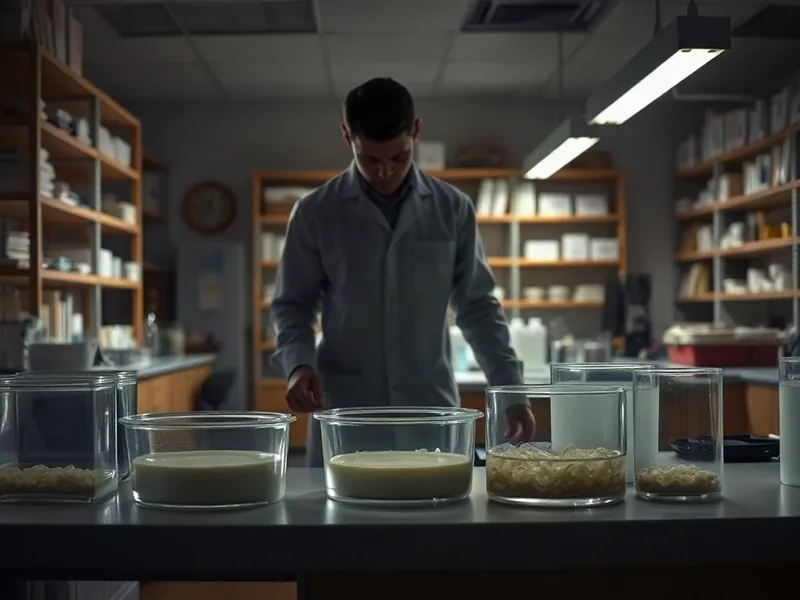
Imagine spending months wading through frozen rivers and bass lakes, waders cinched to your thighs, just to catch a worm smart enough to be afraid of a light. That's not a joke. It's the actual field work of Zachary Kelso, a research assistant in the Harvard lab of neuroscientist Sam Gershman, who has spent the better part of a year chasing planarians across New England, Oregon, and Michigan in an attempt to answer a question that has quietly haunted neuroscience for sixty years: can memory itself be transferred from one creature to another?
Planarians are small, arrow-headed flatworms, and they're an odd choice of research subject only until you learn what they can do. They're among the simplest animals with a true brain and a nervous system built with the same left-right symmetry ours has. Chop one in half, and both halves grow back into complete worms. A fragment as tiny as 1/279th of the original animal can regenerate into a fully formed adult within weeks. One early naturalist called them "immortal under the edge of the knife." That resilience is exactly what drew a young, unconventional psychologist named James McConnell to them in the 1950s, and it's what's drawing scientists back to them now.
McConnell, then at the University of Texas and later the University of Michigan, had a simple starting idea: if memory depends on connections between neurons, as researchers were beginning to believe during the dawn of the DNA era, then even a creature as simple as a planarian ought to be able to learn something. He ran what amounted to Pavlov's dog experiments on worms, pairing a bright light with an electric shock until the worms learned to flinch at the light alone. That much was unremarkable. What happened next was not.
McConnell began beheading his trained worms. The regenerated heads, unsurprisingly, kept the learned fear response, since they'd regrown from tissue connected to the original brain. But the regenerated tails, grown from segments that had never had a head or brain at all, remembered too. McConnell concluded that memory wasn't stored only in the brain. It was somehow distributed through the worm's whole body. He pushed further still: he minced trained worms into a paste and injected it into untrained ones, a process a historian later described as resembling "impaling a prune with a javelin." Strangest of all, when he fed the paste to other worms, those cannibal worms picked up the light-shock association almost instantly, as though they were recalling something rather than learning it fresh.
To modern ears, this sounds like science fiction, but in its time it fit a plausible scientific narrative. The discovery of the DNA double helix had just revealed how densely information could be packed into molecules like proteins and nucleic acids. McConnell believed memories might be encoded chemically in RNA, meaning they could, in principle, be eaten and absorbed by another animal. Other labs replicated versions of his findings, and for a while, training planarians became a fixture of high school science fairs. Then, just as suddenly as it rose, the field collapsed. Planarian memory research faded from scientific journals and textbooks, and the entire episode slipped into obscurity.
Gershman's interest isn't nostalgia. He studies organisms that seem to retain information about past experiences without anything resembling a conventional nervous system, including the single-celled Stentor coeruleus, which somehow modifies its behavior with no neurons at all. If McConnell's planarian results held up, worms could become a powerful model for understanding where memory actually lives in a body, not just in a brain. That's a question with real stakes beyond worm biology. If memory can be stored outside neural circuits, even partially, it would reshape how researchers think about conditions involving memory loss and regeneration, and it would challenge a core assumption that has guided brain science for decades.
But so far, the modern worms aren't cooperating. Kelso's hunt for planarians willing to learn has taken him from the frozen banks of Boston's Charles River, where he broke through ice with a hammer while dressed, by his own admission, in business casual, to streams around Eugene, Oregon, to lakes in Michigan where he followed directions from a decades-old guidebook called The Fresh-Water Triclads of Michigan. He's tried commercially supplied lab worms too. None of it has worked. No matter how the worms are sourced or how carefully they're trained, Gershman's team can't get them to show the conditioned fear response that was once considered basic and repeatable.
That failure is itself the mystery worth investigating. Something has changed, either in the worms, in the experimental methods, or in our understanding of what McConnell was actually observing. It's possible that the original results were never as solid as they seemed, shaped by subtle flaws in experimental design that were common in that era of psychology. It's also possible something genuinely biological has shifted, whether in the worm populations themselves or in environmental factors affecting their behavior. Replicating old science is rarely as simple as repeating the steps on paper, and planarians, despite their simplicity, are proving to be stubborn, uncooperative test subjects.
This isn't just a quirky historical curiosity. Science depends on the ability to replicate findings, and when a once-celebrated result can't be reproduced decades later, it raises hard questions about how much confidence we place in early, sensational discoveries, even ones that shaped the trajectory of an entire research field. For patients and families affected by memory disorders, the broader question of where and how memories are stored carries real weight. If flatworms can teach us anything about memory existing outside traditional neural pathways, it could eventually inform research into resilience after brain injury or disease. For now, though, the worms aren't talking, and neither is the Charles River ice giving up its secrets easily.
Tags
Original Sources
Are Memories Transferable? Meet the Scientists Replicating an Infamous Study to Find Out
↗ https://www.wired.com/story/are-memories-transferable-meet-the-scientists-replicating-an-infamous-study-to-find-out
About the author
Amara's entry point into AI was an epidemiology role at a London research hospital, where she spent five years studying how digital health tools reached — or conspicuously failed to reach — underserved communities. Watching early algorithmic systems in healthcare quietly entrench existing inequalities, she redirected her career toward the systemic consequences of AI at scale. She covers AI through an unflinching lens: who benefits, who bears the cost, and what evidence actually says versus what the press release claims. Her writing is calm and precise, but she doesn't mistake balance for neutrality.
More from The Steward →This Week's Edition
1 November 2026
21 articles
Related Articles
Related Articles
More Stories
© 2026 Cedar & Bloom. All rights reserved.