The Drum · Weekly AI news, freeSubscribe →

Share
A radiology research team's unauthorized use of AI tools exposed patient data for months before discovery, marking the second shadow AI breach at a major academic medical center this fall.
If you've ever had an imaging scan at a major teaching hospital, there's a good chance your records passed through more hands, and more systems, than you realized. That's the quiet bargain of academic medicine: your data helps train the next generation of doctors and, increasingly, the algorithms meant to assist them. But that bargain depends on trust. And trust is exactly what's been shaken at Weill Cornell Medicine.
Last week, the New York City health system began notifying patients that their protected health information may have been exposed after a radiology research project improperly fed patient data into an AI tool. The incident happened at NewYork-Presbyterian, the hospital system affiliated with Weill Cornell, back in June. Nobody caught it until September 6, when WCM discovered the breach and launched an investigation.
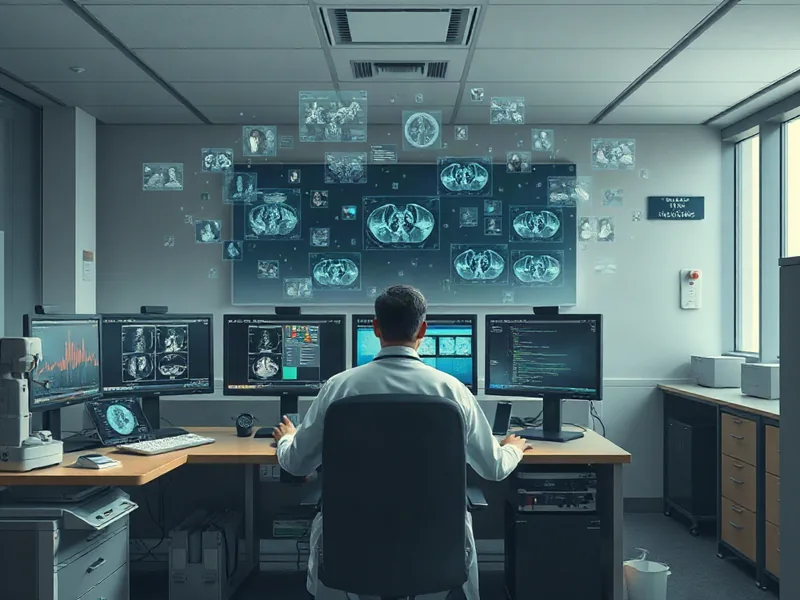
What they found was straightforward, if troubling. During a radiology research study, information from Weill Cornell Imaging was "entered into artificial intelligence tools and processed using machine learning without authorization and in violation of WCM policies," according to the health system's notice to patients. In plain terms: someone used an AI system that hadn't been cleared for that purpose, with real patient data, breaking internal rules along the way.
The health system moved quickly once it learned what happened. Officials say they suspended the research activity immediately and requested that all data involved be deleted. They also rolled out "additional education to reinforce compliance with WCM's requirements for the appropriate use of AI tools and the protection of patient information." So far, WCM says it has found no evidence that any unauthorized individuals actually accessed the exposed information, though the data itself was sensitive enough to warrant formal notification.
The specifics matter here, because not all data breaches carry the same weight. The information involved included medical record numbers and radiology accession numbers, which are essentially internal tracking codes hospitals use to manage imaging studies. It also may have included the dates and times of radiology services, where patients received care, and clinical details tied to their radiological exams: diagnoses, treatment histories, surgical and procedural records, and medication information.
That's a meaningful amount of clinical detail. Still, WCM was careful to note what wasn't included. The breach did not involve patient names, addresses, phone numbers, email addresses, Social Security numbers, or financial information. Think of it like losing a folder full of someone's medical chart notes, but without the cover page that has their name and contact details stapled to it. That's a real privacy concern, but a narrower one than a full identity-theft scenario.
"Weill Cornell deeply regrets any concern this incident may cause," health system leaders said in a statement. "We take the confidentiality and security of our patients' information very seriously, and are continuing to expand our extensive security measures including providing additional training."
That kind of statement is standard in breach notifications, and it should be. But it's worth asking what "expanding security measures" actually looks like in practice, especially when the root problem isn't a hacker breaking in from outside. It's staff inside the building, often well-meaning, using tools that weren't vetted for handling sensitive data.
This is the second time in as many months that a major academic medical center has dealt with exactly this kind of incident. In October, Johns Hopkins disclosed a breach at its Bayview Medical Center in Baltimore, where a staff member reportedly uploaded a spreadsheet containing patient data to a public AI website that hadn't been approved for institutional use. That incident exposed information belonging to more than 3,000 patients.
Security professionals have a name for this pattern: shadow AI. It's a cousin of the older problem of "shadow IT," where employees adopt software or cloud services without going through official channels, usually because it's faster or more convenient than waiting for approval. The AI version of this problem is arguably more dangerous, because generative and agentic AI tools don't just store data, they actively process it, sometimes retaining it to improve their own models or passing it along to third-party servers nobody at the hospital ever vetted.
Picture a research assistant who's eager to get results and decides to run data through a free online AI tool because it's faster than waiting for IT to set up an approved system. The intentions might be good. The outcome, as these two cases show, can still be a breach that affects thousands of real people who never consented to that specific use of their information.
Experts tracking this trend have been warning for a while that healthcare's enthusiasm for AI is outpacing its ability to govern how that AI gets used. As generative and agentic AI tools become more common in clinical and research settings, the gap between what's officially sanctioned and what's actually happening on the ground keeps widening. Closing that gap requires more than policy documents sitting in a compliance binder. It requires active monitoring of what tools staff are actually using, clearer and faster approval pathways so people aren't tempted to go around the system, and ongoing training that treats AI literacy as seriously as any other patient safety requirement.
These incidents aren't really about reckless employees or malicious actors. They're about a healthcare system scrambling to keep up with technology that's moving faster than its own governance structures. Patients trust hospitals with some of the most sensitive information they'll ever share, expecting that trust to come with safeguards matching the sensitivity of that data.
When that data ends up inside an AI tool nobody approved, even without clear evidence of misuse, it chips away at that trust. Two incidents in two months at respected academic medical centers suggest this isn't a fluke. It's a pattern, and patterns demand systemic fixes, not just apology letters and refresher training sessions. Hospitals that want to keep innovating with AI will need to invest as much in oversight as they do in the tools themselves.
Tags
Original Sources
Improper AI use leads to another data incident, more patient notifications
↗ https://www.healthcareitnews.com/news/improper-ai-use-leads-another-data-incident-more-patient-notifications
About the author
Amara's entry point into AI was an epidemiology role at a London research hospital, where she spent five years studying how digital health tools reached — or conspicuously failed to reach — underserved communities. Watching early algorithmic systems in healthcare quietly entrench existing inequalities, she redirected her career toward the systemic consequences of AI at scale. She covers AI through an unflinching lens: who benefits, who bears the cost, and what evidence actually says versus what the press release claims. Her writing is calm and precise, but she doesn't mistake balance for neutrality.
More from The Steward →This Week's Edition
11 November 2026
14 articles
Related Articles

The Phone in Your Employee's Pocket May Be an Open Door to Your Network
Security & Risk · 6 min

South Korea's Top Tax Exam Scorer Admits AI-Assisted Cheating, Rattling National Testing System
Security & Risk · 5 min

Single Router Grounds US Aviation: A $1 Billion-a-Year System Still Can't Hold
Security & Risk · 5 min
Related Articles
The Phone in Your Employee's Pocket May Be an Open Door to Your Network
Security & Risk · 6 min
South Korea's Top Tax Exam Scorer Admits AI-Assisted Cheating, Rattling National Testing System
Security & Risk · 5 min
Single Router Grounds US Aviation: A $1 Billion-a-Year System Still Can't Hold
Security & Risk · 5 min
More Stories
© 2026 Cedar & Bloom. All rights reserved.
