The Drum · Weekly AI news, freeSubscribe →

Share
SpaceX faces another setback with its Starship rocket, while Firefly Aerospace expands its footprint in Central Texas to accelerate spacecraft production.
SpaceX’s highly anticipated Starship launch was thwarted by a ground system issue on Thursday. The company had gathered significant attention and media coverage for the event at its facility in South Texas. Despite the delay, SpaceX remains undeterred and plans to attempt another launch as early as Friday evening. This setback is not unexpected given that both the rocket and the ground systems are almost entirely new.
The stakes are high for SpaceX and the broader U.S. Spaceflight industry. A successful Starship launch would mark a significant milestone in reusable spacecraft technology, potentially revolutionizing space travel and cargo transport. However, any delays or failures could have far-reaching implications for SpaceX’s ambitious plans and its clients' timelines.
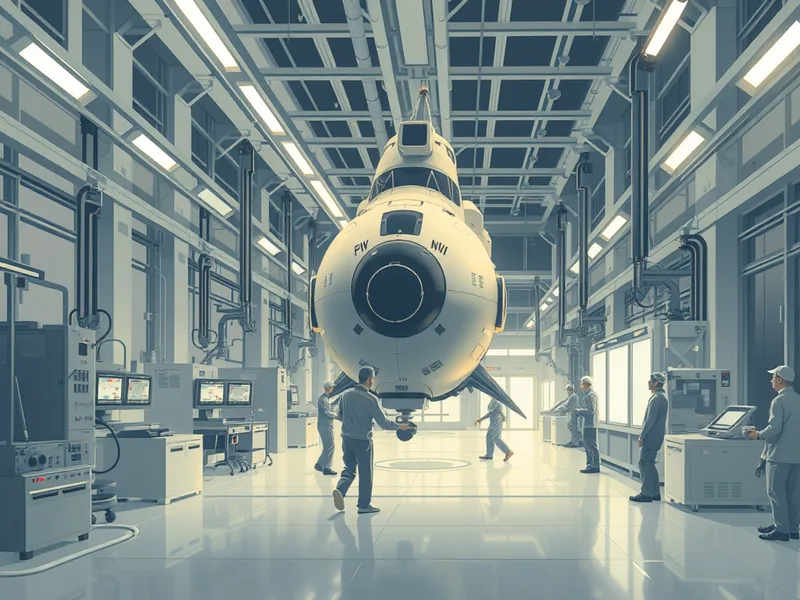
Firefly Aerospace has announced a major expansion of its operations in Central Texas. The company is moving into a new headquarters, expanding its cleanroom space, and adding an innovation lab to support its growing workforce and accelerate spacecraft production. The new campus, located in Cedar Park, Texas, will span 144,000 square feet and include facilities for spacecraft assembly, testing, mission control, avionics and component production, engineering, and business operations.
This expansion is a significant step forward for Firefly Aerospace. The new campus is twice the size of its previous facilities in Cedar Park and is strategically located less than 30 miles from Firefly’s 200-acre Rocket Ranch in Briggs, Texas. Rocket Ranch houses six test stands and 217,000 square feet of facilities dedicated to launch vehicle engineering, manufacturing, and integration. The overall goal is to transition from developing space vehicles to producing them at scale.
The upcoming Starship launch attempt will be closely watched by the aerospace community. SpaceX’s ability to overcome technical challenges and achieve a successful launch will have significant implications for its future projects and the broader space industry. Meanwhile, Firefly Aerospace’s expansion in Texas highlights the growing importance of private sector investment in space technology.
As these developments unfold, it’s also worth noting Tesla’s recent advancements in AI compute. The company has proposed putting massive AI compute in space, powered by constant solar energy. This move could address several terrestrial challenges, including strained power grids, massive water consumption, and land-use conflicts. The integration of advanced AI and renewable energy in space exploration is a promising direction for future innovation.
In the coming weeks, keep an eye on SpaceX’s launch attempts, Firefly Aerospace’s production capabilities, and Tesla’s AI initiatives. These developments could reshape the landscape of space technology and pave the way for new opportunities in both commercial and scientific applications.
Tags
Original Sources
Rocket Report: Starship launch delayed, German launch company may aid Canada
↗ https://arstechnica.com/space/2026/05/rocket-report-starship-launch-delayed-german-launch-company-may-aid-canada
Mistral defends military AI, expands data centres - Reuters
↗ https://www.reuters.com/business/media-telecom/mistral-defends-ai-use-warfare-rebuts-pope-criticism-2026-05-28
About the author
Kai built ML infrastructure at a Bay Area startup before developing an obsession with transformer architectures and inference optimisation that eventually pulled him out of product work entirely. A stint at a compute research lab sharpened his instinct for what actually matters in a model release versus what is marketing. He writes from the inside — from the perspective of someone who has debugged the systems he is describing at three in the morning. He is allergic to hype and instinctively drawn to the unglamorous plumbing questions that everyone else skips over.
More from The Engineer →This Week's Edition
3 June 2026
29 articles
Related Articles

Rosarium Health Partners With Anthem Medi-Cal to Fund Home Modifications for Older Californians
Products & Applications · 5 min

Meta's new open-weight model runs on Macs, if you have 1TB of RAM to spare
Products & Applications · 5 min

Persona AI Bets on Calm Execution in a Noisy Humanoid Robotics Market
Products & Applications · 5 min
Related Articles
Rosarium Health Partners With Anthem Medi-Cal to Fund Home Modifications for Older Californians
Products & Applications · 5 min
Meta's new open-weight model runs on Macs, if you have 1TB of RAM to spare
Products & Applications · 5 min
Persona AI Bets on Calm Execution in a Noisy Humanoid Robotics Market
Products & Applications · 5 min
More Stories
© 2026 Cedar & Bloom. All rights reserved.
