The Drum · Weekly AI news, freeSubscribe →

Share
Healthcare leaders predict that by 2027, virtual care will stop being a side project and become woven into daily hospital operations, patient journeys and after-hours family support.
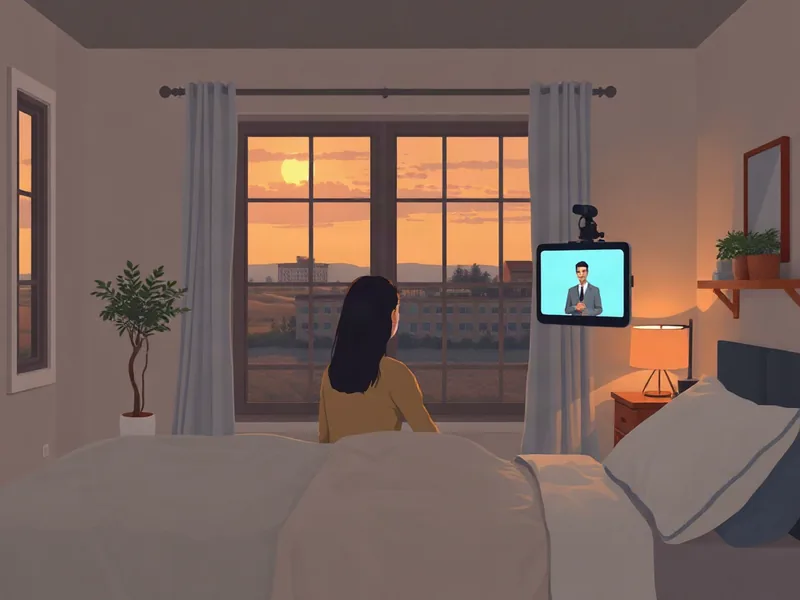
Picture a family thirty miles from the nearest hospital. Their child has a complex medical condition, and it's 5 p.m. on a Saturday. The nearest specialist's office closed hours ago. For years, this has meant a drive to the emergency room, a long wait, and a clinician who doesn't know the child's history. That gap, the space between when people need care and when they can actually get it, is what the next phase of telemedicine is supposed to close.
Telemedicine has already moved past the simple video visit. Hospitals now place virtual nurses alongside bedside teams, link remote specialists with local clinicians, and use digital tools to coordinate care across different settings. As these programs settle into everyday operations, health systems are paying closer attention to what they actually deliver: outcomes, staffing relief and a better patient experience.
Three healthcare executives shared their predictions for where virtual care is headed in 2027. Their forecasts point to a common theme. The emphasis is shifting away from simply connecting people through screens and toward making virtual care function as a dependable part of the entire care journey.
Joe Wechsler, CEO of VirtuAlly, which provides remote nursing and monitoring support to hospitals, expects virtual care to stop being treated as an experiment. "In 2027, virtual care will move out of pilot mode and into core clinical infrastructure, and hospital boards will expect to see it in outcomes and margins," Wechsler said.
Think of it like staffing a night shift with experienced eyes that never leave the floor. Wechsler anticipates health systems placing seasoned clinicians behind technology that's already installed in patient rooms. Virtual nurses, tele-sitters and telemetry teams would work in tandem with bedside staff to catch signs of patient decline earlier, lighten the load on overworked nurses, and extend specialized expertise into community and rural hospitals that often struggle to recruit enough staff.
That expansion won't happen on faith alone. Budgets are tight across the industry, and hospital boards want receipts. "As budgets tighten, buyers will look for accreditation, outcomes data and integration into existing workflows before they commit," Wechsler said. In other words, virtual nursing programs will need to prove their worth in hard numbers, not just good intentions.
Patty Hayward, vice president and general manager of healthcare and life sciences at Talkdesk, sees artificial intelligence playing the connective role that human coordinators often can't scale to fill. Talkdesk provides cloud-based contact center software and customer experience automation for healthcare organizations.
"In 2027, telehealth will no longer be defined by the ability to connect a patient and clinician through a screen," Hayward said. "The real breakthrough will be AI's ability to connect the entire care journey."
That's a meaningful shift in how success gets measured. Rather than counting how many video visits a program logs, Hayward expects health systems to ask harder questions: Can patients actually get appointments? Do they stay connected to their clinicians between visits? Are referrals and follow-ups happening smoothly, or are patients falling through the cracks between departments? AI, in this vision, isn't just automating a single task like scheduling. It's stitching together the full sequence of appointments, referrals, treatment and follow-up care that too often breaks down at the handoffs.
Dr. Patricia Hayes, chief medical officer at Imagine Pediatrics, brings the conversation back to the families living that gap in real time. Imagine Pediatrics is a pediatrician-led medical group offering virtual-first and in-home care for children with special healthcare needs.
"A family can live 20 minutes from a children's hospital and still be in a care desert at 5 p.m. on a Saturday," Hayes said.
That's the paradox worth sitting with. Proximity to a hospital doesn't guarantee access to care when you need it most, especially for families managing a child's complex, ongoing medical needs outside standard business hours. Hayes predicts that by 2027, these families will be able to reach a clinician immediately, day or night, and that clinician will have access to the child's full history and existing pediatric care plan rather than starting from scratch.
"Virtual care extends the reach of the pediatrician and specialists a family already trusts and opens access to the right care at the right time," Hayes said. For a parent navigating a medically complex child's needs, that continuity, talking to someone who already knows the case, can be the difference between a manageable evening and a frightening one.
Taken together, these predictions describe a practical test for telemedicine heading into 2027. Can it make clinical expertise available where and when it's actually needed? Can it help care teams, who are often stretched thin, work together more effectively instead of operating in separate silos? And can it make the experience of seeking care less of an obstacle course for patients and families who are already dealing with enough?
None of this is guaranteed. Health systems will need outcomes data, not just enthusiasm, before they commit more budget to virtual nursing and AI-driven care coordination. Rural and community hospitals, often the ones that stand to benefit most from remote specialist support, also tend to have the thinnest margins for adopting new technology. And for families like the one living twenty minutes from a children's hospital, the real measure of success won't be how sophisticated the technology is. It will be whether someone picks up the call on a Saturday evening and actually knows their child's case.
The shift from pilot programs to permanent infrastructure is still underway, and 2027 won't settle every question. But the direction is becoming clearer: less about proving that telemedicine can work, and more about proving that it works reliably, for the people who need it most, at the moments they need it.
Tags
Original Sources
What comes next for telemedicine in 2027?
↗ https://www.healthcareitnews.com/news/what-comes-next-telemedicine-2027
About the author
Amara's entry point into AI was an epidemiology role at a London research hospital, where she spent five years studying how digital health tools reached — or conspicuously failed to reach — underserved communities. Watching early algorithmic systems in healthcare quietly entrench existing inequalities, she redirected her career toward the systemic consequences of AI at scale. She covers AI through an unflinching lens: who benefits, who bears the cost, and what evidence actually says versus what the press release claims. Her writing is calm and precise, but she doesn't mistake balance for neutrality.
More from The Steward →This Week's Edition
25 November 2026
20 articles
Related Articles

AI Can Now Draft Your Radiology Report. The Question Is Whether That Makes You Safer
Health & Science · 6 min

South Korea Builds National AI Network to Close Healthcare Gap Between Seoul and the Regions
Health & Science · 6 min

ACA Marketplace Choices Shrink for 2027, With Over 200 Counties Down to One Insurer
Policy & Regulation · 5 min
Related Articles
AI Can Now Draft Your Radiology Report. The Question Is Whether That Makes You Safer
Health & Science · 6 min
South Korea Builds National AI Network to Close Healthcare Gap Between Seoul and the Regions
Health & Science · 6 min
ACA Marketplace Choices Shrink for 2027, With Over 200 Counties Down to One Insurer
Policy & Regulation · 5 min
More Stories
© 2026 Cedar & Bloom. All rights reserved.