The Drum · Weekly AI news, freeSubscribe →

Share
For millions living with celiac disease, avoiding gluten isn't always enough. Early trial results from Teva suggest an injectable antibody could one day offer real protection against the intestinal damage gluten leaves behind.
For people with celiac disease, a stray crumb of bread or a mislabeled sauce can trigger real physical harm. There's no pill to reverse the damage once it starts, no approved medication to fall back on. The only tool available is total avoidance, and even that often falls short. New data from Teva Pharmaceutical Industries suggests that might be starting to change.
The company reported Wednesday that its experimental antibody, TEV-53408, met the main goal of a mid-stage clinical trial by preventing intestinal damage in celiac patients exposed to gluten. Patients who received the drug also reported milder gastrointestinal symptoms than those on placebo. Just as important, the drug appeared safe and was well tolerated by participants. Teva says more detailed findings will be shared at an upcoming scientific meeting.
This matters because celiac disease is far more common, and far more stubborn, than many people realize. An estimated 5.1 million people across the United States and the five largest European Union countries live with the condition, according to Teva. It develops when the immune system mistakes gluten, a protein found in wheat, barley and rye, for a threat and attacks the lining of the small intestine in response.
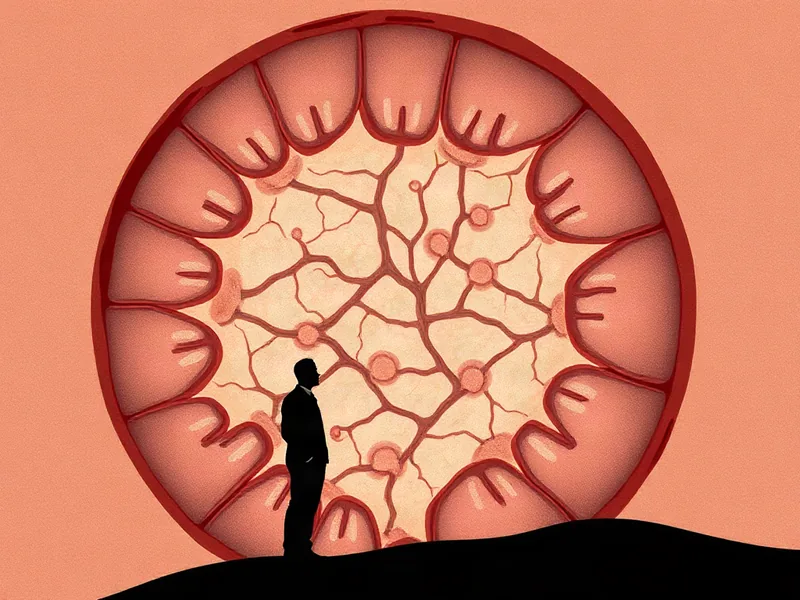
That lining is covered in villi, tiny finger-like projections that absorb nutrients from food. Think of them as the intestine's shag carpet, dense and absorbent when healthy. In celiac disease, the immune attack flattens that carpet down to bare floor, and the body's ability to take in nutrients suffers along with it.
The standard advice for managing celiac disease has always been simple in theory and hard in practice: cut out gluten entirely. Yet even strict adherence doesn't guarantee relief. Teva noted in an investor presentation that roughly half of patients still experience persistent symptoms despite following a gluten-free diet. Cross-contamination, hidden ingredients and the sheer difficulty of eliminating gluten from a modern diet all play a role.
TEV-53408 targets a signaling protein called interleukin-15, or IL-15, which helps drive the immune-mediated inflammation behind celiac disease. Blocking IL-15 is a bit like cutting a specific wire in an alarm system rather than shutting off the power entirely. The idea is to quiet the harmful immune response without disabling the immune system's broader defenses.
The drug is a monoclonal antibody discovered in Teva's own labs. It's designed for injection under the skin rather than through an IV, and it has a long half-life, meaning it stays active in the body for extended periods. Teva says that could eventually allow dosing as infrequently as once every three months, a meaningful convenience for patients managing a chronic condition.
The Phase 2a study enrolled 50 adults with celiac disease who were already following a gluten-free diet and had minimal intestinal damage at the study's start. Participants received a single dose of the drug, then waited two weeks before beginning a six-week gluten challenge, deliberately eating gluten-containing food each day to see whether the drug could blunt the immune response that normally follows. Researchers tracked intestinal changes through biopsies and recorded patient-reported symptoms throughout.
By the end of week eight, the results showed a statistically significant and clinically meaningful reduction in gluten-induced intestinal damage compared to placebo. Patients will continue to be monitored through week 80, giving researchers a longer window to assess how durable the protective effect is and whether any safety concerns emerge over time.
"These results underscore the potential to move beyond managing gluten exposure and address celiac disease at its biological source," Teva Chief Medical Officer Eric Hughes said in a prepared statement. He added that the findings "strengthen our confidence in targeting the IL-15 pathway as an approach to reducing immune-driven intestinal damage."
The celiac data arrive roughly two months after Teva reported encouraging Phase 1b results for the same drug in vitiligo, a condition in which the immune system attacks pigment-producing skin cells. That program is now advancing to Phase 2b testing. Teva argues the celiac results reinforce the idea that TEV-53408 could work across multiple immune-driven conditions. The company's investor presentation projects the drug could reach $1.5 billion to $2 billion in peak annual sales for celiac disease alone, with additional potential in eosinophilic esophagitis, alopecia areata and atopic dermatitis.
Teva isn't alone in this race. Forte Biosciences has developed an antibody that blocks CD122, a shared component of the IL-2 and IL-15 receptors, and its promising early data in celiac disease and vitiligo helped prompt Argenx to acquire the company for $2.2 billion. First Track Biotherapeutics is pursuing a similar CD122-targeting approach with its own antibody, ANB033, in both celiac disease and eosinophilic esophagitis. Leerink Partners analyst David Risinger, who covers First Tracks, noted in a research report that targeting both IL-2 and IL-15 could offer a broader therapeutic effect than Teva's single-pathway approach, though that advantage remains unproven without head-to-head clinical evidence. First Tracks has completed enrollment in the gluten challenge portion of its own Phase 1b celiac trial, with preliminary results expected in the fourth quarter of this year.
Teva plans to move TEV-53408 into a multiple-dose Phase 2 study next, aiming to nail down the right dose and schedule before attempting a Phase 3 trial. The program has financial backing from a January agreement with Royalty Pharma, which could provide Teva up to $500 million. In exchange, Teva would owe Royalty Pharma a milestone payment and ongoing royalties on global sales if the drug eventually reaches the market.
For the millions of people managing celiac disease through diet alone, often with mixed success, a drug that addresses the disease's biological root rather than just gluten exposure could represent a meaningful shift. It's still early. Larger trials and longer follow-up are needed before anyone can call this a treatment rather than a promising signal. But for a disease with no approved therapies and a patient population that has waited a long time for options, even a cautious step forward carries real weight.
Tags
Original Sources
Teva Drug Rises to the Gluten Challenge, Stopping Intestinal Damage in Celiac Disease Trial - MedCity News
↗ https://medcitynews.com/2026/09/teva-celiac-disease-gluten-il-15-antibody-immunology-inflammation
About the author
Amara's entry point into AI was an epidemiology role at a London research hospital, where she spent five years studying how digital health tools reached — or conspicuously failed to reach — underserved communities. Watching early algorithmic systems in healthcare quietly entrench existing inequalities, she redirected her career toward the systemic consequences of AI at scale. She covers AI through an unflinching lens: who benefits, who bears the cost, and what evidence actually says versus what the press release claims. Her writing is calm and precise, but she doesn't mistake balance for neutrality.
More from The Steward →This Week's Edition
4 September 2026
24 articles
Related Articles

A Heart Without Friction: Maglev Technology Moves Into Cardiac Care
Health & Science · 6 min

How a Stubborn Hiss of Radio Noise Helped Confirm the Big Bang
Health & Science · 5 min
AI Can Predict Chemotherapy Response in Aggressive Breast Cancer, But Not Yet Reliably Enough for the Clinic
Health & Science · 5 min
Related Articles
A Heart Without Friction: Maglev Technology Moves Into Cardiac Care
Health & Science · 6 min
How a Stubborn Hiss of Radio Noise Helped Confirm the Big Bang
Health & Science · 5 min
AI Can Predict Chemotherapy Response in Aggressive Breast Cancer, But Not Yet Reliably Enough for the Clinic
Health & Science · 5 min
More Stories
© 2026 Cedar & Bloom. All rights reserved.
