The Drum · Weekly AI news, freeSubscribe →
Share
Dive into the history and technical details of the groundbreaking TMS9900, a chip that set new standards in microprocessor design and influenced generations of engineers.
In the early days of personal computing, Texas Instruments (TI) made a significant impact with the release of the TMS9900 in 1976. This was one of the first 16-bit microprocessors and introduced several innovative features that would influence the industry for years to come. For practitioners and enthusiasts alike, understanding the TMS9900's architecture and performance is a valuable lesson in the evolution of CPU design.
The TMS9900 was a groundbreaking chip for its time, offering 16-bit processing capabilities when most microprocessors were still operating at 8 bits. This increase in bit width allowed for more complex operations and better performance, making it a significant step forward in the field. Here are some key technical details:
The TMS9900's performance was notable for its time, but it also had some limitations that influenced its adoption:
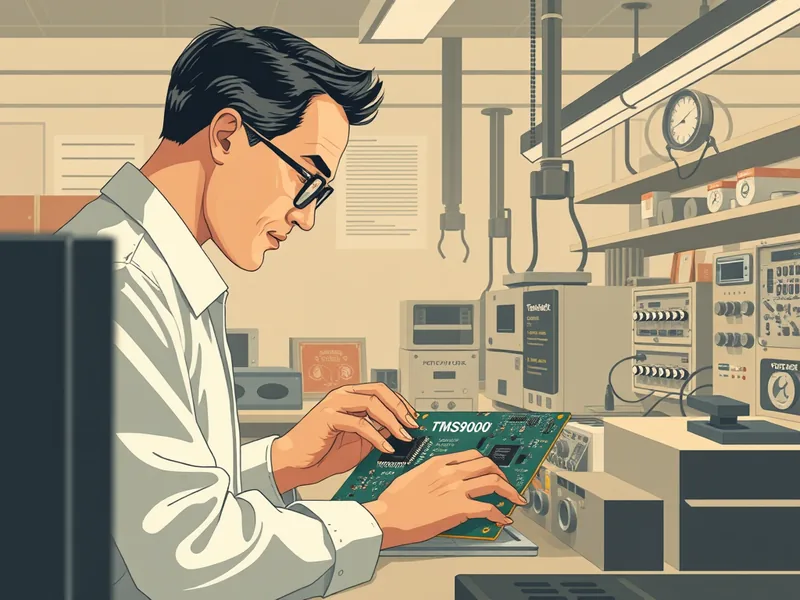
Despite these limitations, the TMS9900 had a significant impact on the industry. It was used in several early personal computers and educational systems, including the TI-99/4A home computer. The chip's influence can be seen in later microprocessors that adopted similar architectural principles, such as the use of on-chip registers and segmented memory models.
The TMS9900 is a prime example of how early microprocessor design set the stage for modern computing. Its 16-bit architecture, on-chip register file, and efficient instruction set were innovative features that pushed the boundaries of what was possible at the time. While it faced challenges in terms of power consumption and cost, the TMS9900's legacy lives on in the principles it established.
For today's engineers and researchers, studying the TMS9900 provides valuable insights into the evolution of CPU design and the trade-offs involved in creating high-performance microprocessors. As we continue to push the boundaries of computing with advanced AI and data processing, the lessons from early pioneers like TI remain relevant and instructive.
Tags
Original Sources
Chip Hall of Fame: Texas Instruments TMS9900
↗ https://spectrum.ieee.org/chip-hall-of-fame-texas-instruments-tms9900/particle-3
About the author
Kai built ML infrastructure at a Bay Area startup before developing an obsession with transformer architectures and inference optimisation that eventually pulled him out of product work entirely. A stint at a compute research lab sharpened his instinct for what actually matters in a model release versus what is marketing. He writes from the inside — from the perspective of someone who has debugged the systems he is describing at three in the morning. He is allergic to hype and instinctively drawn to the unglamorous plumbing questions that everyone else skips over.
More from The Engineer →This Week's Edition
6 August 2026
25 articles
Related Articles

New Book Tackles the Hard Part of Embedded AI: Actually Shipping It
Tools & Engineering · 5 min
Medicare's AI Push Meets a Discovery Problem for Health Chatbots
Products & Applications · 5 min

Microsoft's Internal AI Rollout Offers a Data Point on Enterprise Transformation Economics
Finance & Markets · 5 min
Related Articles
New Book Tackles the Hard Part of Embedded AI: Actually Shipping It
Tools & Engineering · 5 min
Medicare's AI Push Meets a Discovery Problem for Health Chatbots
Products & Applications · 5 min
Microsoft's Internal AI Rollout Offers a Data Point on Enterprise Transformation Economics
Finance & Markets · 5 min
More Stories
© 2026 Cedar & Bloom. All rights reserved.
