The Drum · Weekly AI news, freeSubscribe →
Share
As self-driving cars face growing public distrust and vandalism, the pressing need to enhance safety and rebuild trust becomes crucial, given that these vehicles could save tens of thousands of lives annually lost in traffic accidents.
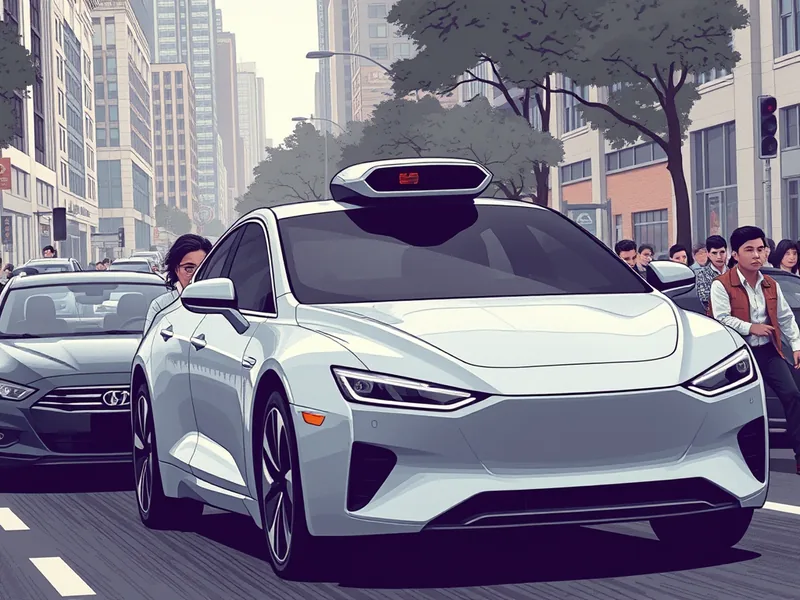
The recent attack on a Waymo self-driving car in San Francisco's Chinatown neighborhood is a stark reminder of the deep-seated public skepticism surrounding autonomous vehicles. A mob vandalized a Jaguar robotaxi, culminating in an act of arson that left the vehicle burnt to a crisp. While some may view this as a form of protest against uncontrolled technological advancement, the reality is far more complex and urgent.
Every year, tens of thousands of people die in traffic accidents. In 2021 alone, over 42,915 people lost their lives on U.S. roads, marking a significant increase from previous years. These fatalities are not just numbers; they represent families torn apart, communities grieving, and countless lives cut short. Self-driving cars have the potential to dramatically reduce these tragedies by eliminating human error, which is responsible for about 94% of all traffic accidents.
Self-driving cars use a combination of sensors, cameras, and artificial intelligence (AI) to navigate roads safely. These systems can detect obstacles, pedestrians, and other vehicles with greater precision than the average human driver. For instance, during a test ride in one of Uber's early self-driving prototypes around 2016, I noticed that the car required frequent interventions from a human backup driver. However, this was just the beginning. Over the years, autonomous technology has made significant strides.
The technology behind self-driving cars is rapidly evolving. Companies like Waymo, Tesla, and Cruise are leading the charge with advanced AI systems that can handle complex driving scenarios. For example, Waymo's vehicles have logged millions of miles on public roads, continuously learning and improving their performance. This data-driven approach ensures that each new iteration of autonomous technology is safer and more reliable than the last.
Despite the potential benefits, public trust remains a significant barrier. The incident in San Francisco highlights the need for transparent communication and community engagement. Tech companies must work closely with local authorities and residents to address concerns about safety, privacy, and the impact on jobs. For instance, Brian Merchant, a critic of autonomous vehicles, argues that these technologies are being imposed without public consent. However, this perspective overlooks the fact that many people, particularly those in high-risk driving environments, stand to benefit greatly from self-driving cars.
The development of autonomous technology should be guided by a commitment to safety and ethical standards. This means rigorous testing, clear regulations, and ongoing dialogue with the public. Tech companies must also invest in education and outreach programs to help people understand the benefits and limitations of self-driving cars. By fostering trust and collaboration, we can ensure that this transformative technology is used for the greater good.
The path to widespread adoption of self-driving cars is not without challenges, but the potential to save lives and improve road safety is too significant to ignore. Instead of resorting to acts of vandalism and violence, it's crucial for all stakeholders-tech companies, policymakers, and the public-to come together and address these issues constructively. The future of transportation depends on our ability to balance innovation with responsibility.
Tags
Original Sources
About the author
Amara's entry point into AI was an epidemiology role at a London research hospital, where she spent five years studying how digital health tools reached — or conspicuously failed to reach — underserved communities. Watching early algorithmic systems in healthcare quietly entrench existing inequalities, she redirected her career toward the systemic consequences of AI at scale. She covers AI through an unflinching lens: who benefits, who bears the cost, and what evidence actually says versus what the press release claims. Her writing is calm and precise, but she doesn't mistake balance for neutrality.
More from The Steward →This Week's Edition
7 March 2024
29 articles
Related Articles

Rosarium Health Partners With Anthem Medi-Cal to Fund Home Modifications for Older Californians
Products & Applications · 5 min

Meta's new open-weight model runs on Macs, if you have 1TB of RAM to spare
Products & Applications · 5 min

Persona AI Bets on Calm Execution in a Noisy Humanoid Robotics Market
Products & Applications · 5 min
Related Articles
Rosarium Health Partners With Anthem Medi-Cal to Fund Home Modifications for Older Californians
Products & Applications · 5 min
Meta's new open-weight model runs on Macs, if you have 1TB of RAM to spare
Products & Applications · 5 min
Persona AI Bets on Calm Execution in a Noisy Humanoid Robotics Market
Products & Applications · 5 min
More Stories
© 2026 Cedar & Bloom. All rights reserved.
