The Drum · Weekly AI news, freeSubscribe →

Share
Born from a grudge against Intel and engineered to be backward-compatible yet cheaper, the Z80 became one of the longest-lived chips in computing history. Here's what made its architecture so hard to kill.
Most processors get replaced within a few product cycles. The Z80 shipped in 1976 and is, remarkably, still in production today. That kind of longevity in silicon is rare enough to demand an explanation, and the explanation turns out to be a mix of clever engineering, an accidental compatibility strategy, and a founder with something to prove.
The chip's origin story starts with Federico Faggin, who had already made his mark at Intel as the lead designer on the 4004, the world's first commercial microprocessor, and later the 8080. Faggin left Intel in 1974 after a falling out over how the company treated his design contributions. He co-founded Zilog with Ralph Ungermann, and the Z80 was built partly as a technical rebuttal: a chip that could run existing 8080 software while fixing the things Faggin thought Intel had gotten wrong.
That decision to preserve software compatibility with the 8080 was the single smartest move in the whole project. Programmers didn't have to rewrite their code to move to Zilog's new hardware. That lowered the switching cost to close to zero for anyone already in the Intel ecosystem, and it meant the Z80 could ride on the momentum of software already written for its predecessor while offering a meaningfully better chip underneath.
Under the hood, the Z80 wasn't just an 8080 clone with a new logo. Zilog's engineers extended the instruction set, added new addressing modes, and built in features aimed squarely at making life easier for engineers designing systems around the chip:
Those choices weren't glamorous, but they mattered enormously to the engineers who actually had to build products around this thing. Fewer power rails and less external support circuitry meant cheaper, simpler boards. For a chip aimed at cost-sensitive markets like hobbyist computers, embedded controllers, and eventually game consoles, that kind of practical engineering was worth more than raw clock speed.
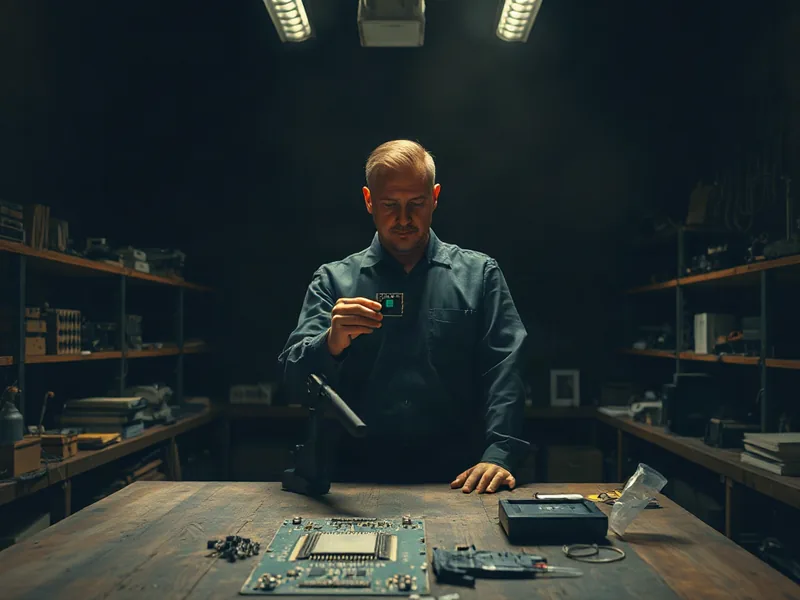
The result was a processor that found its way into an enormous range of products through the late 1970s and 1980s. Home computers like the Sinclair ZX Spectrum and the Amstrad CPC used it. It powered countless embedded systems where cost and simplicity mattered more than cutting-edge performance. It even ended up as the sound coprocessor in game consoles, a role where its cheapness and reliability made it a natural fit long after it had stopped being anyone's idea of a fast general-purpose CPU.
What's striking from an engineering standpoint is how the Z80's design priorities aged. Chips optimized purely for peak performance tend to get leapfrogged quickly, because performance is exactly the axis competitors target hardest. But a chip optimized for compatibility, low cost, and ease of integration tends to stick around in niches long after it's been surpassed on paper. The Z80 wasn't the fastest thing available for most of its life. It was, however, cheap, well understood, and trivial to design around, and those properties compound over decades in a way raw speed doesn't.
There's a broader lesson here for anyone thinking about processor design or platform strategy more generally. Backward compatibility is often treated as a constraint, something you tolerate because ripping out an installed base is too costly. The Z80 shows it can also be an offensive weapon. Faggin's team didn't just tolerate 8080 compatibility, they used it as the on-ramp for a technically superior product, then layered in enough independent value (the single-voltage supply, the integrated refresh logic) that the Z80 wasn't merely a cheaper 8080. It was a better chip that happened to also be a drop-in upgrade.
It's also worth noting how much of the Z80's success traces back to a personnel dispute rather than a grand technical strategy. Faggin's exit from Intel and the friction over credit for his work on the 4004 and 8080 directly shaped what Zilog decided to build and how aggressively they built it. Corporate history is full of these moments where a chip's technical direction gets set by something as unglamorous as a founder wanting to prove a former employer wrong. It's a reminder that the org chart and the interpersonal dynamics behind a design team often matter as much as the transistor budget.
Half a century on, the Z80 is still manufactured, still used in embedded and retro-computing contexts, and still taught as a case study in processor design. Modern engineers rarely work with an instruction set this old directly, but the underlying pattern, ship something compatible, make it cheaper and simpler to integrate, and let the ecosystem effects do the rest, shows up constantly in how new architectures get adopted today. You can see echoes of it in how RISC-V is being positioned against proprietary ISAs, or in how ARM built its dominance in mobile through licensing rather than raw performance leadership alone.
The Z80's staying power wasn't an accident of nostalgia. It came from a deliberate bet that compatibility plus practical cost engineering would beat pure performance in the market, and that bet paid off for decades. For engineers today, it's a useful reminder that the chips or platforms that win long-term aren't always the fastest ones at launch. They're often the ones that make adoption easiest and keep making it easy for years afterward.
Tags
Original Sources
Chip Hall of Fame: Zilog Z80 Microprocessor
↗ https://spectrum.ieee.org/chip-hall-of-fame-zilog-z80-microprocessor/particle-2
About the author
Kai built ML infrastructure at a Bay Area startup before developing an obsession with transformer architectures and inference optimisation that eventually pulled him out of product work entirely. A stint at a compute research lab sharpened his instinct for what actually matters in a model release versus what is marketing. He writes from the inside — from the perspective of someone who has debugged the systems he is describing at three in the morning. He is allergic to hype and instinctively drawn to the unglamorous plumbing questions that everyone else skips over.
More from The Engineer →This Week's Edition
30 September 2026
28 articles
Related Articles

What the Uncanny Valley Actually Tells Us About Machine Perception
Models & Research · 5 min

The Chip That Let Hardware Be Rewritten Like Software: Xilinx's XC2064
Models & Research · 5 min

New Graphite Study Finds AI Models Still Have Distinctive Writing Tells, Even After Scrubbing Em-Dashes
Models & Research · 5 min
Related Articles
What the Uncanny Valley Actually Tells Us About Machine Perception
Models & Research · 5 min
The Chip That Let Hardware Be Rewritten Like Software: Xilinx's XC2064
Models & Research · 5 min
New Graphite Study Finds AI Models Still Have Distinctive Writing Tells, Even After Scrubbing Em-Dashes
Models & Research · 5 min
More Stories
© 2026 Cedar & Bloom. All rights reserved.
