The Drum · Weekly AI news, freeSubscribe →

Share
A quarter-century after anthrax-laced envelopes killed five people and rattled a nation still shaken by 9/11, the response holds hard lessons for a world where AI could make the next biothreat easier to build and harder to catch.
Twenty-five years ago this fall, a handful of envelopes changed how America thought about safety. The country was still raw from September 11. Then came the letters, laced with anthrax spores, mailed from New Jersey to newsrooms and congressional offices. By the time the crisis passed, 22 people had contracted anthrax disease. Five of them died. The financial toll ran into the billions once you count the cleanup, the investigations, and the disrupted institutions left to reckon with contaminated buildings and shattered trust.
It is worth sitting with how small the physical footprint of that attack actually was. A handful of letters. That's it. And yet they exposed something every American shares: the mail. We all get it. We all trust it, mostly without thinking. The 2001 attacker understood that the postal system's greatest strength, its universal reach, could be turned into a delivery mechanism for harm. One envelope reached American Media Incorporated in Florida, where a photo editor for The Sun grew severely ill. It took a sharp-eyed clinician, reading the signs in a spinal tap sample, to recognize what was happening and sound the alarm.
That single moment of clinical intuition probably saved lives. It also revealed a truth that still holds today: the strength of any biothreat response depends less on stockpiles and protocols than on people paying close attention, and being willing to trust their instincts even when the diagnosis seems implausible.
The anthrax letters were, in the language of public health, a "low-tech, high-impact" event. Someone with technical know-how and access to a dangerous pathogen used an ordinary system, the mail, to spread fear far beyond the actual number of people harmed. Twenty-five years later, the technical bar for causing that kind of harm has not gotten higher. If anything, it may be dropping.
Artificial intelligence tools now offer capabilities that were unimaginable in 2001. Some of that is good news for public health: AI can speed up genomic surveillance, flag unusual disease clusters, and help researchers design faster diagnostics. But the same tools that accelerate legitimate science can, in theory, lower the barrier to designing or optimizing a biological agent. That dual-use tension, where a technology's promise and its peril grow from the same root, is not new to biosecurity. It is, however, moving faster than the policy frameworks meant to manage it.
Think of it like a lock and a lockpick sold in the same hardware store. The tools that let scientists understand and defend against pathogens are often the same tools that, misused, could help someone create one. The challenge is not banning the store. It is building better ways to know who is buying what, and why, without shutting down the legitimate research that keeps us safer.
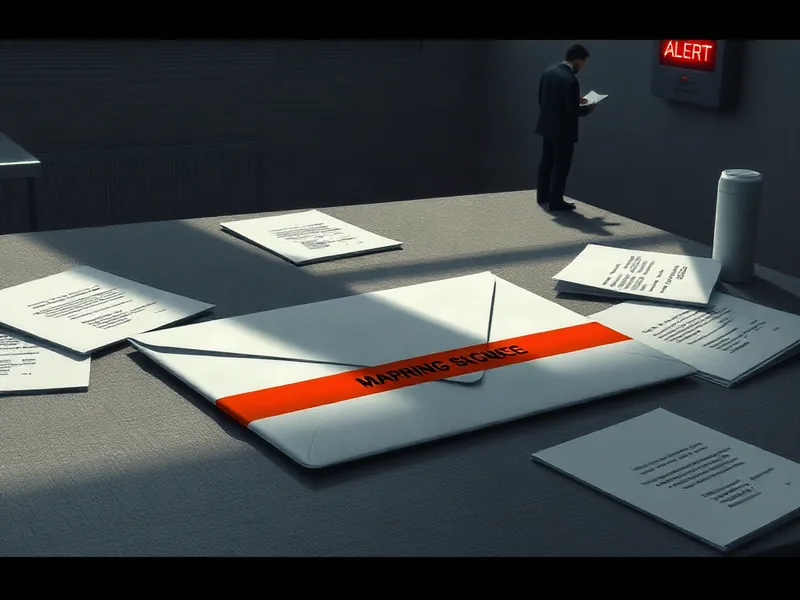
The anthrax response of 2001 offers a template, imperfect but instructive, for how that vigilance can work. Public health investigators leaned on clinical observation, laboratory science, and interagency coordination to trace the letters, treat the exposed, and communicate with a frightened public. It was slow, expensive, and occasionally chaotic. But it worked well enough to contain what could have been a far larger catastrophe. The question now is whether that same combination of human judgment and institutional coordination can keep pace with threats that might emerge not from a single letter writer, but from a lab, a computer, or some combination of the two.
There is also the matter of trust, which is harder to rebuild than any laboratory system. In 2001, fear spread faster than the spores themselves. People stopped opening mail. Some hoarded antibiotics. Government agencies had to communicate risk clearly, under pressure, while investigators were still piecing together what happened and who was responsible. That balancing act, being honest about uncertainty while still projecting competence, remains one of the hardest parts of any public health response. It will be no easier the next time, especially if the source of a threat is harder to trace than a postmark.
Some of the infrastructure built after 2001 still exists. Surveillance systems, stockpiles of medical countermeasures, and interagency response plans all trace their lineage to lessons learned that autumn. But infrastructure ages, and institutional memory fades faster than most people expect. The scientists and public health officials who lived through the anthrax letters are retiring or have already left government service. The next generation will need to relearn some of those lessons, ideally without having to relearn them the hard way.
The anthrax letters were a reminder that a small, determined actor can cause outsized harm using systems the rest of us depend on every day. That lesson has not expired. If anything, it has grown more relevant as new technologies expand both the tools of discovery and the tools of harm. Investing in the boring, unglamorous work of public health, surveillance systems, trained clinicians who trust their instincts, and agencies capable of moving fast under uncertainty, remains the best defense against threats we cannot fully predict.
Twenty-five years on, the specifics have changed. The mail is no longer the most obvious vector for concern. Artificial intelligence and synthetic biology have opened new pathways that did not exist in 2001. But the fundamentals of resilience have not changed at all. Vigilant clinicians, honest public communication, and institutions willing to invest in preparedness before a crisis, not during one, are still what stand between a contained incident and a national catastrophe. Remembering that is not nostalgia. It is preparation.
Tags
Original Sources
I worked on the CDC investigation of the anthrax letters. 25 years later, are we ready for the next biothreat?
↗ https://www.statnews.com/2026/09/26/anthrax-letters-25th-anniversary-cdc-investigation-new-biothreats-ai
About the author
Amara's entry point into AI was an epidemiology role at a London research hospital, where she spent five years studying how digital health tools reached — or conspicuously failed to reach — underserved communities. Watching early algorithmic systems in healthcare quietly entrench existing inequalities, she redirected her career toward the systemic consequences of AI at scale. She covers AI through an unflinching lens: who benefits, who bears the cost, and what evidence actually says versus what the press release claims. Her writing is calm and precise, but she doesn't mistake balance for neutrality.
More from The Steward →This Week's Edition
27 September 2026
18 articles
Related Articles
DARPA's Robotic Repair Mission Aims to Service Satellites 22,000 Miles Up
Products & Applications · 5 min

The Navy's Slow Turn Toward Electric Warships
Environment & Climate · 5 min

Winning the Arbitration, Losing the Cash Flow: How the No Surprises Act's Payment Gap Squeezes Independent Doctors
Products & Applications · 5 min
Related Articles
DARPA's Robotic Repair Mission Aims to Service Satellites 22,000 Miles Up
Products & Applications · 5 min
The Navy's Slow Turn Toward Electric Warships
Environment & Climate · 5 min
Winning the Arbitration, Losing the Cash Flow: How the No Surprises Act's Payment Gap Squeezes Independent Doctors
Products & Applications · 5 min
More Stories
© 2026 Cedar & Bloom. All rights reserved.
