The Drum · Weekly AI news, freeSubscribe →

Share
Houston's largest public research university is stepping up with a new interdisciplinary institute aimed at addressing one of the city’s most pressing issues: homelessness.
The University of Houston (UH) has taken a significant step in addressing the complex issue of homelessness by launching the Institute for Housing, Homelessness and Health (IH3). This initiative brings together a diverse array of expertise from across the university to support community organizations, hospitals, local government, and housing providers. The goal is to scale successful approaches and improve health outcomes in Texas.
Housing and health are deeply intertwined, and homelessness is a multifaceted challenge that requires nuanced solutions. Ben King, Ph.D., founding director of IH3 and a clinical associate professor at UH’s Tillman Family College of Medicine, emphasizes the complexity of the issue. "Homelessness is not solved with simple solutions or platitudes," King told Fierce Healthcare in an advanced interview. "The solutions must be as varied and complex as the problems they aim to address."
Houston has made considerable strides in addressing homelessness, achieving one of the lowest per capita rates in the country. This success can be attributed to significant investments in housing interventions and a coordinated response from various stakeholders. However, ongoing challenges remain, driven by factors such as housing affordability, education costs, and economic conditions.
IH3 will unite faculty, researchers, and students from multiple disciplines, including medicine, nursing, social work, law, business, and engineering. This interdisciplinary approach is crucial for understanding the multifaceted nature of homelessness and developing effective solutions. The institute aims to inform leaders about trends, identify service gaps, and facilitate more informed decision-making.
King stresses that IH3's role is to support, not compete with, existing systems. "We don’t want to do something that is not a university role," he explained. "The goal is to enhance the system by providing data-driven insights and evidence-based recommendations."
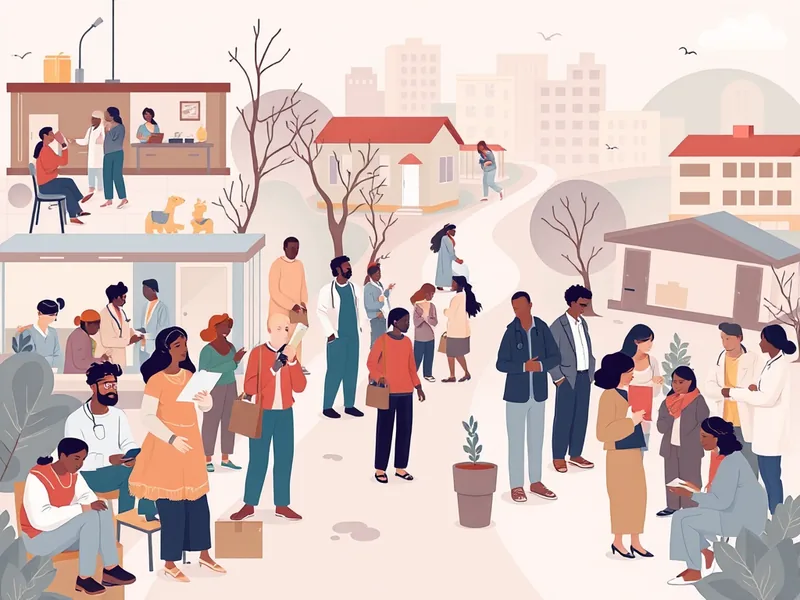
One of the key components of IH3 will be its data lab, which will help model new policies and evaluate interventions. Healthcare has historically struggled with integrating disparate data sources to gain a clearer picture of outcomes. This challenge extends to local homeless response systems as well. By bringing together diverse datasets, IH3 aims to provide a more comprehensive understanding of the issues at hand.
The launch of IH3 underscores the critical role that academic institutions can play in addressing societal challenges. By leveraging interdisciplinary expertise and data-driven approaches, UH is positioning itself as a key partner in Houston's efforts to combat homelessness. This initiative not only benefits the city but also sets a precedent for other universities and communities facing similar issues.
The success of IH3 could have far-reaching implications, demonstrating how collaboration between academia, government, and community organizations can lead to meaningful change. As cities across the country grapple with rising homelessness rates, the lessons learned from Houston's approach could provide valuable insights and strategies for other regions.
In a world where housing insecurity is a growing concern, initiatives like IH3 offer hope and a path forward. By addressing the root causes of homelessness and fostering a more equitable society, we can create healthier, more resilient communities for all.
Tags
Original Sources
University of Houston launches interdisciplinary institute to guide local housing interventions
↗ https://www.fiercehealthcare.com/providers/university-houston-launches-interdisciplinary-housing-institute-inform-policy
About the author
Amara's entry point into AI was an epidemiology role at a London research hospital, where she spent five years studying how digital health tools reached — or conspicuously failed to reach — underserved communities. Watching early algorithmic systems in healthcare quietly entrench existing inequalities, she redirected her career toward the systemic consequences of AI at scale. She covers AI through an unflinching lens: who benefits, who bears the cost, and what evidence actually says versus what the press release claims. Her writing is calm and precise, but she doesn't mistake balance for neutrality.
More from The Steward →This Week's Edition
31 August 2026
17 articles
Related Articles

Microsoft and AWS Push Agentic AI as the Next Layer of Industrial Software
Products & Applications · 5 min

Modular Data Centers Chase Solar Curtailment to Power GPUs
Tools & Engineering · 5 min

Stanford Launches Center for Decoding the Universe to Bring AI Methods to Astrophysics
Models & Research · 5 min
Related Articles
Microsoft and AWS Push Agentic AI as the Next Layer of Industrial Software
Products & Applications · 5 min
Modular Data Centers Chase Solar Curtailment to Power GPUs
Tools & Engineering · 5 min
Stanford Launches Center for Decoding the Universe to Bring AI Methods to Astrophysics
Models & Research · 5 min
More Stories
© 2026 Cedar & Bloom. All rights reserved.
