The Drum · Weekly AI news, freeSubscribe →

Share
Scientists have created the first comprehensive map of the vast underground fungal network that supports plant life and helps regulate our planet's climate. Here’s why this matters to us all.
Beneath the surface of the Earth lies a complex and vital ecosystem, one that has long been hidden from human eyes. An international team of researchers has now produced the first global map of this subterranean fungal network, revealing an intricate web of life that stretches for roughly 110 quadrillion kilometers-nearly 1 billion times the distance between Earth and the sun. The findings, published in Science, highlight the critical role these fungi play in supporting plant life and regulating our planet's climate.
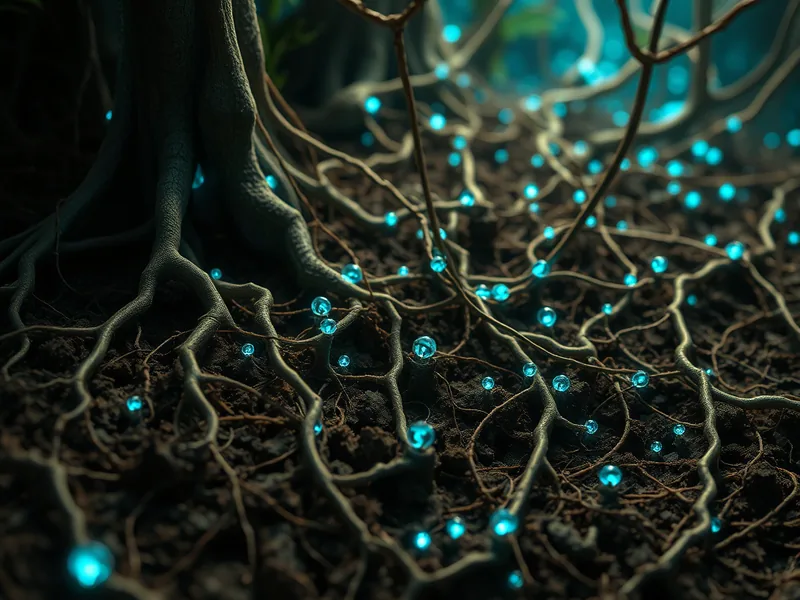
Arbuscular mycorrhizal fungi (AM fungi) form a vast underground network that is essential for the survival of about 70 percent of all plant species. Through microscopic filaments called hyphae, these fungi establish symbiotic relationships with plant roots. In exchange for carbon produced through photosynthesis, the fungi supply plants with water and nutrients, enhancing their growth and resilience.
To create this groundbreaking map, researchers compiled data from 322 previous studies and analyzed over 16,000 soil samples collected from diverse terrestrial ecosystems around the world. They used advanced machine learning techniques and high-resolution imaging technologies to estimate both the network's total extent and its biomass. The result is a detailed visualization of an ecosystem that has been largely invisible until now.
The underground fungal network, or mycorrhizal network, is not just a passive part of the soil; it is an active participant in the life cycles of plants and the broader environment. This network acts as a vast transportation system for nutrients and water, ensuring that even plants in nutrient-poor soils can thrive. The hyphae of AM fungi extend far beyond the reach of plant roots, effectively increasing their absorption area.
This fungal network plays a crucial role in carbon sequestration. By facilitating the exchange of carbon between plants and the soil, these fungi help to store significant amounts of carbon dioxide underground, which can mitigate the effects of climate change. The scale of this phenomenon is staggering: the estimated 110 quadrillion kilometers of hyphae form an interconnected web that spans forests, meadows, and even urban gardens.
Corentin Bisot, a coauthor of the study, emphasized the importance of these findings: "With the advent of new technologies in high-resolution imaging, machine learning, and robotics, we are beginning to reveal what has long remained hidden beneath our feet. We are discovering how the complex network-forming structures of fungi transport nutrients and help regulate the climate."
Understanding the global mycorrhizal network is not just an academic exercise; it has profound implications for environmental policy and sustainability efforts. As we face increasing challenges from climate change, soil degradation, and biodiversity loss, the role of these underground ecosystems becomes even more critical.
The fungal network supports plant health and resilience, which in turn helps to maintain the stability of entire ecosystems. By enhancing nutrient cycling and carbon sequestration, this network can contribute to efforts to mitigate climate change and restore degraded lands. Conservation strategies that protect and promote the health of these fungi could have far-reaching benefits for both natural and managed environments.
The discovery of this vast underground network highlights the interconnectedness of life on Earth. It underscores the need for a holistic approach to environmental management, one that considers the intricate relationships between different organisms and ecosystems. As we continue to explore and understand these hidden networks, we gain valuable insights into how to better care for our planet.
The global map of the mycorrhizal network is just the beginning. Further research will likely uncover more about the dynamics of this ecosystem and its potential applications in agriculture, forestry, and environmental restoration. For now, it serves as a powerful reminder that beneath our feet lies a world of life that is essential for the health of our planet and all its inhabitants.
Tags
Original Sources
There’s a Global Network of Fungi Under Your Feet. This Is the First Complete Map
↗ https://www.wired.com/story/theres-a-global-network-of-fungi-under-your-feet-this-is-the-first-complete-map
About the author
Amara's entry point into AI was an epidemiology role at a London research hospital, where she spent five years studying how digital health tools reached — or conspicuously failed to reach — underserved communities. Watching early algorithmic systems in healthcare quietly entrench existing inequalities, she redirected her career toward the systemic consequences of AI at scale. She covers AI through an unflinching lens: who benefits, who bears the cost, and what evidence actually says versus what the press release claims. Her writing is calm and precise, but she doesn't mistake balance for neutrality.
More from The Steward →This Week's Edition
13 July 2026
34 articles
Related Articles

Oracle Trucks In Natural Gas to Keep AI Data Centers Running Ahead of Pipelines
Environment & Climate · 5 min

MIT Technology Review's 2026 Climate Tech List Shows Where Capital Is Actually Flowing
Environment & Climate · 5 min

Corporate Carbon Pledges Face a Reckoning as Accountability Rules Tighten
Environment & Climate · 5 min
Related Articles
Oracle Trucks In Natural Gas to Keep AI Data Centers Running Ahead of Pipelines
Environment & Climate · 5 min
MIT Technology Review's 2026 Climate Tech List Shows Where Capital Is Actually Flowing
Environment & Climate · 5 min
Corporate Carbon Pledges Face a Reckoning as Accountability Rules Tighten
Environment & Climate · 5 min
More Stories
© 2026 Cedar & Bloom. All rights reserved.
