The Drum · Weekly AI news, freeSubscribe →
Share
As tensions escalate, the U.S. Prepares to challenge China over massive IP theft in AI, threatening global tech dominance and cybersecurity amid accusations that Chinese firms exploit American innovations.
In a growing international dispute, the United States is gearing up to confront what it claims are "industrial-scale thefts" of American artificial intelligence (AI) intellectual property by Chinese entities. The Financial Times reported on these allegations, which have significant implications for global tech competition and cybersecurity.
The tension has been building since the launch of DeepSeek, a Chinese AI model that OpenAI alleged was trained using outputs from its own models. This incident sparked a broader debate about the ethical use of AI and intellectual property rights. Since then, other major AI firms have reported similar issues. Google, for instance, claimed in January that "commercially motivated" actors attempted to clone its Gemini AI chatbot by prompting it over 100,000 times, likely to train cheaper copycat models. Anthropic followed suit the next month, accusing Chinese companies DeepSeek, Moonshot, and MiniMax of using fraudulent accounts to generate millions of exchanges with its Claude model.
For the US government, these so-called "distillation attacks" pose a significant threat. They could potentially allow China to rapidly catch up in the AI race, which is seen as a critical component of national security and economic competitiveness. In a memo reviewed by the Financial Times, Michael Kratsios, director of the White House Office of Science and Technology Policy, warned that "the US government has information indicating that foreign entities, principally based in China, are engaged in deliberate, industrial-scale campaigns to distill US frontier AI systems."
Kratsios detailed how these campaigns allegedly operate. He stated that Chinese actors were using tens of thousands of proxy accounts to evade detection and employing jailbreaking techniques to expose proprietary information. The memo also indicated that US firms would soon gain access to government intelligence to help them combat these attacks.
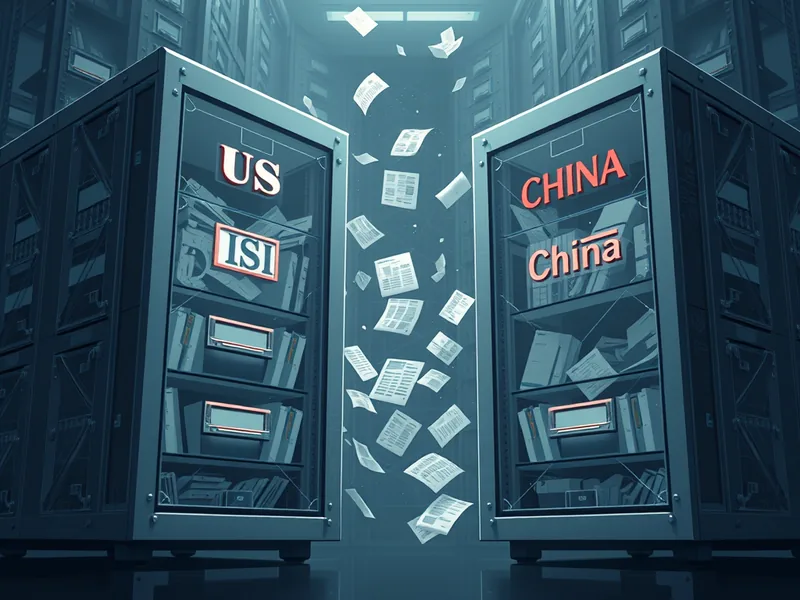
While the allegations are serious, they have been met with strong denial from China. Beijing has labeled the accusations as "slander," emphasizing its commitment to innovation and intellectual property rights. This response underscores the complex geopolitical dynamics at play, where both countries are vying for dominance in the tech sector.
For now, AI firms are relying on their terms of service to address these violations. However, the US government is considering more robust legal measures. Congress may update existing laws to provide additional tools for US companies fighting these alleged fraudulent activities. In an April report, the House’s Select Committee on China advised that Congress "should direct the Commerce Department’s Bureau of Industry and Security" to take action.
The speed at which lawmakers will act remains uncertain. However, the stakes are high. The outcome could shape the future of AI development and international tech cooperation or competition. As the debate continues, both sides must navigate a delicate balance between protecting intellectual property and fostering innovation for the benefit of all.
Tags
Original Sources
About the author
Amara's entry point into AI was an epidemiology role at a London research hospital, where she spent five years studying how digital health tools reached — or conspicuously failed to reach — underserved communities. Watching early algorithmic systems in healthcare quietly entrench existing inequalities, she redirected her career toward the systemic consequences of AI at scale. She covers AI through an unflinching lens: who benefits, who bears the cost, and what evidence actually says versus what the press release claims. Her writing is calm and precise, but she doesn't mistake balance for neutrality.
More from The Steward →This Week's Edition
25 April 2026
29 articles
Related Articles
States Race to Write the Rules for AI Sandboxes in Health Care, and Lobbyists Are Racing Right Alongside Them
Policy & Regulation · 5 min
DOJ Moves to Reward Health Care Companies That Report Their Own Fraud
Policy & Regulation · 5 min

As US Intelligence Sharing Wavers, Ukrainians Lose Precious Minutes Against Russian Missiles
Policy & Regulation · 6 min
Related Articles
States Race to Write the Rules for AI Sandboxes in Health Care, and Lobbyists Are Racing Right Alongside Them
Policy & Regulation · 5 min
DOJ Moves to Reward Health Care Companies That Report Their Own Fraud
Policy & Regulation · 5 min
As US Intelligence Sharing Wavers, Ukrainians Lose Precious Minutes Against Russian Missiles
Policy & Regulation · 6 min
More Stories
© 2026 Cedar & Bloom. All rights reserved.
