The Drum · Weekly AI news, freeSubscribe →

Share
The US Copyright Office's report underscores the necessity of human involvement in creating copyrighted works, setting new standards that could reshape how AI-generated content is protected and valued in the industry.
In a significant development in the realm of intellectual property, the United States Copyright Office (USCO) has issued a new report that clarifies the conditions under which artificial intelligence (AI)-generated works can be copyrighted. The report, part of an ongoing series on the intersection of copyright law and AI, emphasizes the importance of human intervention in the creative process for a work to qualify for copyright protection.
The implications of this ruling are far-reaching, affecting creators, tech companies, and anyone who uses or develops AI tools. For artists, writers, and filmmakers, understanding these guidelines is crucial for protecting their intellectual property and ensuring they can benefit from their creative efforts. For the tech industry, it sets clear boundaries on what can be considered an original work under copyright law.
The USCO's report delves into the "copyrightability" of outputs generated by AI systems, particularly large language models (LLMs) and other advanced algorithms. A key factor in determining whether a work can be copyrighted is the level of human contribution involved. According to the USCO, works created entirely by AI without any human intervention are not eligible for copyright protection.
The report highlights that for an AI-generated work to be considered for copyright, there must be a significant and creative human input. This means that simply entering prompts into an AI service is not enough to claim authorship or copyright. The USCO received over 10,000 comments on this issue, with the majority agreeing that existing copyright laws are sufficient to address purely AI-generated content.
However, opinions diverged when it came to generative AI outputs involving some form of human contribution. The report states that copyrightability must be determined on a case-by-case basis, but new legal principles may be needed to handle the complexities of AI-made content.
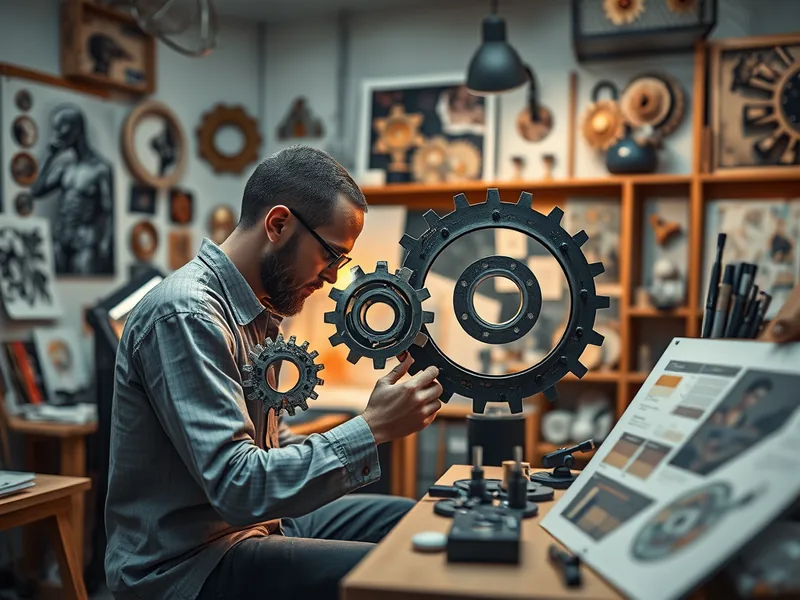
The USCO draws a crucial distinction between the assistive use of AI tools and generative services. Assistive AI tools, which help humans in the creative process, do not limit copyright protection. For example, AI systems used to age or de-age actors, remove objects from scenes, or perform other tasks throughout the production process can still result in works that are eligible for copyright.
On the other hand, generative AI services, which make "expressive" choices on their own, require further analysis. The report cites comments from the Motion Picture Association and other trade organizations, noting that these systems should not be used as a substitute for human creativity. If content is generated by merely inputting prompts into an AI service without any meaningful human creative input, it cannot be copyrighted.
To illustrate, consider a scenario where an artist uses an AI tool to enhance the colors in a digital painting. This use of AI would likely qualify for copyright protection because the artist's original creation is being improved with the help of technology. However, if the same artist were to generate an entirely new image using an AI service by simply entering a text prompt, that image would not be eligible for copyright.
The USCO's report is a step toward clarifying the legal landscape surrounding AI-generated content. As AI continues to evolve and become more integrated into creative processes, it will be essential to strike a balance between protecting human creativity and fostering innovation. For now, creators should be aware that while assistive AI tools can enhance their work without affecting copyright, purely generative AI outputs are unlikely to receive the same protections.
Tags
Original Sources
About the author
Amara's entry point into AI was an epidemiology role at a London research hospital, where she spent five years studying how digital health tools reached — or conspicuously failed to reach — underserved communities. Watching early algorithmic systems in healthcare quietly entrench existing inequalities, she redirected her career toward the systemic consequences of AI at scale. She covers AI through an unflinching lens: who benefits, who bears the cost, and what evidence actually says versus what the press release claims. Her writing is calm and precise, but she doesn't mistake balance for neutrality.
More from The Steward →This Week's Edition
5 February 2025
29 articles
Related Articles
States Race to Write the Rules for AI Sandboxes in Health Care, and Lobbyists Are Racing Right Alongside Them
Policy & Regulation · 5 min
DOJ Moves to Reward Health Care Companies That Report Their Own Fraud
Policy & Regulation · 5 min
As US Intelligence Sharing Wavers, Ukrainians Lose Precious Minutes Against Russian Missiles
Policy & Regulation · 6 min
Related Articles
States Race to Write the Rules for AI Sandboxes in Health Care, and Lobbyists Are Racing Right Alongside Them
Policy & Regulation · 5 min
DOJ Moves to Reward Health Care Companies That Report Their Own Fraud
Policy & Regulation · 5 min
As US Intelligence Sharing Wavers, Ukrainians Lose Precious Minutes Against Russian Missiles
Policy & Regulation · 6 min
More Stories
© 2026 Cedar & Bloom. All rights reserved.
