The Drum · Weekly AI news, freeSubscribe →

Share
A new federally funded project aims to let doctors test treatments on a virtual copy of a critically ill patient first, before trying them on the real person. Here's what that could mean for ICU care.
Picture this. A loved one is in the ICU, hooked to machines, their condition shifting hour by hour. The medical team is making urgent decisions with incomplete information, because the human immune system under extreme stress behaves in ways that are maddeningly hard to predict. Now imagine those same doctors had a computer model of that exact patient, built from their own blood, their own biology, updating in real time. They could test a treatment on the virtual version first. Only then would they try it on the person in the bed.
That is the premise behind a new $38 million research initiative at the University of Vermont's Larner College of Medicine, funded by the Advanced Research Projects Agency for Health, or ARPA-H. The federal agency, housed within the U.S. Department of Health and Human Services, is betting on digital twin technology to change how we treat some of the most dangerous conditions in critical care medicine.
A digital twin, in plain terms, is a computer model built from real-world data that mirrors how a system behaves and helps predict what it will do next. Engineers have used the concept for years to model jet engines and power plants, running simulations to catch problems before they happen in the physical machine. UVM's project asks a bolder question: can that same approach work for a human immune system in crisis?
The initiative, called ReSCUED, short for Reprogramming Severe Critical Illness Using Extensible Digital Twins, is part of ARPA-H's broader CIRCLE program, which focuses on immunological reprogramming in critical illness. It will run over five years and bring together UVM with Wake Forest University School of Medicine, the University of Alabama at Birmingham's Heersink School of Medicine, and Washington University School of Medicine. Two tech partners round out the team: the Cambridge, Massachusetts-based DNA Medicine Institute, which is contributing a bedside molecular testing platform originally built for the International Space Station, and California-based InflammaSense, whose wearable technology tracks activity in patients' vagus nerves, a key player in regulating inflammation.
The clinical target is sepsis, a condition in which the body's own immune response spirals out of control and can quickly lead to organ failure and death. Dr. Gary An, a UVM trauma surgeon and the project's principal investigator, described the problem bluntly. Modern medicine can keep people alive longer in the ICU with organ support technology, he said, but often "their bodies can't get out of the immune dysfunction hole, and we don't know how to help them out of it."
That is where the complexity becomes almost unmanageable for a human mind alone. An put it this way: "The multidimensional dynamics of immune dysfunction is too complex for a person, even an expert, to comprehend. But we can train a computational model to do that."
Here is how the research team plans to build that model. Blood samples will be drawn from critically ill patients at multiple points, every six hours, to measure key cells, proteins, and molecules tied to immune and inflammatory activity. That data feeds into a digital twin unique to each patient, continuously refined as new readings come in. Layer on clinical information and computational modeling, and the AI system can start suggesting which interventions are likely to help most, and when to use them.
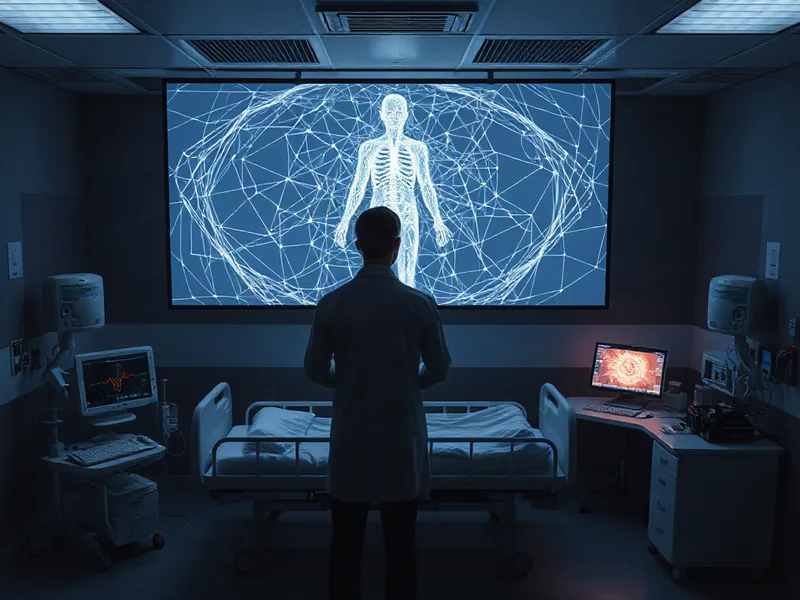
Think of it like a weather forecast that updates as a storm moves, except instead of predicting rain, it is predicting how a patient's immune system will respond to a specific drug or therapy. Clinicians could test an approach virtually first, see how the model predicts the patient will respond, and adjust before committing to a real-world treatment.
The stakes, measured in both human and financial terms, are enormous. Roughly 4.6 million Americans are treated in ICUs every year, at a cost UVM estimates reaches $70 billion annually. The university projects that digital twin technology could shorten ICU stays by as much as 25%, a figure that would matter enormously to families watching a relative's hospital bill climb alongside their worry.
The research timeline is methodical by design. Over the first three years, the team aims to develop and validate the digital twin model and demonstrate, through computation alone, that it can reliably predict patient outcomes. Only if that milestone is met does the project advance toward actual clinical trials involving critically ill patients. ARPA-H structured the award as milestone-based funding, meaning continued support depends on the research clearing each benchmark.
UVM leadership framed the award as a landmark moment for the university. President Marlene Tromp called it evidence of "the tremendous impact that digital twins could have on potentially life-saving medical diagnoses and treatment." Kirk Dombrowski, UVM's vice president for research and economic development, went further, calling the work potentially one of the most consequential uses of AI in medicine, one that could "redefine what is possible" by grounding treatment decisions in the unique biology of each patient.
The broader research community has been circling this idea for a while. Pothik Chatterjee, executive director of Houston Methodist and Rice University's Digital Health Institute, has pointed to how combining algorithms with diverse patient data, from wearables to imaging to medical records, can surface patterns that clinicians would otherwise miss, advancing what researchers call precision medicine: treatment tailored to the individual rather than a one-size-fits-all protocol.
If ReSCUED succeeds, its implications stretch well beyond sepsis. Severe trauma and burn patients, who also experience wildly unpredictable immune responses, stand to benefit from the same underlying technology. More broadly, the project offers a template for treating any condition where patients respond differently to identical therapies, which describes a large share of modern medicine.
There are real risks to weigh alongside the promise. Building a trustworthy model of something as complex as the human immune system is a scientific challenge that has defeated researchers before, and the jump from computational validation to real clinical trials on critically ill patients will demand rigorous safety oversight. But the potential reward, giving exhausted ICU teams a tool that can see patterns no human alone could track, is the kind of bet public health research is supposed to make. As Dr. Richard Page, dean of the Larner College of Medicine, put it, the award reflects "the bold and innovative research taking place" at the university, and for the families waiting in ICU corridors, bold may be exactly what is needed.
Tags
Original Sources
ARPA-H awards UVM up to $38M for ICU digital twin AI
↗ https://www.healthcareitnews.com/news/arpa-h-awards-uvm-38m-icu-digital-twin-ai
About the author
Amara's entry point into AI was an epidemiology role at a London research hospital, where she spent five years studying how digital health tools reached — or conspicuously failed to reach — underserved communities. Watching early algorithmic systems in healthcare quietly entrench existing inequalities, she redirected her career toward the systemic consequences of AI at scale. She covers AI through an unflinching lens: who benefits, who bears the cost, and what evidence actually says versus what the press release claims. Her writing is calm and precise, but she doesn't mistake balance for neutrality.
More from The Steward →This Week's Edition
2 October 2026
28 articles
Related Articles

Blue Shield of California Signals Commercial Expansion of Medicare's ACCESS Chronic Care Model
Health & Science · 5 min

HHS Directs Nearly $250 Million Toward Addiction Treatment and Overdose Prevention
Health & Science · 5 min

Payerset Bets on AI Research Assistant to Make Price Transparency Data Usable
Products & Applications · 6 min
Related Articles
Blue Shield of California Signals Commercial Expansion of Medicare's ACCESS Chronic Care Model
Health & Science · 5 min
HHS Directs Nearly $250 Million Toward Addiction Treatment and Overdose Prevention
Health & Science · 5 min
Payerset Bets on AI Research Assistant to Make Price Transparency Data Usable
Products & Applications · 6 min
More Stories
© 2026 Cedar & Bloom. All rights reserved.
