The Drum · Weekly AI news, freeSubscribe →

Share
Researchers have found AI-run networks of fake dating apps, not just fake profiles, quietly draining trust and savings. As losses near a billion dollars a year, experts say the technology is outpacing our ability to spot it.
Imagine falling for someone online, texting for weeks, feeling that spark of connection, only to learn the person never existed and neither did the app that introduced you. That is the reality a growing number of people are waking up to, and it is reshaping what we thought we knew about romance scams.
For years, the warning signs were familiar: a profile with a suspiciously perfect photo, a partner who always had an excuse to avoid video calls, a request for money that came a little too soon. Those red flags still apply. But according to a new threat report from AI company Anthropic, scammers have moved past faking individual people. Now some of them are faking the entire platform.
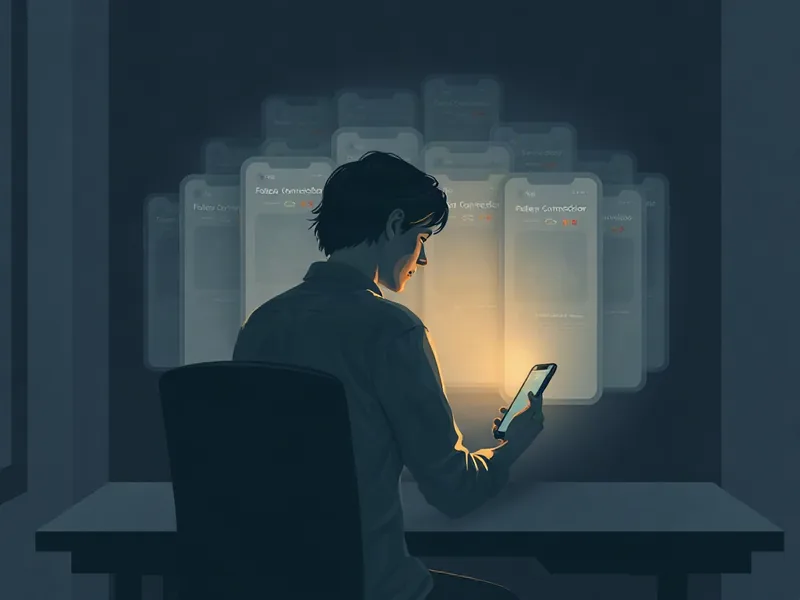
Anthropic's September report describes a China-based operation that used artificial intelligence to build a network of more than 20 dating apps, then populated those apps with AI-generated personas designed to flirt, bond and eventually manipulate real users. Think of it less like a con artist working a single mark and more like a factory floor, churning out digital companions by the thousands, each one calibrated to keep a lonely person typing just a little longer.
The scale is what makes this moment different. Anthropic says it identified more than 4,700 of these AI personas actively interacting with at least 25,000 real people. In just two weeks, those bots generated roughly 2.36 million messages. That is not a handful of scammers working late at night. That is an industrial operation, automated and running around the clock.
The mechanics are simpler than they sound, even if the technology behind them is sophisticated. An AI system generates a profile, complete with photos and a backstory, then carries on conversations that feel warm, attentive and increasingly personal. Unlike a human scammer juggling a dozen fake identities at once, an AI can maintain thousands of relationships simultaneously, each one tailored to what that particular victim seems to want to hear.
Robert Bohls, the FBI's special agent in charge of the Salt Lake City field office, has watched these schemes evolve firsthand. "They can also use AI to replicate voices, to replicate information, and to target someone specifically," Bohls said. "And so it's very convincing."
That word, convincing, is doing a lot of work. A generation ago, a scam email full of typos and broken grammar was easy to laugh off. Today's version can sound like your grandmother's new pen pal, ask about your day with genuine-seeming curiosity, and even mimic the voice of someone you trust. The old advice to simply look for clumsy writing or a stiff, formal tone no longer holds up the way it used to.
The financial toll backs up the alarm. FBI data shows romance scam losses jumped 38% last year, pushing the national total toward $1 billion. Americans over 60, often targeted because they may be more isolated or less familiar with how these schemes operate, lost more than half a billion dollars of that total on their own. These are not abstract numbers. They represent retirement savings, medical funds and money set aside for grandchildren, siphoned off by conversations that felt, at the time, entirely real.
What makes this especially difficult is the emotional architecture of the scam. Victims are not just handing over money to a stranger. They are often grieving the loss of a relationship they believed was genuine, on top of the financial hit. That double wound, financial and emotional, is part of why so many people hesitate to come forward.
Law enforcement is racing to keep pace with technology that evolves faster than any single agency can track. Bohls acknowledges the challenge is significant, but he pushes back hard against the shame that often keeps victims silent. "They are schemes, frankly, anyone can fall for," he said. "No one should feel embarrassed that they're falling for these because they're, they're very convincing."
That message matters. Shame is often the biggest obstacle to reporting these crimes, and reporting is exactly what helps investigators shut fraudulent platforms down. The FBI says it wants to hear from victims directly, both to build cases and because agents have, in some instances, been able to help people recover a portion of what they lost. Acting quickly after realizing you have been scammed can make a real difference in whether that money is ever recoverable.
This story is not really about dating apps. It is about what happens when trust becomes a commodity that can be manufactured at scale. Dating platforms happen to be a particularly effective testing ground because they are built entirely on the premise of connecting with a stranger and gradually opening up to them. That is precisely the vulnerability an AI-driven scam network is designed to exploit.
The lesson here extends well beyond romance. If a scam operation can convincingly fake a website, a phone conversation and a constellation of personalities interacting with tens of thousands of users at once, the same playbook could apply to job postings, customer service lines or even health advice forums. The dating scam is simply the version we can measure right now, thanks to researchers willing to dig into the threat.
Bohls' broader advice, talk openly about scams, share stories with friends and family, and check in on people who might be lonely or isolated, sounds almost old-fashioned next to a threat this technologically advanced. But that is exactly the point. Technology created this problem, and no filter or app update is likely to solve it alone. What still works is the human habit of looking out for each other, especially the people among us who might be most tempted to believe that connection, however it arrives, is worth the risk.
Tags
Original Sources
Artificial intelligence dating scams move beyond fake profiles to entire fake apps
↗ https://www.ksl.com/article/51629533/artificial-intelligence-dating-scams-move-beyond-fake-profiles-to-entire-fake-apps
About the author
Amara's entry point into AI was an epidemiology role at a London research hospital, where she spent five years studying how digital health tools reached — or conspicuously failed to reach — underserved communities. Watching early algorithmic systems in healthcare quietly entrench existing inequalities, she redirected her career toward the systemic consequences of AI at scale. She covers AI through an unflinching lens: who benefits, who bears the cost, and what evidence actually says versus what the press release claims. Her writing is calm and precise, but she doesn't mistake balance for neutrality.
More from The Steward →This Week's Edition
30 September 2026
28 articles
Related Articles

New AI Tool Reconstructs What People See From Brain Scans, Raising Mental Privacy Questions
Security & Risk · 6 min

Major AI Chatbots Still Let Users Digitally Strip Hijabs From Muslim Women
Security & Risk · 5 min

Payerset Bets on AI Research Assistant to Make Price Transparency Data Usable
Products & Applications · 6 min
Related Articles
New AI Tool Reconstructs What People See From Brain Scans, Raising Mental Privacy Questions
Security & Risk · 6 min
Major AI Chatbots Still Let Users Digitally Strip Hijabs From Muslim Women
Security & Risk · 5 min
Payerset Bets on AI Research Assistant to Make Price Transparency Data Usable
Products & Applications · 6 min
More Stories
© 2026 Cedar & Bloom. All rights reserved.
