The Drum · Weekly AI news, freeSubscribe →
Share
Tech moguls spent fortunes buying influence over platforms and networks ahead of the midterms. Crooked Media cofounder Jon Favreau explains why people's grocery bills and rent checks mattered more than anyone's messaging machine.
Something strange happened this November. A wave of tech billionaires spent the better part of a decade buying up the information ecosystem, and voters shrugged it off anyway.
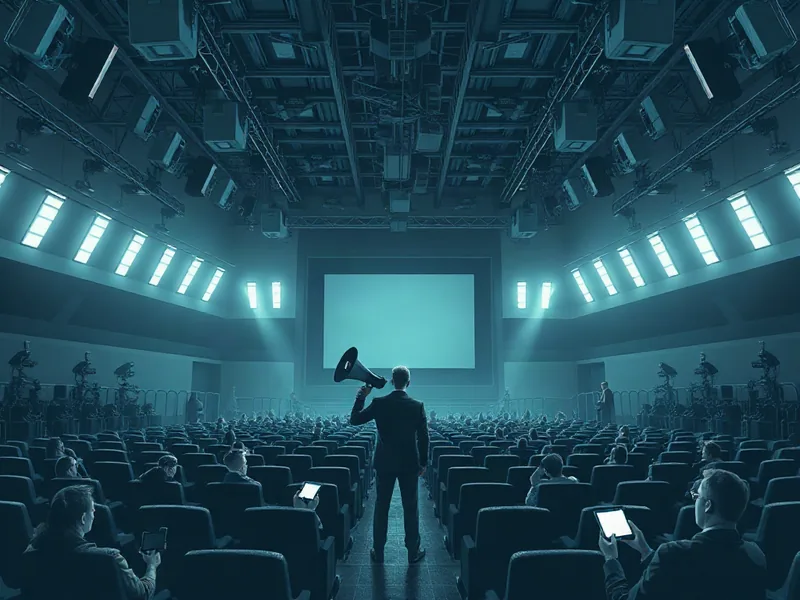
Think about the scale of it. Elon Musk bought Twitter and remade it as X. Mark Zuckerberg gutted Meta's content moderation while courting Trump's favor. The Ellison family bought into TikTok, reshuffled leadership at CBS News, and is reportedly circling CNN while folding Warner into Skydance. These aren't small moves. They're attempts, deliberate or not, to shape what hundreds of millions of people see and believe every day.
And then Democrats swept the midterms anyway. For anyone who assumed media ownership translates cleanly into public opinion, that result should sting a little.
Jon Favreau has a theory about why, and it's refreshingly unglamorous. Favreau cofounded Crooked Media and co-hosts Pod Save America, the podcast he launched with fellow Obama staffers in the aftermath of Trump's 2016 win. Speaking with Nilay Patel on The Verge's Decoder podcast, Favreau argued the outcome wasn't really about media at all. It was about affordability.
"People's lived experiences end up being more salient than the messages that they get from politics," Favreau said. Voters who can't fill up their gas tank or imagine buying a house don't much care what cable news or a trending hashtag tells them to feel. That's the blunt mechanism at work: a government elected on promises to lower costs, that then failed to deliver, got punished. No amount of favorable platform algorithm tuning changes that math.
It's worth sitting with how counterintuitive this is to the conventional wisdom in media and politics circles. For years, the working assumption has been that whoever controls the pipes controls the narrative, and whoever controls the narrative controls the electorate. Conservative media built that theory methodically, starting with talk radio decades ago and extending into today's platform ownership plays. Favreau's read suggests the pipes matter less than material conditions: gas prices, rent, grocery bills, whether you can find a job.
Favreau has lived this pattern from the inside, more than once. He pointed to Joe Biden's presidency as a recent example. Biden's team could point to passed legislation, distributed checks, and favorable economic statistics, and still lose the argument because people said, simply, "I don't feel that yet." Voters gave Trump another shot, Favreau said, even among people who found him personally repellent, because they remembered feeling better off during his first term.
Go back further and the pattern holds. Favreau described working on Obama's 2009 transition into office amid the financial crisis. The crisis technically ended within two years, but the recession lingered, people stayed unemployed, and voters punished Democrats in the 2010 midterms regardless of the Recovery Act or healthcare reform. "It doesn't matter what you say you did or how great your messaging is," Favreau said, "I don't feel it."
What's notable is that Favreau doesn't treat this as some iron law that incumbents are helpless against. He credits Obama's 2012 reelection campaign with cracking the code, in a sense, by refusing to lecture voters about statistics. Instead of insisting the economy was stronger than people felt, the campaign acknowledged the pain directly and reframed the race as a choice between two visions, Obama's versus Mitt Romney's. That honesty, Favreau argued, is the thing incumbents keep forgetting. "You can't tell people to feel a way that they aren't feeling," he said.
This has real implications beyond electoral politics, and it connects to something The Beat has tracked closely: the growing gap between how Silicon Valley wants to be perceived and how the public actually experiences its products. Surveillance technology offers a sharp example. Favreau pointed to AI-enabled camera networks and the argument, made by companies like Ring and Flock, that blanket surveillance deters crime and makes neighborhoods safer. It's a pitch built on the language of safety, which Favreau noted is genuinely one of the top issues voters care about alongside affordability.
But the public reaction to these systems has been largely hostile, Favreau said, even though safety is exactly the value proposition the industry is selling. That disconnect echoes the broader midterm lesson. Companies and campaigns alike can build a sophisticated, well-funded case for why their product or policy should earn public trust. If it doesn't match what people actually live through day to day, networked databases connecting Ring doorbells to police drones, or a presidency that promised cheaper groceries and delivered higher ones, the argument collapses under its own cleverness.
Crooked Media itself is a useful data point here too. The company built an independent liberal media operation from scratch after 2016, something conservative outlets had been doing since talk radio's early days. It now runs more than a dozen shows, employs roughly 100 people, and has crossed 65,000 paying subscribers. That it has thrived without billionaire platform ownership behind it reinforces Favreau's broader point: reach and resources help, but they're not what ultimately moves people.
The lesson here isn't that media ownership is irrelevant. Musk, Zuckerberg, and the Ellison family didn't spend billions on a whim, and influence over information flows still matters enormously for shaping long-term narratives and norms. But this midterm cycle is a reminder that public trust isn't purchased outright. It's earned, or lost, through whether institutions, whether governments, platforms, or surveillance companies, actually deliver on the conditions people experience in their daily lives. For an industry that has increasingly bet on reshaping public opinion through ownership and platform control, that's a humbling, and clarifying, result.
Tags
Original Sources
How Silicon Valley lost the public, with Crooked Media’s Jon Favreau
↗ https://www.theverge.com/podcast/1036484/jon-favreau-pod-save-america-offline-crooked-media-trump-big-tech-ai-2028-election
About the author
Amara's entry point into AI was an epidemiology role at a London research hospital, where she spent five years studying how digital health tools reached — or conspicuously failed to reach — underserved communities. Watching early algorithmic systems in healthcare quietly entrench existing inequalities, she redirected her career toward the systemic consequences of AI at scale. She covers AI through an unflinching lens: who benefits, who bears the cost, and what evidence actually says versus what the press release claims. Her writing is calm and precise, but she doesn't mistake balance for neutrality.
More from The Steward →This Week's Edition
20 November 2026
29 articles
Related Articles
Patients Want AI to Simplify Healthcare, But Trust Lags Behind Enthusiasm
Job Market & Society · 5 min
Employer Benefits Market Rigged Against Better Options, Industry Panel Says
Job Market & Society · 5 min

Robot Babies Raise Real Questions About Who We're Building Machines For
Job Market & Society · 5 min
Related Articles
Patients Want AI to Simplify Healthcare, But Trust Lags Behind Enthusiasm
Job Market & Society · 5 min
Employer Benefits Market Rigged Against Better Options, Industry Panel Says
Job Market & Society · 5 min
Robot Babies Raise Real Questions About Who We're Building Machines For
Job Market & Society · 5 min
More Stories
© 2026 Cedar & Bloom. All rights reserved.
