The Drum · Weekly AI news, freeSubscribe →

Share
As five generations of nurses work side by side, new thinking on retention suggests hospitals have been solving the wrong problem. Self-scheduling technology may offer a more honest fix.
Picture a hospital floor at shift change. A nurse in her twenties, fresh out of school and still paying off loans, hands off to a colleague in her sixties who has delivered babies and held dying patients' hands for four decades. Between them stands every other generation in the workforce today. For years, healthcare leaders have tried to understand why nurses leave by looking at age brackets, assuming that younger staff want flexibility and older staff want stability. That framework, it turns out, may be missing the point entirely.
Ali Morin, chief nursing informatics officer at symplr, argues that retention has less to do with how old a nurse is and more to do with where they stand in their career. Speaking to Healthcare IT News, Morin noted that five distinct generations now work alongside each other in nursing, from new graduates to nurses nearing retirement. Rather than splitting them by birth year, she suggests health systems should pay closer attention to career stage, the mix of experience, financial pressure, family obligation, and professional ambition that shapes what a nurse actually needs from their job at any given moment.
That distinction matters more than it might sound. A nurse early in her career may be juggling student debt and the demands of continuing education, needing flexibility to attend classes or study for certifications. A nurse in the middle of her career might be balancing childcare or eldercare with unpredictable shift rotations. A nurse approaching retirement may want fewer overnight shifts and more say over when they work at all. None of those needs map cleanly onto age. A 50 year old nurse who recently switched specialties may have more in common with a 25 year old new hire than with a peer who has spent thirty years in the same unit.
This is where self-scheduling technology enters the conversation, and why Morin sees it as more than a convenience feature bolted onto existing staffing software.
Traditional hospital scheduling has long operated like a rigid grid imposed from above. Administrators build the schedule, nurses receive it, and any changes require a cascade of phone calls, favor trading, and manager approval. It is efficient for the institution but often punishing for the individual, especially when life does not cooperate with a schedule set weeks in advance.
Self-scheduling flips that model. Instead of a fixed assignment handed down, nurses get visibility into open shifts and the ability to claim or trade them within guardrails set by the hospital. Think of it less like a factory shift roster and more like a shared calendar where everyone can see the gaps and volunteer to fill them. For a nurse working toward an advanced certification, that might mean picking up shifts that avoid conflicting with night classes. For a nurse caring for an aging parent, it might mean trading a weekend rotation without having to beg a colleague for a favor.
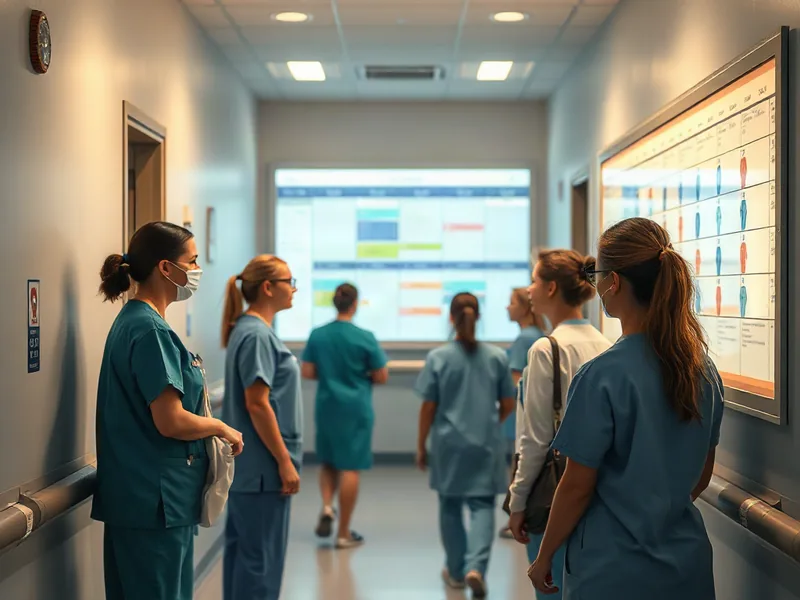
Morin's framing suggests this kind of predictability, knowing in advance what a schedule will look like and having some control over it, does more for retention than generic perks or one-size-fits-all wellness programs. It treats nurses as people navigating distinct life phases rather than as interchangeable units sorted by birth year.
The timing of this conversation is not accidental. Nursing shortages have strained hospitals for years, and burnout driven by unpredictable scheduling has been one of the most frequently cited reasons nurses cite for leaving bedside care altogether. Every nurse who leaves represents not just a staffing gap but years of clinical knowledge walking out the door, knowledge that takes months or years to rebuild in a replacement hire. Retention tools that actually address root causes, rather than surface-level complaints, carry real weight for patient safety and continuity of care.
It also reflects a broader shift happening across health IT more broadly. Other recent coverage has highlighted how artificial intelligence deployments in hospitals risk failing if they ignore nursing workflows, and how nurses' frontline expertise can make AI tools more effective rather than less. The common thread running through all of it is simple: technology designed without input from the people actually doing the work tends to create friction rather than relief. Scheduling software is no exception. A system built around assumptions about age rather than lived career stage risks solving the wrong problem entirely, no matter how sophisticated its algorithm.
There are limits worth acknowledging. Self-scheduling technology does not fix understaffing on its own, nor does it address wage concerns or unsafe patient ratios that also drive nurses away from the profession. Giving nurses more control over when they work does not help if there are simply not enough nurses to go around. Flexibility is one piece of a much larger puzzle that includes compensation, workplace safety, and realistic staffing levels.
Still, the shift in framing matters. If hospitals keep designing retention strategies around age, they will keep missing nurses whose real struggles have nothing to do with how many birthdays they have had. A 35 year old balancing a toddler and a certification exam needs something different from a 35 year old who just moved cities for a new role, even though a generational chart would lump them together identically.
For patients, the stakes are not abstract. A hospital that retains experienced nurses keeps institutional knowledge on the floor, the kind of pattern recognition that catches a subtle complication before it becomes an emergency. For nurses themselves, predictability and autonomy over scheduling can mean the difference between a sustainable career and a profession they feel forced to abandon. Getting this right will not solve the nursing shortage overnight. But it offers a more honest starting point than sorting the workforce by generation and hoping the right policies fall out of the chart.
Tags
Original Sources
Health systems can adapt to nurse workforce needs
↗ https://www.healthcareitnews.com/video/health-systems-can-adapt-nurse-workforce-needs
About the author
Amara's entry point into AI was an epidemiology role at a London research hospital, where she spent five years studying how digital health tools reached — or conspicuously failed to reach — underserved communities. Watching early algorithmic systems in healthcare quietly entrench existing inequalities, she redirected her career toward the systemic consequences of AI at scale. She covers AI through an unflinching lens: who benefits, who bears the cost, and what evidence actually says versus what the press release claims. Her writing is calm and precise, but she doesn't mistake balance for neutrality.
More from The Steward →This Week's Edition
9 October 2026
34 articles
Related Articles

New Survey Finds Women Far More Skeptical of AI Than Men, and the Gap Is Widening
Job Market & Society · 5 min

India's AI Data Centre Boom Runs Into Resistance From the Communities Living Beside It
Job Market & Society · 6 min

A 15-Year-Old Lost a Hand. Now Europe's Students Are in the Streets Over School Funding
Job Market & Society · 6 min
Related Articles
New Survey Finds Women Far More Skeptical of AI Than Men, and the Gap Is Widening
Job Market & Society · 5 min
India's AI Data Centre Boom Runs Into Resistance From the Communities Living Beside It
Job Market & Society · 6 min
A 15-Year-Old Lost a Hand. Now Europe's Students Are in the Streets Over School Funding
Job Market & Society · 6 min
More Stories
© 2026 Cedar & Bloom. All rights reserved.
