The Drum · Weekly AI news, freeSubscribe →

Share
RYO, a bionic hand from Kawatec, demonstrates unprecedented dexterity with 95% of human-like movements, offering hope and independence to amputees through advanced AI integration.
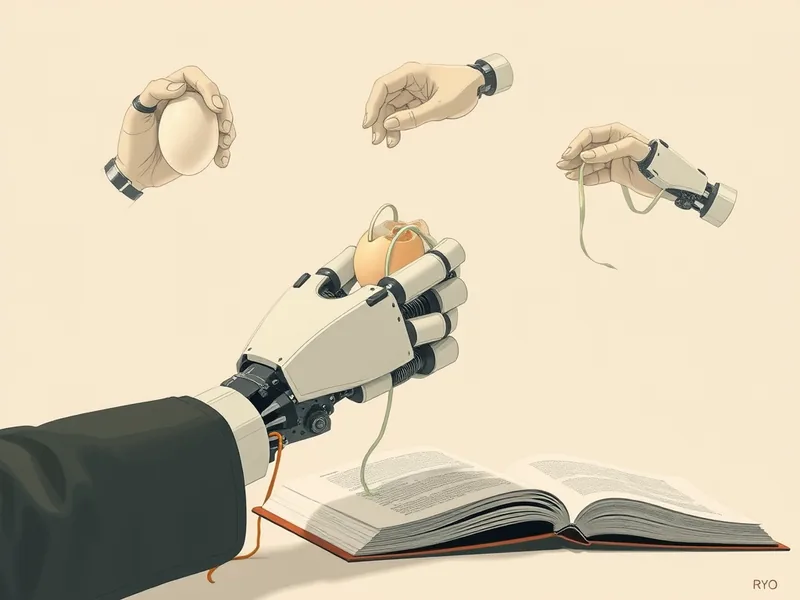
At Expo 2025 in Osaka, a crowd gathered around a small table where a bionic hand named RYO was performing what seemed like simple tasks. Yet, the simplicity of these actions-picking up an egg, tying a shoelace, turning a page-masked the profound technological achievement behind them. Developed by Kawatec, a Japanese company, RYO is not just another prosthetic limb; it’s a marvel of engineering and artificial intelligence that can replicate 95% of natural hand movements.
For many, the ability to perform these everyday tasks is taken for granted. But for those who have lost limbs, such actions can be challenging or impossible. This is where RYO shines. By combining myoelectric sensors with advanced machine learning algorithms, Kawatec has created a prosthetic that responds to muscle signals and learns from user interactions, making movements fluid and intuitive.
One of the most striking demonstrations at Expo 2025 was RYO’s ability to handle tofu without crushing it. Tofu, known for its delicate texture, requires a gentle touch that even some human hands might struggle with. Watching RYO perform this task, one could almost forget it was a bionic hand. The precision and delicacy were breathtaking, offering a glimpse into a future where prosthetics are not just functional but also nuanced and responsive.
The impact of such technology is profound. For individuals who have lost limbs due to accidents, diseases, or congenital conditions, the emotional and practical benefits are immense. Imagine being able to hold a grandchild’s hand for the first time in years, or tie your own shoes without assistance. These are not just tasks; they are moments of dignity and independence that RYO can help restore.
But the promise of AI-powered prosthetics extends beyond individual users. It also has significant implications for healthcare systems and societies at large. By providing more advanced and accessible prosthetic options, we can reduce the burden on medical professionals and improve the quality of life for millions of people worldwide. This technology is not just a medical breakthrough; it’s a social one.
However, the development and deployment of such technology are not without challenges. The cost of these advanced prosthetics remains high, making them inaccessible to many who need them most. Additionally, there are ethical considerations around data privacy and the use of AI in healthcare. These issues must be addressed through robust governance frameworks and international cooperation.
Despite these challenges, the future looks bright. Kawatec is just one of many companies and research institutions pushing the boundaries of what’s possible with AI-powered prosthetics. As the technology advances, we can expect to see more affordable and accessible options becoming available, bringing hope to those who have long awaited such innovations.
At Expo 2025, RYO was not just a technological marvel; it was a symbol of progress and possibility. It reminded us that with each step forward in AI and robotics, we are moving closer to a world where everyone can live with greater independence and dignity. The journey is ongoing, but the destination-a more inclusive and supportive society-is within reach.
Tags
Original Sources
About the author
Lena spent a decade working in international development before AI tools began showing up in the field programmes she was running — first as curiosity, then as something that genuinely changed outcomes. She writes about the moments where AI stops being a headline and starts being a lifeline: the early cancer detection in a rural clinic, the flood model that gave a village three extra days to evacuate, the translation tool that let a child speak to a doctor for the first time. She is not naive about the risks, but she believes the stories of AI doing real good deserve the same rigour and airtime as the cautionary ones.
More from The Optimist →This Week's Edition
30 April 2026
29 articles
Related Articles

Iambic Therapeutics Raises $150 Million in IPO to Fund AI-Designed Cancer Drugs
Finance & Markets · 5 min

Biotech's Summer Glow Fades as XBI Slips 11% From August Highs
Finance & Markets · 5 min

States Race to Write the Rules for AI Sandboxes in Health Care, and Lobbyists Are Racing Right Alongside Them
Policy & Regulation · 5 min
Related Articles
Iambic Therapeutics Raises $150 Million in IPO to Fund AI-Designed Cancer Drugs
Finance & Markets · 5 min
Biotech's Summer Glow Fades as XBI Slips 11% From August Highs
Finance & Markets · 5 min
States Race to Write the Rules for AI Sandboxes in Health Care, and Lobbyists Are Racing Right Alongside Them
Policy & Regulation · 5 min
More Stories
© 2026 Cedar & Bloom. All rights reserved.
