The Drum · Weekly AI news, freeSubscribe →

Share
Inspired by Kato's lifesaving sniff, scientists have developed an electronic "nose" capable of early lung cancer detection, offering hope for timely interventions and potentially saving countless lives.
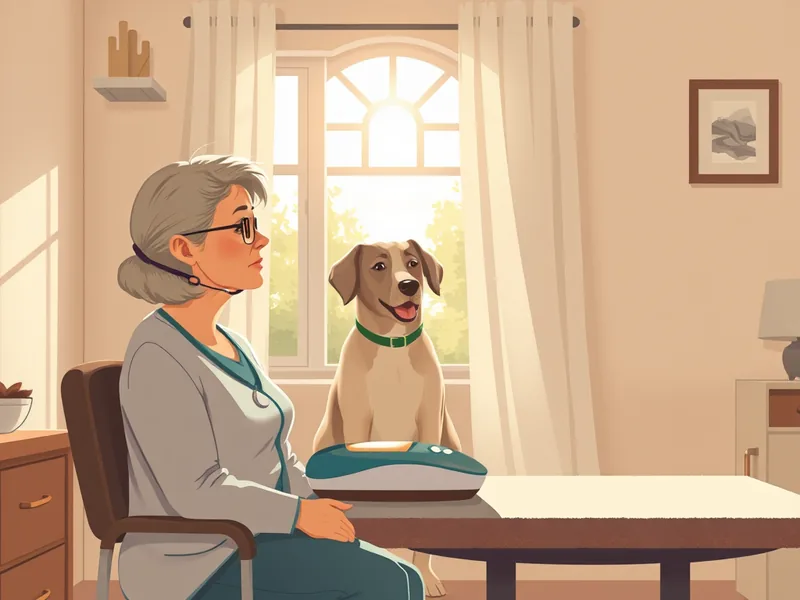
In a quiet, sunlit room in Italy, Clara was undergoing what seemed like an ordinary health check-up. Little did she know that her life was about to change dramatically thanks to the keen sense of smell of a very special dog named Kato. Kato, with his nose trained to detect even the slightest chemical changes in human breath, alerted Clara’s doctor to potential lung cancer. This early detection saved her life and inspired a groundbreaking innovation: an electronic nose that can now do what only dogs could before.
Lung cancer is one of the most deadly forms of cancer, often detected too late when treatment options are limited. Early diagnosis can dramatically improve survival rates, but traditional methods like X-rays and CT scans are not always effective in catching the disease in its early stages. This is where Kato and his canine colleagues come into play. Dogs have an extraordinary ability to detect volatile organic compounds (VOCs) that are present in the breath of people with lung cancer. These VOCs change subtly as the disease progresses, making them a crucial indicator for early detection.
Inspired by these remarkable dogs, a team of researchers at the University of Bari in Italy set out to create an electronic nose that could mimic this ability. The result was the eNose, a device capable of analyzing breath samples and identifying the presence of lung cancer with high accuracy. This technology is not only non-invasive but also quick and cost-effective, making it accessible to a broader range of patients.
Dr. Enrico Stura, one of the lead researchers on the project, explained the significance of this innovation: "The eNose can detect changes in breath that are indicative of lung cancer at a very early stage. This means we can start treatment sooner, potentially saving many lives."
Clara’s story is not unique. Many patients have been diagnosed with lung cancer through similar methods, often after noticing unusual behavior from their pets. However, relying on dogs for widespread screening is impractical and inconsistent. The eNose offers a reliable alternative that can be integrated into routine medical check-ups.
The impact of this technology extends beyond individual patients. Early detection can lead to more effective treatments, reducing the burden on healthcare systems and improving overall public health outcomes. For communities with limited access to advanced medical facilities, the eNose could be a game-changer, providing a simple and accurate diagnostic tool that can be used in remote areas.
While the eNose is still in its early stages of development and testing, the initial results are promising. Clinical trials have shown high sensitivity and specificity, with the device accurately identifying lung cancer in breath samples from patients who were later confirmed to have the disease through traditional methods.
However, there are challenges to overcome. The eNose must be calibrated to detect a wide range of VOCs associated with different stages and types of lung cancer. Additionally, it needs to be validated across diverse populations to ensure its effectiveness for all patients.
Despite these hurdles, the future looks bright. Dr. Stura and his team are confident that the eNose will soon become a standard tool in early cancer detection. They envision a world where routine health check-ups include breath analysis, making lung cancer a disease that can be caught and treated before it becomes life-threatening.
For Clara, Kato, and countless others who may benefit from this technology, the eNose represents more than just a medical breakthrough-it symbolizes hope. Hope for early detection, hope for better treatment outcomes, and hope for a future where lung cancer is no longer a death sentence but a manageable condition.
As we continue to advance in the realm of AI and innovative healthcare solutions, stories like Clara’s remind us that behind every technological marvel are real people whose lives can be transformed for the better. The eNose is not just a tool; it is a beacon of hope in the fight against lung cancer.
Tags
Original Sources
About the author
Lena spent a decade working in international development before AI tools began showing up in the field programmes she was running — first as curiosity, then as something that genuinely changed outcomes. She writes about the moments where AI stops being a headline and starts being a lifeline: the early cancer detection in a rural clinic, the flood model that gave a village three extra days to evacuate, the translation tool that let a child speak to a doctor for the first time. She is not naive about the risks, but she believes the stories of AI doing real good deserve the same rigour and airtime as the cautionary ones.
More from The Optimist →This Week's Edition
30 April 2026
24 articles
Related Articles

xAI Launches Grok Bot, an Autonomous Agent That Logs Into Your Tools and Does the Work
Products & Applications · 5 min

German Bishops Back Child-Friendly AI Standards, Citing Papal Call on Human Dignity
Policy & Regulation · 5 min

New AI Tool Gives Forecasters an Earlier Warning on Rapidly Strengthening Hurricanes
Environment & Climate · 5 min
Related Articles
xAI Launches Grok Bot, an Autonomous Agent That Logs Into Your Tools and Does the Work
Products & Applications · 5 min
German Bishops Back Child-Friendly AI Standards, Citing Papal Call on Human Dignity
Policy & Regulation · 5 min
New AI Tool Gives Forecasters an Earlier Warning on Rapidly Strengthening Hurricanes
Environment & Climate · 5 min
More Stories
© 2026 Cedar & Bloom. All rights reserved.
