The Drum · Weekly AI news, freeSubscribe →

Share
A collapsed lung strikes up to a third of CT-guided lung biopsies, driving up costs and hospital stays. An Irish device now tries to stop that injury before the needle ever causes it.
Every two minutes, someone in the United States learns they have lung cancer. For many, the diagnosis triggers an immediate next step: a needle biopsy to confirm what the scan suggested. Most patients focus on the results of that test. Few are warned about a risk built into the procedure itself.
CT-guided lung biopsies are common, with more than 800,000 performed annually in the U.S. Up to a third of them result in pneumothorax, a collapsed lung caused when air escapes through the puncture site and gets trapped between the lung and chest wall. Think of the lung as a balloon inside a rigid box. Once air leaks into that box instead of staying in the balloon, the lung can't expand properly, and breathing becomes labored. For many patients, that means an unplanned hospital admission lasting several days, on top of the anxiety of a cancer workup.
The financial toll adds up quickly. A single pneumothorax case can erode the profit margin of 20 to 30 uncomplicated biopsies, according to figures cited in recent reporting on the issue. Multiply that across hundreds of thousands of procedures a year, and the complication costs the American healthcare system hundreds of millions of dollars annually. That's before accounting for the toll on patients themselves, who face extended recovery time and added stress during an already frightening period.
A Dublin startup thinks it has found a fix. Selio Medical has developed an FDA-cleared device designed to prevent pneumothorax rather than treat it after the fact. The company is now raising a 5 million euro Series A round ahead of a U.S. commercial launch planned for this fall.
Most current strategies for managing pneumothorax share a common weakness: they only kick in once the damage is already done. Clinicians might use a "blood patch," drawing a small amount of the patient's own blood and injecting it into the needle tract in hopes of sealing the leak. Others roll the patient onto the puncture site, using body weight to press the wound closed. Both methods attempt cleanup after the lung has already started to deflate.
"Because pneumothorax is so common, there have been many mitigation approaches for it, but they've all been post-biopsy, and that has lacked efficacy for that very reason," said Selio CEO Colm McGarvey, speaking at a digital health event last week at the Guinness Enterprise Centre in Dublin.
Selio's approach flips the timeline. Instead of waiting to react, the device seals the puncture site with a biodegradable hydrogel plug before the tissue sample is even taken. No leak, no collapse. It's a bit like patching a tire before you drive over the nail, rather than pulling over once you've already got a flat.
In practice, the device is a pre-filled syringe that attaches to the same introducer tool clinicians already use during a standard biopsy. Once the needle reaches the lung, the clinician pauses briefly to deliver the hydrogel plug, then proceeds with the biopsy as usual. McGarvey said the added step takes roughly two minutes, a modest addition to a workflow that already exists in every interventional radiology suite performing these procedures.
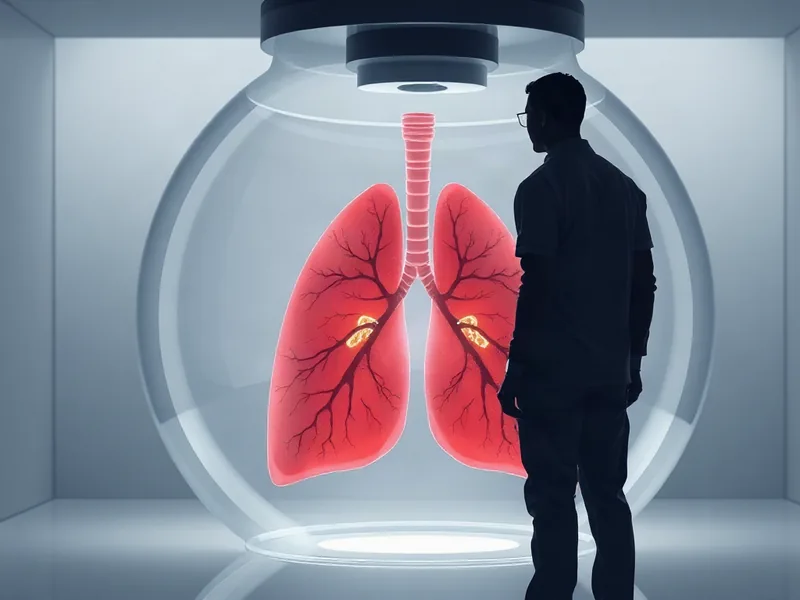
The hydrogel itself forms a seal measuring 8 to 10 millimeters around the puncture site, visible on CT imaging so clinicians can confirm it's properly placed. Over roughly two months, the material biodegrades naturally, leaving nothing behind once it's done its job.
Selio isn't the only company chasing this problem, but McGarvey argues the data sets his device apart. The company ran a head-to-head preclinical study against Biosentry, currently the only other FDA-cleared device for this specific use. In that comparison, Selio's technology cut pneumothorax cases by 70%, with no clinically significant complications reported. That's a meaningful gap in a field where the standard of care has historically meant watching and waiting to see if a collapse happens.
The company plans to bring that evidence into real-world practice starting this fall, launching first at two New York medical centers before expanding further across the U.S. market.
Preventing pneumothorax outright, rather than scrambling to manage it after the fact, could reshape both the patient experience and the economics of a very common procedure. Fewer hospital admissions mean less disruption for patients already navigating a cancer diagnosis. It also means fewer sleepless nights spent monitoring chest tubes and oxygen levels instead of focusing on next steps in treatment.
For hospitals, the calculus is straightforward. If a single complication can wipe out the margin from dozens of routine biopsies, a device that meaningfully reduces that risk offers a clear financial incentive alongside the clinical one. Whether Selio's early results hold up at scale, across diverse patient populations and less controlled real-world settings, remains an open question. Preclinical data and head-to-head comparisons against a single competitor are encouraging, but they aren't the same as years of post-market surveillance.
Still, the direction is worth watching closely. Lung cancer screening rates have been climbing as more people become eligible under expanded guidelines, which means more biopsies are coming, not fewer. Any tool that lowers the risk profile of that procedure, even modestly, could ripple outward into meaningfully better outcomes and lower costs across a healthcare system already strained by chronic underfunding in diagnostic imaging and interventional care.
The bigger test will be adoption. Radiologists and pulmonologists tend to be conservative about changing established workflows, especially when the current approach, however imperfect, is familiar. Two extra minutes per procedure sounds trivial on paper, but busy imaging suites run on tight schedules, and any new step needs to prove its worth quickly and consistently. If Selio's device performs in New York hospitals the way it performed in preclinical trials, it could offer a genuine template for how medical innovation should work: not treating a known complication more efficiently, but designing it out of the procedure entirely.
Tags
Original Sources
This Device Could Prevent Lung Biopsy's Most Common — and Costly — Complication - MedCity News
↗ https://medcitynews.com/2026/09/lung-biopsy-pneumothorax
About the author
Amara's entry point into AI was an epidemiology role at a London research hospital, where she spent five years studying how digital health tools reached — or conspicuously failed to reach — underserved communities. Watching early algorithmic systems in healthcare quietly entrench existing inequalities, she redirected her career toward the systemic consequences of AI at scale. She covers AI through an unflinching lens: who benefits, who bears the cost, and what evidence actually says versus what the press release claims. Her writing is calm and precise, but she doesn't mistake balance for neutrality.
More from The Steward →This Week's Edition
3 September 2026
24 articles
Related Articles

A Heart Without Friction: Maglev Technology Moves Into Cardiac Care
Health & Science · 6 min

How a Stubborn Hiss of Radio Noise Helped Confirm the Big Bang
Health & Science · 5 min

AI Can Predict Chemotherapy Response in Aggressive Breast Cancer, But Not Yet Reliably Enough for the Clinic
Health & Science · 5 min
Related Articles
A Heart Without Friction: Maglev Technology Moves Into Cardiac Care
Health & Science · 6 min
How a Stubborn Hiss of Radio Noise Helped Confirm the Big Bang
Health & Science · 5 min
AI Can Predict Chemotherapy Response in Aggressive Breast Cancer, But Not Yet Reliably Enough for the Clinic
Health & Science · 5 min
More Stories
© 2026 Cedar & Bloom. All rights reserved.
