The Drum · Weekly AI news, freeSubscribe →

Share
Google’s AI can spot early signs of lung cancer more accurately than human doctors, according to a study published in Nature Medicine, potentially revolutionizing how the disease is diagnosed and treated.
Lung cancer is one of the most deadly forms of cancer, primarily because it often goes undetected until it has reached advanced stages. However, a breakthrough by researchers at Google has shown that artificial intelligence (AI) can significantly improve early detection rates, potentially saving thousands of lives.
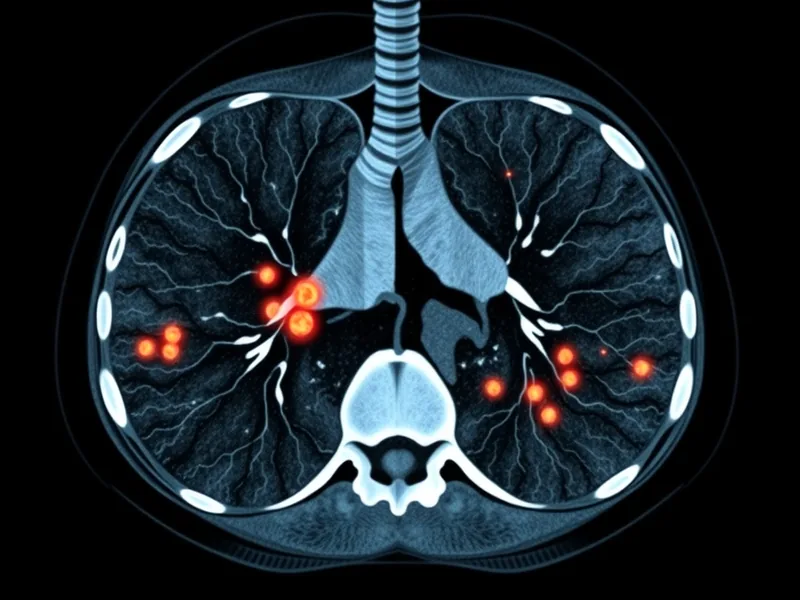
In a study published in the journal Nature Medicine, Google's AI system demonstrated its ability to outperform radiologists in detecting lung cancer from CT scans. The implications are profound: earlier detection means better treatment outcomes and a higher chance of survival for patients.
To understand the impact of this technology, it’s helpful to think of it like a highly skilled detective working alongside a seasoned investigator. Just as a detective can spot subtle clues that might escape a human eye, AI algorithms are trained to identify patterns in medical images that even experienced doctors might miss.
The Google AI system uses deep learning, a type of machine learning that mimics the way the human brain processes information. It was trained on a vast dataset of CT scans from thousands of patients, both with and without lung cancer. This extensive training allows the AI to recognize even the smallest abnormalities that could indicate early-stage lung cancer.
The study involved two groups: one group of six radiologists who were experienced in reading lung cancer scans, and another group consisting of the Google AI system. Both groups were given a series of CT scans to analyze, some of which contained early signs of lung cancer.
The results were striking. When analyzing new cases, the AI system outperformed all six radiologists in detecting lung cancer. It was particularly effective in identifying small nodules that are often difficult for humans to see. In follow-up tests where previous scans were available, the AI still matched or exceeded the performance of the radiologists.
The potential benefits of this technology are enormous. Early detection is crucial for treating lung cancer effectively. According to the American Cancer Society, the five-year survival rate for lung cancer patients diagnosed at an early stage is about 59%, compared to just 6% for those diagnosed at a later stage.
However, like any new medical technology, there are risks and challenges to consider. One concern is the potential for overdiagnosis, where the AI might flag benign abnormalities as cancerous, leading to unnecessary treatments. Additionally, there is the issue of data privacy and ensuring that patient information is securely handled by AI systems.
If widely adopted, this technology could transform lung cancer screening programs around the world. It could make early detection more accessible, especially in regions with limited access to specialized medical professionals. Moreover, it could reduce the workload on radiologists, allowing them to focus on more complex cases.
However, the integration of AI into healthcare also raises important ethical questions. How will patients feel about their health being diagnosed by a machine? What role should human doctors play in interpreting AI-generated results? These are conversations that need to be had as we move forward with this technology.
The potential for Google's AI to improve early detection of lung cancer is a significant step forward in the fight against this deadly disease. While there are challenges and risks to consider, the benefits could be life-changing for many patients. As research continues and more data becomes available, we can hope that this technology will become an invaluable tool in healthcare.
Tags
Original Sources
About the author
Amara's entry point into AI was an epidemiology role at a London research hospital, where she spent five years studying how digital health tools reached — or conspicuously failed to reach — underserved communities. Watching early algorithmic systems in healthcare quietly entrench existing inequalities, she redirected her career toward the systemic consequences of AI at scale. She covers AI through an unflinching lens: who benefits, who bears the cost, and what evidence actually says versus what the press release claims. Her writing is calm and precise, but she doesn't mistake balance for neutrality.
More from The Steward →This Week's Edition
29 April 2026
29 articles
Related Articles
Related Articles
More Stories
© 2026 Cedar & Bloom. All rights reserved.