The Drum · Weekly AI news, freeSubscribe →
Share
Leeds researchers have unveiled an AI system that spots heart disease through non-invasive eye scans, offering a quicker and more accessible way to detect the condition in its early stages.
In a groundbreaking development for medical diagnostics, researchers at the University of Leeds have developed an artificial intelligence (AI) system that can detect signs of heart disease by analyzing eye scans. This innovative approach not only promises to improve early detection but also makes the process more accessible and less invasive for patients.
Heart disease is one of the leading causes of death worldwide, affecting millions of people each year. Early diagnosis is crucial for effective treatment, yet traditional methods such as echocardiograms and blood tests can be time-consuming and costly. The new AI system, developed by a team led by Dr. Yalin Zheng, could change that.
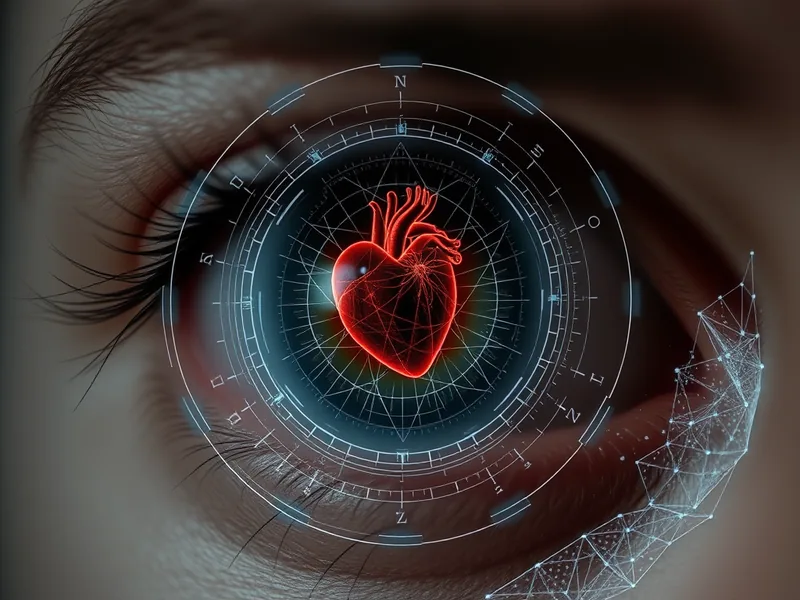
The AI algorithm analyzes retinal images-photos of the back of the eye-to identify subtle changes that may indicate heart disease. These changes are often too subtle for human eyes to detect but can be picked up by advanced machine learning models. The system then generates a risk score, which doctors can use to determine if further tests are needed.
The study, published in the journal Nature Machine Intelligence, involved over 5,000 patients from the UK Biobank. Each participant had both retinal images and echocardiogram data available. The AI was trained on a portion of this data and then tested on the remaining participants to evaluate its accuracy.
Dr. Zheng explained that the AI's performance was impressive: "Our model achieved an AUC (Area Under the Curve) of 0.85, which is considered very good for a diagnostic tool. This means it can correctly identify those at risk of heart disease in 85 out of 100 cases."
One of the most significant benefits of this AI system is its potential to make heart disease screening more accessible. Retinal imaging is already a common practice in many eye exams, making it easier to integrate into routine healthcare. This could lead to earlier detection and better outcomes for patients.
Dr. Zheng also highlighted the cost-effectiveness of the approach: "Echocardiograms can be expensive and require specialized equipment and trained personnel. Eye scans are much more accessible and can be performed by general practitioners or optometrists."
While the potential benefits are clear, there are also risks to consider. AI systems can sometimes produce false positives or negatives, which could lead to unnecessary further testing or missed diagnoses. Dr. Zheng emphasized the importance of ongoing validation: "We need to continue testing this system in diverse populations to ensure it is reliable and effective for everyone."
The researchers at the University of Leeds are already looking ahead to the next steps. They plan to conduct larger, more comprehensive studies to further validate the AI's performance. Additionally, they are exploring ways to integrate the system into existing healthcare frameworks.
Dr. Zheng concluded: "Our ultimate goal is to create a tool that can be used by healthcare providers around the world to improve heart disease diagnosis and ultimately save lives."
The development of this AI system represents a significant step forward in the early detection of heart disease. By leveraging retinal imaging, it offers a non-invasive, cost-effective, and accessible solution that could potentially transform how we approach cardiac health. As research continues, the hope is that this technology will become a standard part of healthcare, making a real difference in people's lives.
Tags
Original Sources
↗ https://www.goodnewsnetwork.org/ai-identify-heart-disease-eye-sca-leeds
About the author
Amara's entry point into AI was an epidemiology role at a London research hospital, where she spent five years studying how digital health tools reached — or conspicuously failed to reach — underserved communities. Watching early algorithmic systems in healthcare quietly entrench existing inequalities, she redirected her career toward the systemic consequences of AI at scale. She covers AI through an unflinching lens: who benefits, who bears the cost, and what evidence actually says versus what the press release claims. Her writing is calm and precise, but she doesn't mistake balance for neutrality.
More from The Steward →This Week's Edition
29 April 2026
29 articles
Related Articles
Related Articles
More Stories
© 2026 Cedar & Bloom. All rights reserved.