The Drum · Weekly AI news, freeSubscribe →

Share
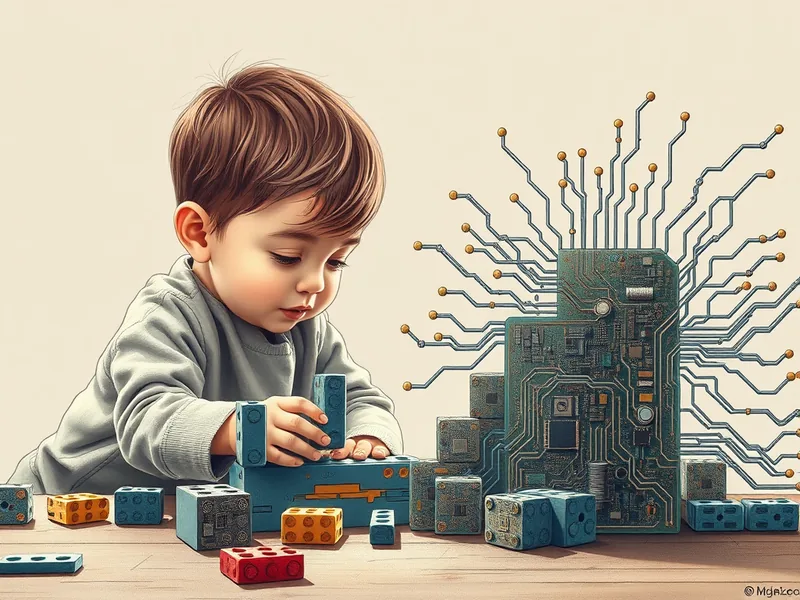
Professor Michael Levin draws surprising parallels between AI and human children, suggesting both are complex systems designed to learn and grow, challenging how we perceive intelligence and development.
In today’s debates about artificial intelligence, we often overlook deeper questions that touch on our fundamental nature and the future we aim to build. Michael Levin, a distinguished professor at Tufts University and director of the Allen Discovery Center, offers a thought-provoking perspective by drawing parallels between AI and human children.
Levin argues that before the rise of AI, humans were already creating high-level intelligent agents: our children. Both AIs and kids share several characteristics:
The challenges posed by AI are not entirely new. They echo ancient questions about what it means to be human:
One key insight is that both humans and AIs, along with all other forms of intelligence on Earth, are governed by the same laws of physics. This raises important questions:
Intelligence is a complex and multifaceted phenomenon. It scales from molecular mechanisms to beings with agency and value:
To truly understand and address the challenges posed by AI, we need to broaden our perspective on intelligence:
Levin introduces the concept of "synthbiosis" to describe this vision. Synthbiosis envisions a future where humans, AIs, and other intelligent entities coexist harmoniously, each contributing uniquely to a diverse and vibrant ecosystem of minds.
Large language models like GPT and Claude are just the beginning. As we continue to develop more advanced AI systems, we must remain open to the possibility of creating or discovering entirely new forms of intelligence. These entities will challenge our preconceptions and force us to rethink what it means to be intelligent and moral.
In essence, the development of AI is not just a technological endeavor but a profound philosophical and ethical journey. By embracing this diversity, we can build a future where all kinds of intelligence are valued and integrated into a thriving, interconnected world.
Tags
Original Sources
About the author
Kai built ML infrastructure at a Bay Area startup before developing an obsession with transformer architectures and inference optimisation that eventually pulled him out of product work entirely. A stint at a compute research lab sharpened his instinct for what actually matters in a model release versus what is marketing. He writes from the inside — from the perspective of someone who has debugged the systems he is describing at three in the morning. He is allergic to hype and instinctively drawn to the unglamorous plumbing questions that everyone else skips over.
More from The Engineer →This Week's Edition
19 April 2024
29 articles
Related Articles

Iambic Therapeutics Raises $150 Million in IPO to Fund AI-Designed Cancer Drugs
Finance & Markets · 5 min

Biotech's Summer Glow Fades as XBI Slips 11% From August Highs
Finance & Markets · 5 min
States Race to Write the Rules for AI Sandboxes in Health Care, and Lobbyists Are Racing Right Alongside Them
Policy & Regulation · 5 min
Related Articles
Iambic Therapeutics Raises $150 Million in IPO to Fund AI-Designed Cancer Drugs
Finance & Markets · 5 min
Biotech's Summer Glow Fades as XBI Slips 11% From August Highs
Finance & Markets · 5 min
States Race to Write the Rules for AI Sandboxes in Health Care, and Lobbyists Are Racing Right Alongside Them
Policy & Regulation · 5 min
More Stories
© 2026 Cedar & Bloom. All rights reserved.
